Love Stories That End Well: Completed Boys’ Love Manga & Manhwa
BL (Boys Love) literature also thrives on its ability to blend romance with diverse genres, creating stories that go beyond simple love narratives. Many BL works incorporate elements of fantasy, slice-of-life, or even adventure, allowing relationships to unfold in unique contexts that heighten emotional stakes. This versatility makes the genre appealing to a wide range of readers, as it can deliver tender everyday moments alongside dramatic conflicts or supernatural twists. Importantly, BL often challenges traditional depictions of masculinity by portraying vulnerability, affection, and emotional depth in male characters, offering a refreshing counterpoint to mainstream media tropes. Through this, BL not only entertains but also broadens cultural conversations about identity, intimacy, and representation in literature.
Here is the list of Boys Love Manga/Manhwa that people will love:
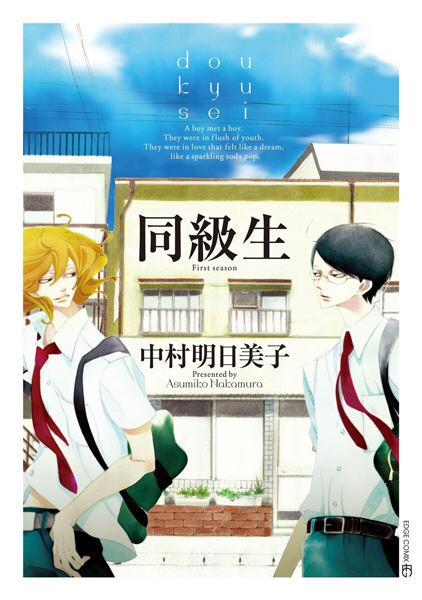
Doukyuusei
- Volumes: 1
- Chapters: 6
- Published: July 25, 2006 - July 27, 2007
- Genres: Boys Love, Slice of Life
- Theme: School
- Serialization: Opera
- Authors: Asumiko Nakamura (Story & Art)
Review: What I find particularly charming about this manga is how effortlessly it captures the innocence, awkwardness, and emotional uncertainty of falling in love for the first time. Rather than relying on exaggerated romantic drama or complicated misunderstandings, the manga focuses on the gradual development of affection between two boys whose personalities and approaches to life are noticeably different. It is a tender Boy's Love story that understands romance does not necessarily need grand gestures to become meaningful.
The relationship between Hikaru Kusakabe and Rihito Sajou is the heart of the story. Kusakabe, with his relaxed personality and musical interests, initially appears to be someone who simply goes with the flow. Sajou, on the other hand, is a more reserved and academically accomplished student who tends to keep his emotions to himself. Their differences create an interesting dynamic, particularly when Kusakabe begins developing feelings for Sajou. What makes their relationship enjoyable is how naturally their affection grows through seemingly ordinary interactions. Their conversations, moments of embarrassment, and gradual attempts to understand one another make their romance feel surprisingly genuine.
From a Boy's Love perspective, I appreciate how this manga approaches same-sex romance without making the characters' relationship feel like a collection of romantic clichés. The story places greater emphasis on emotional intimacy, mutual understanding, and the vulnerability that comes with expressing romantic feelings. Kusakabe and Sajou are not immediately perfect partners, nor do they always understand what the other person wants. They have insecurities, different expectations, and moments when communicating their feelings becomes difficult. However, these imperfections make their relationship more believable and give their romantic development a sense of authenticity.
Another aspect I particularly enjoy is the manga's atmosphere. The school setting provides a familiar backdrop for its coming-of-age narrative, allowing the romance to develop through everyday experiences. Studying together, spending time after school, and discovering unfamiliar feelings become meaningful parts of their relationship. There is something wonderfully nostalgic about the way the story portrays teenage romance, especially its ability to make small interactions feel emotionally significant. It reminds me that first love is often less about knowing exactly what to do and more about learning how to navigate unfamiliar emotions alongside another person.
The artwork also deserves appreciation. The character designs are expressive without being overly elaborate, while the panel compositions complement the story's quiet and intimate atmosphere. The illustrations communicate emotions through subtle facial expressions and body language, making certain romantic moments feel more powerful without requiring excessive dialogue. I particularly like how the visual presentation reinforces the contrast between Kusakabe's more carefree personality and Sajou's reserved nature.
However, the manga's relatively straightforward narrative might not appeal to everyone. Readers looking for intense romantic conflict, complicated relationship dynamics, or substantial dramatic developments may find its storytelling somewhat understated. Some character interactions could also benefit from additional exploration, particularly when it comes to the emotional challenges of maintaining a relationship while dealing with personal expectations and the uncertainties of adolescence. Nevertheless, I do not consider its simplicity a significant weakness because the story clearly prioritizes emotional sincerity over unnecessary complications.
Ultimately, this is a lovely Boy's Love manga that succeeds through its simplicity, warmth, and genuine affection for its characters. I find its portrayal of first love particularly appealing because it treats romance as an experience of discovery rather than something that needs to be artificially dramatic. Kusakabe and Sajou's relationship is charming precisely because it feels personal, imperfect, and human. It is a refreshing coming-of-age romance that celebrates the beauty of falling in love, understanding someone different from yourself, and discovering what it means to be emotionally connected to another person.

Sotsugyousei
- Volumes: 2
- Chapters: 16
- Published: January 25, 2008 - August 28, 2009
- Genres: Boys Love, Drama
- Serialization: Opera
- Authors: Asumiko Nakamura (Story & Art)
Review: I picked up this manga right after finishing Doukyuusei, expecting more of the same soft, tentative sweetness. What I got instead was something that hurt in a way I wasn't prepared for, and I mean that as the highest possible compliment.
The first thing that struck me is how quietly the stakes shift. In the prequel, the question was simple: do they like each other, will they act on it. Here, that's settled. Kusakabe and Sajou are together, they've said the words, they've touched each other. But graduation is looming, and with it the terrifying realization that love alone doesn't solve logistics. Kusakabe wants to be a professional musician. Sajou is grinding toward college entrance exams. Their paths are diverging, and neither of them knows how to say out loud that they're scared of what that means. I found myself reading those early chapters with a knot in my stomach, because Nakamura captures that specific adolescent dread of "we're happy now, but what happens next" with painful accuracy.
Then the story pivots, and it hits much harder. Sajou's mother gets sick, and Sajou—who has spent the entire series being self-contained to the point of self-erasure—starts to crack under the weight of trying to handle everything alone. What broke me wasn't some grand romantic gesture from Kusakabe. It was the offer to help. Just that. Kusakabe doesn't magically fix anything; he can't. But he shows up, and he stays, and he makes it clear that Sajou doesn't have to carry this by himself. There's a moment where Sajou finally lets him in, and it felt more intimate than any physical scene in the entire series.
What I keep coming back to is Sajou's internalized shame. He thinks he "turned" Kusakabe gay. He believes Kusakabe deserved a "normal" life instead of being tied to someone like him. Watching him slowly, clumsily learn to accept that he is allowed to be happy, that he is allowed to want this, was genuinely moving. Kusakabe, for his part, is endlessly patient without being a doormat. He pushes, but gently. He waits. He makes plans for a future Sajou is too scared to believe in yet.
The Hara-sensei side chapters were a surprise highlight. Seeing this adult figure, who was a somewhat uncomfortable presence in the prequel, get his own quiet, bittersweet exploration of unrequited feeling added a layer of melancholy that enriched the whole volume.
I'll be honest about the flaws. There's a recurring thread involving a teacher with inappropriate interest in students that sits poorly, and the narrative doesn't handle it with the seriousness it demands. It's a distraction that pulls focus from the emotional core, and I found myself skimming past those pages.
But the ending—the actual ending—left me with that specific ache of finishing something that understood its characters deeply. Kusakabe and Sajou don't get a fairy-tale resolution. They get something better: a promise to keep choosing each other while figuring out who they're going to be. I closed the book feeling like I'd watched two boys take their first real steps into adulthood, together but separate, holding hands across a gap they're still learning to bridge.

Canis: Dear Mr. Rain
- Volumes: 1
- Chapters: 7
- Published: June 28, 2012 - April 26, 2013
- Genres: Boys Love, Drama
- Serialization: Opera
- Authors: Hachi Ishie (Story & Art)
Review: When I first picked up this manga, I expected a typical BL setup — and ZAKK spent exactly one chapter letting me believe that before quietly dismantling my expectations.
The story follows Kutsuna Satoru, a quiet dry cleaner, and itsuki — a sharply dressed young man with a prosthetic leg who keeps showing up during the rain. The dynamic between them never feels forced. There's no contrived confession, no dramatic misunderstanding dragged out for volume-padding drama. Instead, intimacy builds through small rituals: a mended coat, an umbrella left behind, a scar noticed and never commented on. ZAKK understands that in BL, restraint is often more devastating than declarations, and I found myself rereading panels just to linger in the silence between two characters who are clearly falling for each other and clearly terrified of it.
What struck me most is how the disability and trauma in the story aren't decorative BL tropes used to make one character "fragile." Itsuki's prosthetic leg and what it represents are woven into who he is — his pride, his defensiveness, his refusal to be pitied — and Satoru never positions himself as a savior. He just stays. As a BL reader, I've seen too many stories where the seme/uke roles flatten the characters into archetypes; here the power balance shifts constantly, and both men feel like complete people outside the romance.
ZAKK's art deserves its own paragraph. The rain-soaked cityscapes, the heavy coats, the careful attention to hands and fabric — there's an almost European melancholy to the linework that makes the tender moments hit harder. The monochrome feels intentional: this is a world drained of warmth until two people slowly add it back.
Is it perfect? Some may wish for more pages, more resolution, more of the side characters. But I appreciated that the story ends where it needs to — hopeful without erasing the damage, romantic without losing its honesty.
If you love BL that treats its characters as adults with interior lives, this is one of those quiet masterpieces I return to on rainy days. It reminded me why I fell in love with the genre in the first place: not for the tropes, but for the moments between two people when being seen is more frightening — and more precious — than being loved.
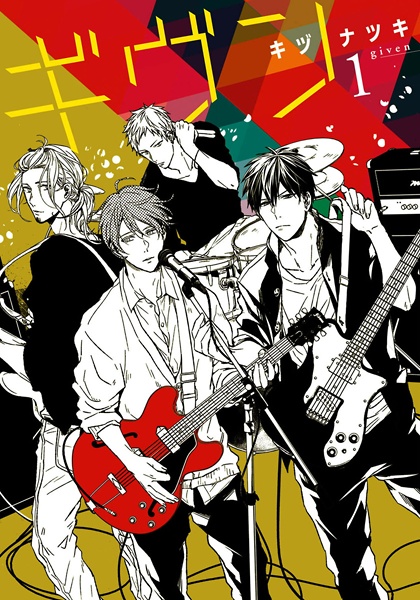
Given
- Volumes: 9
- Chapters: 58
- Published: April 30, 2013 - March 30, 2023
- Genres: Boys Love, Drama
- Themes: Music, School
- Serialization: Cheri+
- Authors: Natsuki Kizu (Story & Art)
Review: This manga occupies a unique position within the landscape of BL (Boys' Love) manga. While it wears the guise of a "youth band" story, its core is a long, healing journey centered on bereavement, survivor's guilt, and the possibility of falling in love again. For readers accustomed to sweet, fluffy romances or high-octane dramatic conflict, the series may present a challenge: it asks you to accept the reality that while those who have passed away never truly vanish, the living can still move forward.
The relationship between the primary couple, Mafuyu and Ritsuka, is overshadowed from the very beginning by the presence of Yuki—Mafuyu's late boyfriend, who died by suicide. This forms the central point of contention in this manga, as well as its most poignant, piercing element. Mafuyu clings to the guitar Yuki left behind, sings in the style Yuki taught him, and—in a climactic moment on stage—pours out all the guilt and longing he had never been able to express. Then, he kisses Ritsuka. To some readers, this emotional trajectory feels like a "whitewashing" of the past, suggesting that Ritsuka is merely a "second choice" for Mafuyu once he finally emerges from the shadow of his grief. However, another interpretation—perhaps one closer to the author's intent—is that Yuki was the person who took Mafuyu's hand when he was suffering under an abusive father; he was, in effect, family. Ritsuka, meanwhile, does something Yuki never could: he invites Mafuyu to make music with him, transforming Mafuyu from someone who needed to be "protected" into a "partner" on the same path. What Ritsuka offers is not a replacement, but a different form of love.
If the primary couple's arc is a narrative of redemption—a transition from winter to summer—the relationship between Haruki and Akihiko explores a murkier, more adult emotional landscape. Akihiko finds himself trapped in a toxic, long-term entanglement with Ugetsu, a violin prodigy, while simultaneously benefiting from the unconditional acceptance and care provided by Haruki. This narrative arc encompasses the humility of unrequited love, the ambiguous tension of living together, and a stark, realistic question: how long does it truly take for someone to move on from a relationship that has drained them? Akihiko ultimately chooses to sever his entanglements with Ugetsu, moves out of Haruki's home, and commits himself to his musical studies—only to confess his feelings to Haruki in the spring. He explains that his transformation was driven by a desire to become someone worthy of Haruki. The process is far from tidy—at times, it is even messy and drawn-out—but it is precisely this lack of neatness that gives the relationship a grounded, authentic quality.
One of the most underrated aspects of this manga is that it treats music as more than mere background dressing. Mafuyu's singing carries such profound impact precisely because he is, for the most part, unable to express himself through words. The song he performs at their first live show serves as a singular, explosive release—compressing all his guilt, rage, and lingering attachment toward Yuki into a melody. Furthermore, the recurring motif of a broken guitar string—snapping both when news of Yuki's death arrives and when Ritsuka begins to harbor doubts about Mafuyu—symbolizes the collapse of Mafuyu's inner world. Ritsuka's act of repairing the string functions as a form of support that requires no words. By using the state of the instrument to mirror the characters' psychological states, this manga integrates music into the very fabric of its storytelling, rather than using it as mere decoration.
To be candid, the art style in the early stages of this manga is not particularly polished; the lines are minimalist, and the character designs may take some getting used to. More importantly, if you have an instinctive aversion to stories where an ex-partner's presence looms too large, the experience of following the main couple might be tinged with a persistent sense of discomfort. Yet, viewed from another perspective, this is precisely what sets this manga apart from many other BL works: it refuses to erase the weight of the past in order to present a "clean" slate for a new romance. Mafuyu ultimately comes to define his past with Yuki as a "winter story" and his present with Ritsuka as a "summer story"—not as a form of forgetting, but as an act of allowing both seasons to coexist within his life.
This work is well-suited for readers who recognize that the Boys' Love (BL) genre can encompass far more than just romance—it can also hold the weight of profound loss and the subsequent process of rebuilding. If you are looking for a lighthearted, purely sweet youth romance, this story might feel a bit heavy; however, if you are open to a narrative that explores moving forward while carrying one's fractures, you will find that it leaves an impression that lingers far longer than its surface might suggest.

Dark Heaven
- Volumes: 6
- Chapters: 84
- Published: February 13, 2016 - October 28, 2017
- Genres: Boys Love, Drama, Erotica
- Theme: Music
- Serialization: Lezhin Comics Webtoon
- Authors: JUNS (Story & Art)
Review: I went into this manhwa expecting a band romance. What I got was a story that grabbed me by the throat and refused to let go for eighty-three chapters, a story that uses the BL framework not as an escape but as a lens pointed directly at the ugliest parts of the world these characters have to live in.
The first thing that hit me was the structure. The story doesn't move in a straight line. It jumps between Simon and Conor as kids, as teenagers falling into a band and into each other, and as adults who have been broken apart by something the narrative withholds for a painfully long time. That fractured timeline could have been a mess, but it works because it mirrors how trauma actually functions—you don't experience your life in order, you experience it in flashes of before and after, trying to piece together where the fracture happened. Watching these two orbit each other across years, knowing something terrible is coming, made every sweet moment ache.
Simon shattered me. He's the blond, blue-eyed white boy with the sunshine smile and the angelic stage presence, and underneath all of it is a home that has twisted him into something he never asked to become. The industry he enters doesn't save him; it exploits him, records him, uses his body as leverage. What I kept thinking about was how his love for Conor is the only thing in his life that isn't transactional. He gives everything to Conor not because he expects something back, but because Conor is the one person who ever looked at him and saw a person instead of a product or a target.
And Conor—a Korean American who grew up being bullied for his race, who found in Simon the first person who didn't make him feel like an outsider, and who then had to carry the weight of loving someone the world wanted to destroy. His fear isn't abstract. It's the fear of a man who has already been told his whole life that he doesn't belong, and who now has to decide whether loving Simon openly is worth the violence that will follow. The moment he chooses Simon anyway, despite everything, felt like the real climax of the story to me.
I have to be honest about the flaws. The ending, while satisfying in its emotional resolution, leans on a villain reveal that feels a little too neat for the messiness that came before. There's a character, Veronica, whose role in tying everything together left me feeling like the story was forcing a puzzle piece into a slot it didn't quite fit. And the middle section does get confusing—there were moments where I had to flip back to remember which timeline I was in or what a side character's relationship to the main pair actually was. But none of that diminished what the story made me feel.
What I'll carry with me is the church. The abandoned church where they built their band, their sound, their private world. That image keeps returning to me—two boys making something beautiful in a space that was supposed to be holy but had been left to rot. That's what this story is. It's not a fairy tale. It's two people deciding that their love is worth building a sanctuary for, even when the world outside keeps trying to tear it down. I closed the final chapter feeling wrecked and grateful, the way you do when something has been honest with you about how hard it is to be alive and in love and still let you have a happy ending.

Life: Senjou no Bokura
- Volumes: 1
- Chapters: 6
- Published: August 12, 2016 - January 14, 2017
- Genres: Boys Love, Drama, Erotica
- Serialization: Hanaoto
- Authors: Miya Tokokura (Story & Art)
Review: What I find particularly fascinating about this manga is how it approaches Boy's Love as something much more than a romance between two men. Rather than concentrating exclusively on the excitement of falling in love, the manga explores what happens after those initial feelings develop into a lifelong commitment. It examines the emotional difficulties of maintaining a relationship, the sacrifices that come with growing older together, and the uncertainty of building a future with someone in a society that does not always make such a relationship easy to embrace. For me, it is an emotionally affecting story about love as both a beautiful experience and a demanding responsibility.
The relationship between Yuuki Nishi and Akira Itou is the central attraction of the narrative. Their initial encounter through a peculiar game involving walking along a white line becomes the starting point of an unexpected romantic connection. What makes their relationship compelling is the contrast between their personalities and how their feelings gradually develop beyond their initial interactions. Their romance begins with youthful curiosity and attraction, but as the story progresses, their relationship becomes increasingly complicated by personal circumstances, social expectations, and the realities of adulthood.
From a Boy's Love perspective, I particularly appreciate how the manga presents its central relationship across different stages of life. Many romance stories conclude once their protagonists finally acknowledge their feelings or begin dating, but this manga takes a considerably broader approach. It explores the transition from adolescence into adulthood, allowing the characters to experience different emotional circumstances as they grow older. This structure gives their relationship a stronger sense of progression because love is not presented as a permanent state of happiness. Instead, it requires patience, understanding, compromise, and the willingness to remain together even when circumstances become difficult.
One of the strongest aspects of the manga is its exploration of identity and social acceptance. Nishi and Itou's relationship exists within a world where their romantic commitment can become difficult to reconcile with conventional expectations. I find this particularly important because the story does not treat their struggles as superficial obstacles designed merely to manufacture romantic drama. Their difficulties reflect the emotional burden of navigating a relationship that does not always receive the same recognition or understanding as heterosexual relationships. The narrative consequently gives their romance a more grounded perspective, emphasizing the importance of emotional security and having someone who genuinely accepts you.
I also appreciate how the manga explores the difference between loving someone and understanding what it means to build a life with that person. There are moments when affection alone cannot immediately resolve disagreements, insecurities, or personal conflicts. Both characters must confront their own expectations and reconsider what they want from their relationship. This makes their romantic development particularly meaningful because their commitment is tested by circumstances that cannot simply be resolved through affectionate declarations.
Another element that makes the story memorable is its emotional pacing. The progression through different periods of the protagonists' lives creates a bittersweet atmosphere, particularly when their youthful experiences are contrasted with the responsibilities and complications of adulthood. I find this approach effective because it gives even the quieter moments considerable emotional significance. Ordinary conversations, moments of reconciliation, and expressions of affection become reminders of how much their relationship has changed over time. The manga understands that some of the most meaningful romantic experiences are not necessarily dramatic but are instead found in the everyday effort of remaining connected to someone.
Nevertheless, the narrative's ambitious timespan can occasionally make certain developments feel abrupt. Moving through several important stages of the characters' lives means that some emotional situations receive less exploration than they might have benefited from. There are moments when I would have appreciated additional chapters dedicated to understanding the characters' perspectives and allowing particular conflicts to develop more naturally. However, this does not substantially undermine the overall experience, as the story's episodic progression also reinforces its central theme: life continues moving forward, regardless of whether people are emotionally prepared for the changes ahead.
Ultimately, this manga is a touching and bittersweet Boy's Love manga that offers a more mature perspective on romantic commitment. I particularly admire its willingness to follow its protagonists beyond the excitement of their first romance and examine the complicated realities of loving someone over an extended period. Nishi and Itou's relationship is not defined solely by attraction but by the challenges, compromises, and personal growth that accompany their shared experiences. For me, this is what makes the manga so memorable: it portrays love not as a perfect destination but as an ongoing journey in which two people must repeatedly choose to understand, accept, and stand beside one another.
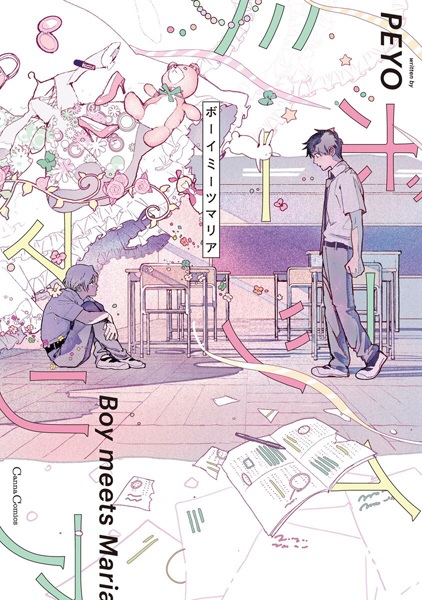
Boy Meets Maria
- Volumes: 1
- Chapters: 7
- Published: October 28, 2017 - August 28, 2018
- Genres: Boys Love, Drama
- Theme: School
- Serialization: Canna
- Authors: Kousei Eguchi (Story & Art)
Review: I came to this manga expecting a sweet crossdressing romance — and what I found instead was one of the most quietly devastating BL-adjacent stories I've ever read. PEYO doesn't write a love story so much as a story about what love costs when you don't yet know who you are.
The premise draws you in gently: Taichi Hara, a straightforward high schooler with a love for theater, meets the breathtaking "Maria" — only to discover that Maria is Arima, a boy who slips into a dress and becomes someone else entirely. In lesser hands, this would be played for comedy or titillation. Here, the crossdressing isn't a gimmick; it's armor. Arima performs femininity the way a wounded actor performs a role — beautifully, desperately, because the alternative is facing the self he can't yet name. As someone who reads BL for the emotional interiority, I was floored by how PEYO handles gender identity without ever reducing Arima to a trope. He's not "the uke in a dress." He's a person in pain, and the manga knows it.
What moved me most is Taichi's response. He doesn't "fix" Arima. He doesn't sweep in with a confession that magically heals everything. Instead he stays present — clumsy, honest, sometimes saying exactly the wrong thing — and lets Arima set the pace. In a genre where confessions often function as the finish line, this manga treats understanding as the goal and romance as something that only becomes possible afterward. That patience felt radical to me.
The art carries the emotional weight perfectly. PEYO's delicate, slightly fragile linework gives every close-up a trembling intimacy — a held hand, a swallowed sentence, the moment a wig comes off and the vulnerability underneath is laid bare. The theater setting mirrors the theme elegantly: everyone in this story is performing something, and the tragedy and hope both live in the space between the performance and the person.
Is it flawless? Not quite — it's short, and I found myself wishing for more breathing room, more time with the supporting cast, especially the threads left deliberately unresolved. But that incompleteness also feels honest. Not every wound closes on the page.
If you read BL for identity, longing, and characters who earn every step toward each other, this manga will stay with you. I closed the final page feeling like I'd watched something fragile survive — and that's more satisfying than any neat happily-ever-after.

blanc
- Volumes: 2
- Chapters: 12
- Published: February 28, 2018 - September 16, 2020
- Genres: Boys Love, Drama, Slice of Life
- Serialization: Opera
- Authors: Asumiko Nakamura (Story & Art)
Review: I went into this manga expecting the same gentle, tentative warmth that carried me through Doukyuusei and Sotsugyousei. What I got instead was a cold splash of reality that I wasn't ready for, and honestly, I'm still not sure whether I'm grateful for it or resenting it.
The series picks up with Hikaru and Rihito no longer in the comfortable bubble of high school. They're apart—Rihito at university in Kyoto, Hikaru chasing his music career—and the distance isn't just geographic. It's the slow, creeping kind of distance that happens when two people love each other but stop knowing how to say it. The volume opens with them broken up, and the casualness of that fact stung more than any dramatic fight could have. It just... happened. Life got in the way. They got tired. They stopped reaching for each other.
What I found most painful—and most honest—is how neither of them is the villain. Hikaru is trying, in his own clumsy way. Rihito is drowning in obligations and expectations, and he pulls away not because he stopped loving Hikaru but because he convinced himself that letting go is the kinder thing to do. There's a moment where Rihito's mother falls ill, and Hikaru just shows up. No grand speech. No declaration. He just visits the hospital every day for two weeks, and when Rihito finds out, something in him cracks. That's the kind of love this series understands—the unglamorous, showing-up-anyway kind.
I have to be honest about the flaws, though. There's a moment where the tonal shift is genuinely jarring—a funeral scene followed almost immediately by intimacy that feels misplaced, like the story remembered it needed a sex scene and dropped it in without considering whether the emotional context could hold it. It pulled me out of the moment. And while the series has always had a complicated relationship with the Hara-sensei subplot, it remains the one thread I consistently wish had been handled differently.
But the ending—the actual ending—left me sitting with my thoughts for a long while. It's not a fairy tale. It's two people choosing, deliberately, to keep trying even when the shape of their life together doesn't look like what they imagined. There's a scene involving a wedding cake and a quiet acknowledgment that feels like Nakamura acknowledging the limits of what these characters can have in the world they live in, while still insisting that what they do have matters. I closed the final volume feeling hollowed out and strangely hopeful at the same time. It's the kind of ache that lingers, and I think that's exactly what it was meant to do.
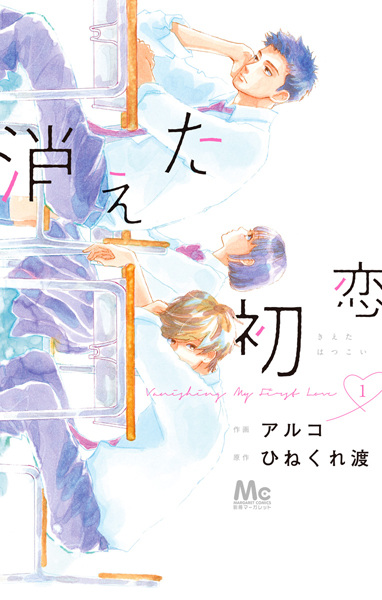
Kieta Hatsukoi
- Volumes: 9
- Chapters: 39
- Published: June 13, 2019 - June 13, 2022
- Genres: Award Winning, Boys Love, Comedy, Romance
- Theme: School
- Demographic: Shoujo
- Serialization: Bessatsu Margaret
- Authors: Aruko (Art), Wataru Hinekure (Story)
Review: I went into this manga expecting the usual BL misunderstanding song and dance, the kind that drags on for volumes until you want to scream at the pages. What I found instead was a story that uses its central mix-up not as a cheap plot device, but as the gentlest possible doorway into two boys figuring out what they mean to each other. It's soft in a way that feels almost radical.
The premise is simple: Aoki borrows an eraser from his crush Hashimoto and sees another boy's name written on it—Ida's. When the eraser falls and Ida picks it up, he assumes the name and the feelings belong to Aoki. Rather than out Hashimoto, Aoki lets the misunderstanding stand. What struck me is how Ida responds. He doesn't recoil. He doesn't mock. He asks if they can be friends first, so he can think about it seriously. That single choice sets the tone for everything that follows. This isn't a story about cruelty or games. It's a story about two people who are fundamentally kind to each other, even when they're confused.
Aoki is a mess in the most endearing way. His face does approximately forty-seven things per panel, and the art leans into it with absolute commitment—the exaggerated expressions, the flailing, the internal screaming made visible. But underneath the comedy is a kid who is genuinely terrified of his own feelings, who has no roadmap for what it means to like a boy, and who keeps accidentally saying things like "if you died, I couldn't go on living" without realizing how devastating that sounds. I found myself laughing and then abruptly not laughing, because the vulnerability underneath the joke is real.
And Ida—Ida is the one who surprised me most. He's stoic, serious, the kind of character who could easily become a brick wall in less careful hands. But he's not. He takes Aoki's feelings seriously to a degree that borders on absurd, and his sincerity becomes its own kind of comedy. When he finally says "let's try dating" not because he's sure of his feelings but because he's been so moved by Aoki's honesty, it feels earned. His journey isn't about sudden realization. It's about slowly noticing that the person in front of him matters, and deciding that's enough to explore.
What I appreciated most is how the story handles its queer elements. The word "gay" is never treated as a punchline or a crisis. There's a brief arc involving a homophobic teacher that lands with a surprising weight for a comedy, showing that even soft stories can acknowledge the world outside. But the core of the manga is two boys navigating first love with the same awkwardness and sincerity as any straight couple in a shoujo romance. That shouldn't feel revolutionary, but it does.
My one frustration is the pacing. Once the main couple gets together, some of the tension dissipates, and there were moments where I found myself more invested in the side characters—Hashimoto and Akkun have a genuinely delightful slow-burn that almost steals the show. But that's a minor complaint for a series that made me grin through almost every chapter.
I closed the final volume feeling lighter than I expected. This isn't a story that will wreck you or make you think deeply about trauma. It's a story about two boys who like each other, who are clumsy and honest and kind, and who get to be happy. Sometimes that's exactly what I need.
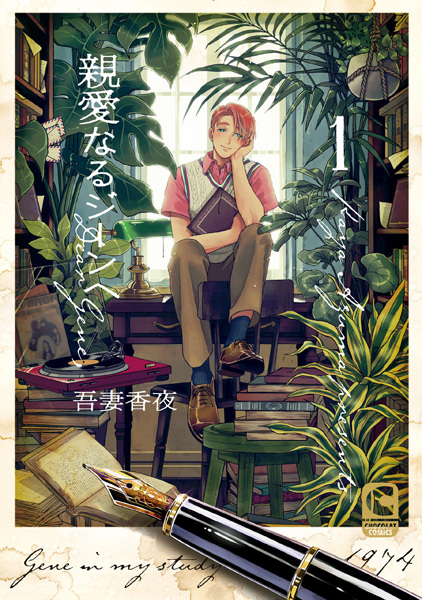
Shinai naru Gene e
- Volumes: 2
- Chapters: 11
- Published: August 31, 2019 - June 30, 2022
- Genres: Boys Love, Drama, Erotica
- Theme: Historical
- Serialization: fRag
- Authors: Kaya Azuma (Story & Art)
Review: I picked up this manga because I loved Rumspringa no Joukei and wanted more of Kaya Azuma's particular brand of quiet, aching storytelling. What I found was something that felt less like a sequel and more like a faded photograph you discover in someone else's drawer—a love story told entirely in retrospect, with all the tenderness and regret that implies.
The framing device is what got me first. A teenager named Gene spends a summer at his uncle Trevor's New York apartment in 1992 and stumbles across a diary. Inside is the story of Trevor's relationship with a homeless former Amish man, also named Gene, nearly two decades earlier. From the very first page, I knew something had gone wrong. The present-day Trevor is alone. The diary exists because the past needed to be preserved. I spent the entire first volume waiting for the other shoe to drop, and Azuma makes you feel that dread in every panel.
Trevor broke my heart in ways I didn't expect. He's a successful lawyer, but there's a fundamental loneliness to him—a man who has convinced himself he's an outsider in every space he occupies, even the family that adopted him. When Gene (the elder) enters his life by returning lost documents, Trevor offers him a place to stay out of a mixture of gratitude and something he can't quite name. Watching Trevor slowly, cautiously allow himself to want something for himself was painful in the best way. He's so gentle, so used to putting others first, that his own happiness feels like an imposition.
And Gene—the Amish runaway who knows nothing of the modern world, who looks at Trevor's life with wide-eyed wonder and an aching desire for something more than the life he was born into. His ambition isn't selfish; it's the natural reaching of someone who has been denied the chance to become who he is. When he eventually leaves for Canada to study, the separation doesn't feel like betrayal. It feels like inevitability. Two people who love each other, pulled apart not by cruelty or misunderstanding, but by the simple fact that they are still becoming themselves.
The art is exactly what I wanted from Azuma—soft, expressive, with a particular talent for aging characters convincingly. The 1990s Trevor is visibly the same man as the 1970s Trevor, just with more weight in his eyes. The nostalgia is thick enough to taste, but it never becomes saccharine. There's a realism to the 1970s New York setting, to the way Trevor's sexuality is handled as a quiet, unspoken thing, that keeps the story grounded.
My one real complaint is the ending. Or rather, the lack of one. Some readers found the conclusion too ambiguous, too open, wishing for something more explicitly emotional. I understand that impulse—I wanted it too. But the more I sat with it, the more I felt that the unresolved quality was honest. This isn't a story about two people who get a clean, happy resolution. It's a story about a love that existed, that mattered, and that left its mark on both people even after they parted. The young Gene reading the diary in 1992 is the proof that it mattered. The fact that he exists, that he's reading these words, is the only closure the story needs.
I closed the second volume feeling hollowed out and grateful. This is not a comfort read. It's a memory of a comfort read, which is a different and more lasting thing.


Comments
Post a Comment