Action Manga of the Early 2000s (2000–2005)
The 2000s were a golden era for action manga and manhwa—an age of explosive battles, unforgettable rivalries, and stories that pushed the boundaries of imagination. From fiery tournaments to supernatural duels, these series didn’t just entertain; they defined a generation of readers who grew up on adrenaline-fueled panels and cliffhanger chapters. Now that many of these titles have reached their conclusion, they stand as completed legacies—ready to be revisited, rediscovered, and celebrated.
In this blog, we’ll dive into the standout action series of the 2000s that have wrapped up their journeys, exploring what made them iconic and why they still resonate today. Whether you’re a longtime fan or a newcomer curious about the classics, this is your gateway into the completed chronicles of action storytelling from that unforgettable decade.
Here is the list of Manga/Manhwa that cover action:
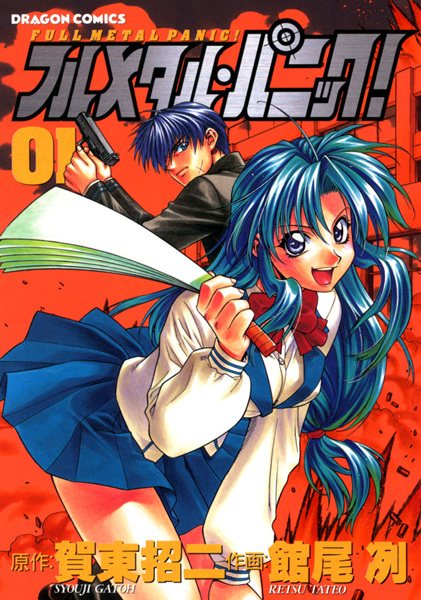
Full Metal Panic!
- Volumes: 9
- Chapters: 58
- Published: January 9, 2000 - March 9, 2005
- Genres: Action, Comedy, Romance
- Themes: Mecha, Military
- Demographic: Shounen
- Serialization: Dragon Age
- Authors: Retsu Tateo (Art), Shouji Gatou (Story)
Review: Reading this manga feels like jumping straight into a battlefield where explosions, military conspiracies, and high-tech weapons are just another Tuesday. I absolutely love how this manga combines intense mecha action with a protagonist whose combat skills are ridiculously impressive, but whose understanding of ordinary civilian life is practically nonexistent. It's such a chaotic combination, and honestly, that's what makes the story so entertaining.
What immediately caught my attention was Sousuke Sagara. He's a highly trained soldier who approaches almost every situation like a military operation. Whether he's dealing with armed enemies or something as harmless as everyday school activities, his instincts always push him toward the most extreme solution. I find his character genuinely entertaining because he's not your typical action hero. He's disciplined, serious, and incredibly capable in combat, but his lack of social awareness creates some hilarious situations. Watching someone so experienced in warfare struggle with normal teenage life is comedy gold.
From an action perspective, the manga delivers some seriously exciting moments. The military operations, firefights, and Arm Slave battles give the story a strong sense of intensity. I particularly enjoy how the mecha combat isn't simply about giant robots smashing into each other. There's a tactical element involving weapons, positioning, strategy, and battlefield awareness. The fights feel more engaging because victory isn't always determined by raw firepower. Sousuke's military experience plays a huge role in how he approaches every confrontation.
I also appreciate the introduction of the Whispered and the technological mysteries surrounding them. These elements add another layer to the narrative, making the conflict feel much bigger than a straightforward military action story. The combination of espionage, advanced technology, and international tensions gives the manga an interesting foundation. It keeps me curious about the larger world and the forces operating behind the scenes.
Another thing I genuinely enjoy is the contrast between its serious military storyline and its lighter character interactions. The humor doesn't completely undermine the action; instead, it gives the characters room to breathe between dangerous missions. Kaname Chidori also provides an interesting contrast to Sousuke's personality, especially when his military mindset clashes with her ordinary school life. Their interactions add personality to a story that could otherwise become overwhelmingly focused on combat.
Of course, I wouldn't say everything is perfect. Some developments can feel a little rushed, and the transitions between comedy and serious military drama might take some adjustment. Certain supporting characters could also use more development to make their involvement in the larger conflict feel more meaningful. Still, these weaknesses don't take away too much from the overall experience.
What I Love:
- Sousuke's badass military skills and hilariously poor understanding of civilian life.
- Tactical Arm Slave battles that make the mecha action exciting.
- A compelling mixture of military operations, espionage, and science fiction.
- The chemistry between Sousuke and Kaname.
- A balance of explosive action, comedy, and character-driven storytelling.
What Could Be Better:
- Some story developments could benefit from more breathing room.
- The tonal shifts between comedy and serious action aren't always perfectly balanced.
- Certain supporting characters deserve more attention and development.
Final Thoughts:
For me, this is a seriously entertaining combination of military science fiction and mecha action. I came for the giant robots, dangerous missions, and explosive confrontations, but I ended up enjoying Sousuke's ridiculous personality and the character dynamics just as much. Its greatest strength is how it makes military action feel exciting without forgetting that its characters have personalities beyond the battlefield.
If there's one thing this manga proves, it's that being an elite soldier doesn't automatically make someone qualified to survive high school. I love that contrast. It's chaotic, action-packed, occasionally hilarious, and absolutely worth checking out if you're into mecha, military adventures, and science-fiction stories with a strong personality.
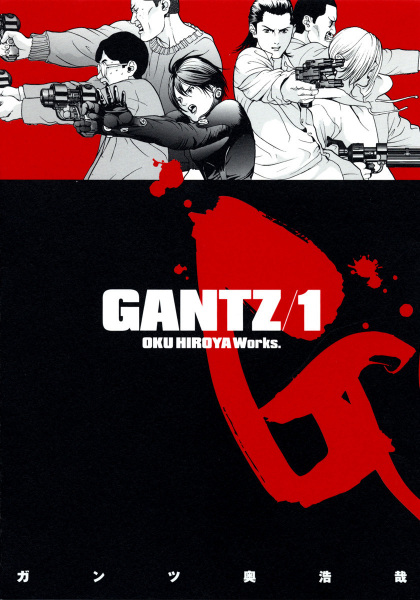
Gantz
- Volumes: 37
- Chapters: 383
- Published: July 13, 2000 - June 20, 2013
- Genres: Action, Drama, Horror, Sci-Fi, Supernatural
- Themes: Gore, High Stakes Game, Psychological, Survival
- Demographic: Seinen
- Serialization: Young Jump
- Authors: Hiroya Oku (Story & Art)
Review: I find this manga to be an exceptionally intense and brutal action manga that pushes the boundaries of science fiction, survival horror, and supernatural combat. Created by Hiroya Oku, the series follows Kei Kurono and Masaru Kato, two young men who die in a railway accident but unexpectedly find themselves participating in a mysterious game orchestrated by a strange black sphere called Gantz. Forced to hunt dangerous extraterrestrial creatures, the participants must fight for survival in an environment where death can arrive without warning. I find this premise particularly compelling because it transforms ordinary people into unwilling soldiers trapped in an increasingly disturbing battle for existence.
From an action perspective, Kei Kurono is an interesting protagonist because his development is closely connected to the violence surrounding him. Initially selfish, immature, and primarily concerned with his own survival, Kei gradually becomes more capable of handling dangerous missions. His experiences force him to confront fear, responsibility, and the consequences of his decisions. I appreciate how his transformation does not happen overnight, making his progression feel connected to the increasingly difficult challenges he encounters.
The combat sequences are undoubtedly among the manga's greatest strengths. Gantz provides its participants with advanced weapons, specialized suits, and equipment that allow them to confront creatures far stronger than ordinary humans. The combination of futuristic technology and grotesque extraterrestrial enemies creates spectacular confrontations. I particularly enjoy the unpredictability of these encounters because the characters rarely have complete information about their targets. Even seemingly manageable missions can quickly become catastrophic when an enemy reveals an unexpected ability.
Another element I appreciate is the variety of opponents. The extraterrestrial creatures range from bizarre and almost comical beings to genuinely terrifying monsters capable of overwhelming entire groups. This diversity prevents the action from becoming repetitive and constantly challenges the participants to reconsider their strategies. The increasingly dangerous missions also establish a clear escalation in scale, eventually transforming the story from a mysterious survival game into something much larger.
I also find the group dynamics particularly effective. The participants come from different backgrounds and possess conflicting personalities, motivations, and moral values. Some prioritize cooperation, while others focus entirely on personal survival. These differences create tension within the team and make every mission psychologically demanding. I especially appreciate how the manga explores the importance of teamwork when individual strength is rarely sufficient to overcome overwhelming enemies.
Hiroya Oku's artwork deserves considerable recognition as well. The detailed character designs, mechanical equipment, futuristic environments, and disturbing creature illustrations give the action a remarkable visual intensity. The use of digital backgrounds and cinematic compositions makes many confrontations feel enormous in scale. I find the graphic violence particularly effective in communicating the consequences of failure, although its extreme brutality will certainly not appeal to everyone.
However, I recognize that this manga has several weaknesses. Its excessive graphic violence, sexual content, and occasional exploitation of female characters can become distracting. Some character motivations also feel inconsistent, while the narrative occasionally becomes unnecessarily complicated as the scale of the conflict expands. Nevertheless, these shortcomings do not completely overshadow its ambitious action sequences and imaginative science-fiction concepts.
Overall, this is a remarkable action manga that combines extraterrestrial warfare, futuristic weaponry, survival challenges, and psychological tension into an unforgettable experience. I admire how Hiroya Oku consistently raises the stakes, forcing the characters to confront increasingly terrifying enemies and morally complicated situations. Its spectacular combat, unpredictable encounters, and uncompromising portrayal of violence make it particularly memorable. For me, this manga demonstrates how an action manga can become much more than a collection of exciting battles by exploring the psychological and emotional consequences of fighting simply to stay alive.
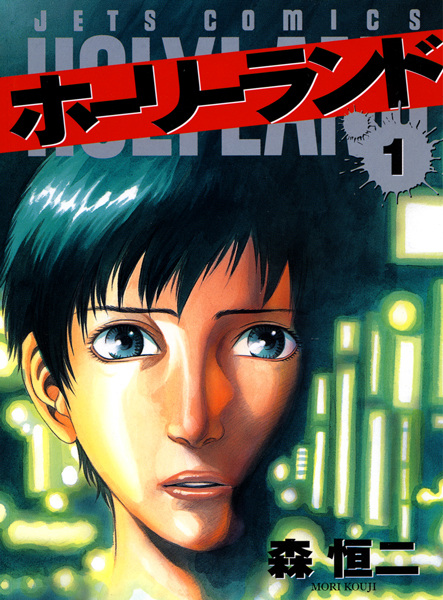
Holyland
- Volumes: 18
- Chapters: 182
- Published: October 13, 2000 - May 23, 2008
- Genre: Action
- Themes: Delinquents, Martial Arts, Psychological
- Demographic: Seinen
- Serialization: Young Animal
- Authors: Kouji Mori (Story & Art)
Review: I came to this manga expecting a martial arts story, and that's what I got—but it's a martial arts story that cares far more about why someone fights than about how. The premise is simple: Yuu Kamishiro, a bullied teenager who has withdrawn from the world, finds purpose in street fighting and begins a journey through the nightlife of Tokyo's back alleys. From an action perspective, the series is defined by its commitment to realism, its refusal to glamorize violence, and its understanding that a fight is not a spectacle but a crisis.
The first thing I noticed is how grounded the combat is. Yuu is not a prodigy; he is a kid who gets beaten up repeatedly before he learns to fight back. The series tracks his development with a meticulousness that I found both rewarding and exhausting. Every punch he throws is earned through training, every technique he learns is practiced until it becomes instinct, and every fight he wins is the result of preparation rather than talent. The action sequences reflect this. Fights are not choreographed exchanges of elaborate techniques but messy, desperate struggles. Yuu uses basic boxing, wrestling, and street fighting tactics, and the series is careful to show the limitations of each. He gets tired, he gets hurt, and he makes mistakes. The action is not about superiority but about survival.
What struck me most is how the series uses fighting as a metaphor for mental health. Yuu's journey is not merely about becoming stronger but about finding a reason to live. The fights are not the point; they are the means by which Yuu learns to value himself. The series' most effective action sequences are those in which Yuu is forced to confront not an opponent but his own fear, his own self-loathing, and his own desire to give up. There is a sequence in which he fights a man who is stronger, faster, and more experienced than he is, and the outcome is not a victory but a realization that surviving is enough. I found myself moved by these sequences in ways I did not expect, and the series' willingness to let its protagonist lose—truly lose, not merely suffer a setback—is what makes its moments of triumph feel earned.
The supporting cast provides the series with its most varied action scenarios. The various fighters Yuu encounters are not merely obstacles but people with their own reasons for fighting, and the series is careful to give them context. Some fight for money, some for status, some for the sheer pleasure of violence, and the action sequences are designed to reveal character as much as they are to entertain. The series' willingness to let its antagonists be sympathetic is also notable; the people Yuu fights are not villains but people who have made different choices, and the action sequences are structured to explore those choices rather than merely condemn them.
Visually, the art is rough and expressive, with an emphasis on impact and emotion. The action sequences are not polished or elegant but messy and chaotic, and the series' use of shadow and framing gives the violence a visceral weight. The art's limitations are most apparent in the quieter moments, where the series' reliance on dialogue and exposition can slow the pacing, but the action sequences are consistently well-executed. The series' use of close-ups and reaction shots is particularly effective in conveying the psychological toll of fighting, and the art's simplicity makes the moments of violence feel more intimate and more consequential.
The series' structural weakness is its pacing. This is a long manga, and its narrative meanders, with extended training sequences and philosophical digressions that can make the action feel episodic rather than cumulative. The series' tone is also inconsistent; it oscillates between brutal realism and genuine sentimentality, and the action sequences sometimes suffer when the sentimentality undercuts the stakes.
This is a work that understands that the most effective action is that which is rooted in character. Its fights are not merely spectacle but demonstrations of growth, and the series' willingness to let its protagonist struggle and fail makes the moments of victory feel earned. For readers seeking a martial arts story that treats violence with the seriousness it deserves, it offers a consistently rewarding experience.

Kamen Rider Spirits
- Volumes: 16
- Chapters: 96
- Published: November 25, 2000 - January 26, 2009
- Genres: Action, Adventure, Horror, Sci-Fi
- Demographic: Seinen
- Serialization: Magazine-Z
- Authors: Shoutarou Ishinomori (Story), Kenichi Muraeda (Art)
Review: Reading this manga feels like witnessing the return of everything I love about classic superhero action. It's packed with masked heroes, terrifying monsters, secret organizations, and battles that carry the unmistakable spirit of old-school tokusatsu. What makes this manga particularly exciting for me is how it takes the legacy of Kamen Rider and transforms it into a much bigger, more intense adventure. This isn't just about fighting monsters of the week; it's about heroes standing against overwhelming evil, even when the odds are ridiculously stacked against them.
One of my favorite aspects is how the story brings multiple Kamen Riders into the spotlight. Each Rider has a distinct personality, fighting style, and sense of justice, which makes their individual appearances feel meaningful. I especially enjoy how the manga celebrates their legacy without making them feel like interchangeable superheroes. They're experienced warriors with their own struggles, motivations, and reasons to keep fighting. Seeing these legendary heroes unite against a common enemy is genuinely satisfying.
From an action perspective, this manga absolutely delivers. The fight sequences have a fantastic sense of impact, with powerful kicks, brutal punches, dramatic finishing moves, and enemies that look genuinely intimidating. I love how the artwork captures the physical intensity of every confrontation. The battles aren't simply flashy spectacles; they communicate the determination and desperation of heroes fighting against forces that threaten humanity. Every encounter feels like a test of strength, endurance, and courage.
The enemies are another major highlight. The mysterious organization and its monstrous creations provide a constant sense of danger. I appreciate that the antagonists aren't treated as disposable obstacles. Their designs, abilities, and connections to the larger conspiracy help make the conflict feel much more substantial. The darker atmosphere also gives the story a stronger edge, reminding me that being a Kamen Rider means facing sacrifices and responsibilities that ordinary people could never fully understand.
What I particularly appreciate is the manga's respect for the franchise's history. It embraces the classic Kamen Rider formula while expanding its mythology through a more interconnected narrative. The nostalgia is definitely there, but it doesn't rely entirely on familiar faces to carry the experience. There's enough new conflict, mystery, and character development to make the adventure exciting in its own right.
Of course, the storytelling can occasionally feel overwhelming. With multiple Riders, enemies, and interconnected storylines competing for attention, certain developments might require patience. Some character moments could also benefit from additional breathing room. However, I find that the ambitious scale is part of what makes the manga so interesting.
What I Love:
- Multiple Kamen Riders with distinctive personalities and fighting styles.
- Intense hand-to-hand combat and spectacular finishing attacks.
- Fantastic monster designs and threatening antagonists.
- A darker atmosphere that gives the battles genuine stakes.
- Strong appreciation for classic Kamen Rider mythology and legacy.
- Artwork that captures the energy and brutality of tokusatsu-inspired action.
What Could Be Better:
- Multiple storylines can occasionally make the narrative difficult to follow.
- Some character developments deserve more attention.
- Certain transitions between major conflicts could use better pacing.
Final Thoughts:
For me, this is a love letter to the legendary masked heroes who built the foundation of Japanese superhero entertainment. Its greatest strength is how it combines nostalgia with large-scale action, giving these iconic Riders another opportunity to demonstrate why their legacy continues to matter. I love the explosive battles, the intimidating enemies, and especially the idea that even when confronted by seemingly unstoppable evil, these heroes refuse to surrender.
It's the kind of manga that reminds me why I fell in love with superhero stories in the first place. No complicated gimmicks needed: just courage, determination, incredible finishing moves, and heroes willing to put everything on the line. Henshin!

Dorohedoro
- Volumes: 23
- Chapters: 190
- Published: November 30, 2000 - September 12, 2018
- Genres: Action, Comedy, Fantasy, Horror
- Theme: Gore
- Demographic: Seinen
- Serialization: Gessan
- Authors: Q Hayashida (Story & Art)
Review: I'll admit it took me a while to find my footing with this manga. The world is grimy, the rules are strange, and the action is unlike anything I'd encountered before—less about clean strikes and more about the messy, improvisational violence of people who are genuinely trying to kill each other. Once I settled into its rhythm, though, I found an action series that rewards patience with some of the most inventive and unpredictable fight sequences I've ever read.
The first thing that struck me is how the series treats violence as a fact of life rather than a spectacle. The residents of Hole live in a world where magic users from the other dimension routinely use them as test subjects, and the result is a society in which brutality is normalized. The action sequences reflect this. Fights are not climactic events but everyday occurrences, and the series' characters engage in them with a casualness that makes the violence feel both more real and more disturbing. Caiman's quest to find the sorcerer who transformed his head is driven by a personal need, but the fights he gets into along the way are often incidental—he is attacked, he defends himself, he moves on. The action is not structured around a grand narrative but around the messy reality of living in a dangerous world.
What I found most engaging is the series' use of magic as an action element. The sorcerers' abilities are varied and unpredictable, and the action sequences are designed to showcase the creative applications of their powers. A fight might involve a sorcerer who can manipulate smoke, another who can turn objects into explosives, and a third whose ability is so strange that it takes several panels to understand what is happening. The series does not explain these abilities in advance but reveals them through their use, and the action sequences are structured to keep the reader guessing. I found myself re-reading panels to make sure I understood what had just happened, and the series' willingness to trust its readers to keep up is refreshing.
Caiman's fighting style is the series' other major action asset. He is not a martial artist but a brawler, and his fights are characterized by a brute-force approach that is both effective and comical. His immunity to magic gives him an advantage against sorcerers, but it does not make him invincible, and the series is careful to keep his fights challenging. The action sequences are often brutal, with Caiman taking as much damage as he deals, and the series' use of injury is notable; characters accumulate scars and wounds that persist across chapters, and the toll of fighting is visible in their bodies.
The supporting cast provides the series with its most varied action scenarios. Nikaido's ability to manipulate time is used in combat with a resourcefulness that makes her one of the series' most entertaining fighters, while Shin and Noi's partnership is the source of some of the series' most effective action sequences. The En family, the series' central antagonists, are not merely villains but a dysfunctional family whose internal dynamics are as important as their fights, and the action sequences involving them are structured to reveal character as much as they are to entertain.
Visually, the art is detailed and grotesque. The world of Hole is rendered with an attention to grime and decay that makes the action feel grounded in a physical reality, and the character designs are distinctive without being exaggerated. The action sequences are not always easy to follow—the series' use of paneling can be chaotic—but the chaos suits the tone, and the fights feel appropriately messy. The art's evolution over the series' run is noticeable; the earlier chapters are rougher, while the later chapters demonstrate a confidence and precision that make the action sequences more impactful.
The series' structural weakness is its pacing. This is a long manga, and its narrative meanders, with extended digressions and subplots that can make the action feel episodic rather than cumulative. The series' tone is also inconsistent; it oscillates between dark comedy and genuine horror, and the action sequences sometimes suffer when the comedy undercuts the stakes.
This manga is a work that understands that the most interesting action is that which feels unpredictable. Its fights are chaotic, creative, and often surprising, and its willingness to let its characters be messy and flawed makes the action feel more consequential. For readers willing to invest in its strange world and its patient pacing, it offers a consistently rewarding experience.

Konjiki no Gash!!
- Volumes: 33
- Chapters: 323
- Published: January 10, 2001 - December 26, 2007
- Genres: Action, Adventure, Award Winning, Comedy, Supernatural
- Demographic: Shounen
- Serialization: Shounen Sunday
- Authors: Makoto Raiku (Story & Art)
Review: I came to this manga expecting a children's manga about a cute demon child and his reluctant human partner, and that's what I got—but I was not prepared for how seriously the series takes its action. The premise is straightforward: Gash Bell, a young demon transported to the human world to compete in a tournament to become king, is partnered with Kiyomaro Takamine, a brilliant but cynical middle schooler who serves as his "bookkeeper" and spell-caster. Together, they fight other demon-human pairs in battles that are as much about trust and growth as they are about power. From an action perspective, the series is a masterclass in escalation, and its willingness to let its characters grow and change over the course of its long run is what makes its fights so compelling.
The first thing I noticed is how the series structures its combat. The demon tournament provides a clear framework: pairs of demons and humans compete, each demon possessing unique abilities that are unlocked through their bookkeeper's spells. This system gives the action a strategic dimension that I found surprisingly engaging. Kiyomaro is not a fighter; he is a strategist, and his role in battle is to read the opponent, identify weaknesses, and cast the right spell at the right time. The action sequences are designed to showcase this partnership, and the best fights are those in which Kiyomaro's intelligence and Gash's determination combine to overcome opponents who are objectively stronger. I found myself invested in these battles not because of their spectacle but because of the teamwork they represented.
What struck me most is how the series uses action to explore its themes of friendship and growth. Gash is not a natural fighter; he is naive, impulsive, and frequently overwhelmed by opponents who are more experienced than he is. His growth over the course of the series is tracked through his battles, and the action sequences are designed to show his development from a child who fights on instinct to a warrior who fights with purpose. The series' most effective action sequences are those in which Gash is forced to confront his own limitations and overcome them through sheer determination. There is a sequence in which he fights an opponent who has defeated him before, and the outcome is not a victory of strength but of will. I found myself genuinely moved by these sequences, not because they were spectacular but because they were meaningful.
The supporting cast provides the series with its most varied action scenarios. The various demon-human pairs that Gash and Kiyomaro encounter are not merely obstacles but characters with their own motivations and their own fighting styles. The series is careful to give each pair a distinct identity, and the action sequences are structured to showcase their unique abilities. The series' willingness to let its antagonists be sympathetic is also notable; many of the demons Gash fights are not villains but competitors who have their own reasons for fighting, and the action sequences are designed to explore those reasons rather than merely condemn them.
Visually, the art is expressive and dynamic. The action sequences are rendered with a clarity that makes the fights easy to follow, and the series' use of exaggerated expressions and reaction shots adds to both the comedy and the drama. The art's evolution over the series' long run is noticeable; the earlier chapters are rougher, while the later chapters demonstrate a confidence and polish that make the action sequences more impactful. The series' use of paneling is particularly effective in fight scenes, with the layout often mirroring the flow of combat and the shifting positions of the combatants.
The series' structural weakness is its pacing. This is a long manga, and its narrative meanders, with extended training sequences and slice-of-life chapters that can make the action feel episodic rather than cumulative. The series' tone is also inconsistent; it oscillates between comedy and genuine drama, and the action sequences sometimes suffer when the comedy undercuts the stakes.
This is a work that understands that the most effective action is that which is rooted in character. Its fights are not merely spectacle but demonstrations of growth, and the series' willingness to let its protagonists struggle and fail makes the moments of victory feel earned. For readers seeking a series that combines heartfelt character development with genuinely effective action, it offers a consistently rewarding experience.

Shin Angyo Onshi
- Volumes: 17
- Chapters: 76
- Published: March 19, 2001 - August 18, 2007
- Genres: Action, Adventure, Drama, Fantasy, Supernatural
- Theme: Historical
- Demographic: Seinen
- Serialization: Sunday Gene-X
- Authors: In-Wan Yoon (Story), Kyung-il Yang (Art)
Review: I came to this manga expecting a historical fantasy, something along the lines of a Korean-flavored Blade of the Immortal with political intrigue and supernatural elements. What I did not expect was how relentlessly brutal and visually stunning its action would be—how much the series would commit to the physicality of combat, and how effectively it would use violence to explore its themes of corruption, revenge, and the impossibility of justice in a fallen world.
The first thing I noticed is how cinematic the action is. Youn In-Wan and Yang Kyung-Il's manhwa, serialized from 2001 to 2007, is drawn with an attention to composition and motion that makes its fight sequences feel like they were storyboarded for a film. The series' protagonist, Munsu, is an Angyo Onshi—a government agent whose role is to root out corruption and punish the wicked—and his fighting style reflects his experience as a former soldier. He wields a sword with a precision and economy that is both elegant and terrifying, and the action sequences are choreographed to showcase his skill without making him invincible. He gets hurt, he gets tired, and he makes mistakes, and the series' willingness to let him be vulnerable is what makes his victories feel earned.
What struck me most is how the series uses action to explore its themes of power and corruption. The world of this manga is one in which the powerful prey on the weak, and the action sequences are designed to dramatize this dynamic. Munsu's fights are not merely battles against opponents but confrontations with the systems that enable them, and the series' willingness to let him be brutal—to let him kill without hesitation when the situation demands it—is what makes its action so effective. There is a sequence in which Munsu confronts a corrupt official who has been exploiting his position to terrorize a village, and the outcome is not a clean victory but a messy, morally ambiguous act of violence. The series does not let the reader feel comfortable with the violence; it forces the reader to confront its consequences.
The supporting cast provides the series with its most varied action scenarios. Sando, the mysterious woman who accompanies Munsu, is a capable fighter in her own right, and her battles are rendered with a ferocity that contrasts with Munsu's more controlled approach. The various monsters and supernatural entities that the pair encounter are not merely obstacles but characters with their own motivations and abilities, and the action sequences are structured to showcase their unique powers. The series' willingness to let its antagonists be genuinely threatening is also notable; the action sequences are designed to make the reader feel the danger, and the outcomes of these sequences are often tragic rather than triumphant.
Visually, the art is stunning. Yang Kyung-Il's linework is detailed and expressive, and the action sequences are rendered with a clarity and precision that make them easy to follow despite their complexity. The series' use of perspective and framing is particularly effective in conveying the scale of the combat, and the art's evolution over the series' run is noticeable; the earlier chapters are rougher, while the later chapters demonstrate a confidence and polish that make the action sequences more impactful. The series' use of darkness and shadow is also notable; the night scenes are rendered with a depth that makes the violence feel more intimate and more terrifying.
The series' structural weakness is its pacing. This is a long manhwa, and its narrative meanders, with extended philosophical digressions and political intrigue that can make the action feel episodic rather than cumulative. The series' tone is also inconsistent; it oscillates between brutal realism and genuine sentimentality, and the action sequences sometimes suffer when the philosophical elements undercut the stakes.
This is a work that understands that the most effective action is that which is rooted in consequence. Its fights are not merely spectacle but demonstrations of the cost of power, and the series' willingness to let its protagonist be brutal makes the moments of violence feel consequential. For readers seeking a historical fantasy that treats action with the seriousness it deserves, it offers a consistently rewarding experience.

Claymore
- Volumes: 27
- Chapters: 159
- Published: June 6, 2001 - October 4, 2014
- Genres: Action, Adventure, Fantasy, Horror
- Theme: Gore
- Demographic: Shounen
- Serialization: Jump SQ.
- Authors: Norihiro Yagi (Story & Art)
Review: I came to this manga expecting a dark fantasy about warrior women fighting monsters, and that's what I got—but I was not prepared for how the series would use action to explore themes of identity, sacrifice, and the cost of becoming a weapon. Noriko Yagi's manga, serialized from 2001 to 2014, follows Clare, a silver-haired warrior of the Organization, as she hunts Yoma—shapeshifting monsters that prey on humans—and seeks revenge for the death of the woman who saved her. From an action perspective, the series is defined by its precision, its willingness to let its protagonists be monstrous, and its understanding that the most effective combat is that which reveals the cost of victory.
The first thing I noticed is how the series constructs its combat system. Claymores are ranked by power, and their abilities are defined by the yoki—the demonic energy—that they channel through their bodies. This system provides a clear framework for the action, but Yagi is careful to let it evolve. Clare begins as the weakest of her generation, and her growth is tracked through a series of increasingly difficult battles. The action sequences are designed to showcase her development, and the series is careful to show the limitations of her abilities—the risk of awakening, the toll on her body, the psychological cost of channeling more yoki than she can control. The action is not merely spectacle but consequence, and the series' willingness to let Clare be vulnerable is what makes her victories feel earned.
What struck me most is how the series uses action to explore its themes of identity and transformation. The Claymores are not merely warriors but women who have been transformed into something not quite human, and the action sequences are designed to dramatize this transformation. The risk of awakening—of losing oneself to the yoki and becoming the very monsters one hunts—is a constant presence in the fights, and the series' most effective sequences are those in which Clare must confront the possibility that she is becoming what she fears. The action is not merely spectacle but character, and Yagi's willingness to let her protagonist be monstrous is what distinguishes the series from its peers.
The supporting cast provides the series with its most varied action scenarios. The various Claymores that Clare encounters—Miria, Helen, Deneve, and the others—are not merely allies but characters with their own fighting styles and their own relationships to their powers. The action sequences are structured to showcase their unique abilities, and the series' willingness to let its characters die is notable; the action sequences are designed to make the reader feel the danger, and the deaths of major characters are handled with a seriousness that makes the violence feel real. The series' use of teamwork is also effective; the fights are not solo showcases but coordinated efforts, and the contrast between the Claymores' individual abilities and their collective strength is a source of both tension and drama.
Visually, the art is elegant and expressive. The action sequences are rendered with a clarity that makes the fights easy to follow, and Yagi's use of flow and motion is particularly effective in conveying the speed and grace of the Claymores' movements. The art's evolution over the series' long run is noticeable; the earlier chapters are rougher, while the later chapters demonstrate a confidence and polish that make the action sequences more impactful. The series' use of paneling is particularly effective in fight scenes, with the layout often mirroring the flow of combat and the shifting positions of the combatants.
The series' structural weakness is its pacing. This is a long manga, and its narrative meanders, with extended training sequences and philosophical digressions that can make the action feel episodic rather than cumulative. The series' tone is also inconsistent; it oscillates between brutal realism and genuine sentimentality, and the action sequences sometimes suffer when the philosophical elements undercut the stakes. The ending, in particular, is rushed, and the series' final arc feels less developed than the arcs that preceded it.
This is a work that understands that the most effective action is that which is rooted in consequence. Its fights are not merely spectacle but demonstrations of the cost of power, and the series' willingness to let its protagonists be monstrous makes the moments of victory feel earned. For readers seeking a dark fantasy that treats action with the seriousness it deserves, it offers a consistently rewarding experience.
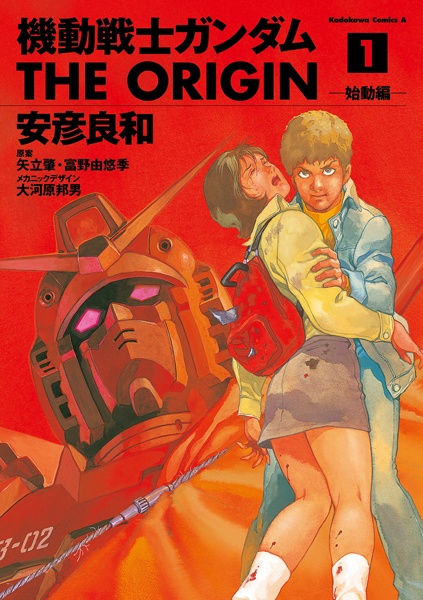
Kidou Senshi Gundam: The Origin
- Volumes: 24
- Chapters: 112
- Published: June 25, 2001 - June 26, 2014
- Genres: Action, Award Winning, Drama, Sci-Fi
- Themes: Mecha, Military, Space
- Demographic: Shounen
- Serialization: Gundam Ace
- Authors: Yoshikazu Yasuhiko (Story & Art), Yoshiyuki Tomino (Story)
Review: I came to this manga knowing the anime, knowing the iconography of the RX-78-2, knowing the One-Year War and the cast of characters who defined a franchise. What I did not expect was how much Yoshikazu Yasuhiko's retelling would deepen the action—how the manga would take the familiar beats of the original series and rework them into something more grounded, more political, and more devastating. From an action perspective, the manga is not merely a retelling but a reconstruction, and its battles are designed to remind the reader that war is not a spectacle but a catastrophe.
The first thing I noticed is how the series grounds its combat in the physics of its world. The mobile suits are not invincible; they have mass, they have limitations, and they have pilots who are exhausted, terrified, and frequently outmatched. Amuro's early battles in the Gundam are not triumphant but desperate, and the series is careful to show the toll of each engagement—the damage to the suit, the strain on the pilot, the collateral damage to the surrounding environment. The action sequences are choreographed with an attention to the mechanics of combat that makes them feel real, and the series' willingness to let its protagonist struggle is what makes his victories feel earned.
What struck me most is how the series uses action to explore its themes of war and humanity. The One Year War is not a backdrop but a subject, and the action sequences are designed to dramatize the cost of the conflict. The battles are not merely between mobile suits but between ideologies, and the series is careful to give the antagonists—Char, Ramba Ral, the various Zeon commanders—their own motivations and their own humanity. The action is not merely spectacle but argument, and the series' willingness to let its characters be complicated is what distinguishes it from its peers.
The supporting cast provides the series with its most varied action scenarios. Char's battles are rendered with a precision and grace that contrasts with Amuro's more desperate approach, and the series uses his combat to explore his psychology—his calculation, his ambition, his grief. The various supporting characters—Bright, Kai, Hayato, Sayla—are given their own moments of action, and the series' willingness to let them fail is notable; the action sequences are designed to make the reader feel the danger, and the deaths of major characters are handled with a seriousness that makes the violence feel real.
Visually, the art is detailed and expressive. Yasuhiko's linework is meticulous, and the action sequences are rendered with a clarity that makes the battles easy to follow despite their complexity. The series' use of perspective and framing is particularly effective in conveying the scale of the combat, and the art's evolution over the series' run is noticeable; the earlier chapters are rougher, while the later chapters demonstrate a confidence and polish that make the action sequences more impactful. The series' use of darkness and shadow is also notable; the night battles are rendered with a depth that makes the violence feel more intimate and more terrifying.
The series' structural weakness is its pacing. This is a long manga, and its narrative meanders, with extended political intrigue and philosophical digressions that can make the action feel episodic rather than cumulative. The series' tone is also inconsistent; it oscillates between brutal realism and genuine sentimentality, and the action sequences sometimes suffer when the philosophical elements undercut the stakes. The series' reliance on the reader's familiarity with the original anime is also a limitation; newcomers may find the dense plotting and large cast challenging.
This is a work that understands that the most effective action is that which is rooted in consequence. Its battles are not merely spectacle but demonstrations of the cost of war, and the series' willingness to let its characters be complicated makes the moments of violence feel consequential. For readers seeking a mecha manga that treats action with the seriousness it deserves, it offers a consistently rewarding experience.

Fullmetal Alchemist
- Volumes: 27
- Chapters: 116
- Published: July 12, 2001 - September 11, 2010
- Genres: Action, Adventure, Award Winning, Drama, Fantasy
- Theme: Military
- Demographic: Shounen
- Serialization: Shounen Gangan
- Authors: Hiromu Arakawa (Story & Art)
Review: This manga is a shonen manga that achieves something rare: a complete, self-contained story with a beginning, middle, and end that never outstays its welcome. Hiromu Arakawa's series, serialized in Monthly Shōnen Gangan from 2001 to 2010 across 108 chapters and 27 volumes, is often cited as one of the few long-running manga to stick its landing without compromise. The premise is deceptively simple—two brothers, Edward and Alphonse Elric, attempt to resurrect their dead mother through alchemy, pay a terrible price, and set out to recover what they lost—but the narrative that unfolds is a densely plotted political thriller dressed in steampunk aesthetics.
The most distinctive structural choice is the absence of power creep. Edward begins the series as a genius State Alchemist, and he ends it roughly the same way. There are no training arcs, no mid-battle evolutions, no escalating power tiers. The homunculi are formidable from their first appearances, and the protagonists' victories come through ingenuity, sacrifice, and teamwork rather than sudden spikes in strength. This design allows the story to focus on emotional and moral growth instead of numerical escalation, and it keeps every confrontation grounded in the established rules of alchemy's Law of Equivalent Exchange.
That law—to obtain something, something of equal value must be lost—functions as both the magic system's foundation and the series' thematic core. The brothers' journey is a prolonged meditation on what value means: the value of a human soul, the cost of state power, the debt owed to the dead. Arakawa uses alchemy as a tool of industry and military conquest as much as a mystical art, and the series' central conflict involves uncovering the systematic atrocities committed by the Amestrian government in the name of national expansion. The Ishvalan genocide, the creation of human chimeras, and the military's manipulation of alchemy as a weapon are all treated with a seriousness that respects the reader's intelligence.
The ensemble cast is where the manga truly distinguishes itself. Edward is a refreshingly unconventional shonen protagonist: his goal is not to become the strongest or to surpass anyone, but simply to get his brother's body back. Supporting characters like Roy Mustang, Riza Hawkeye, Scar, and Lin Yao are given distinct motivations and arcs that intersect with the main plot in organic ways. Even minor characters receive enough attention that their actions carry weight, and the villains—particularly the homunculi and Father—operate with a logic that makes them comprehensible without excusing them.
The artwork is clean, expressive, and remarkably consistent across the nine-year serialization. Arakawa's action choreography is legible and inventive, using the alchemy system's visual language of transmutation circles and energy flows to make every fight readable. The character designs are distinctive without being exaggerated, and the emotional beats—grief, rage, reconciliation—land with the precision of a much more experienced storyteller.
This manga is a rare achievement: a shonen manga with the political and moral density of an adult drama, executed with a clarity and discipline that few long-running series manage. The absence of power escalation forces the narrative to earn its tension through character and consequence rather than spectacle, and the result is a story that feels both intimate and epic. It is complete, it is coherent, and it rewards every page of attention it demands. For readers seeking a manga that respects their time and intelligence while delivering action, philosophy, and genuine emotional weight, this is as close to essential as the medium offers.


Comments
Post a Comment