From Street Races to Soulful Journeys: How Studio A.C.G.T Drives Anime Forward
Few studios have been as consistent in the constantly changing field of Japanese animation as A.C.G.T. This Tokyo-based company was founded in December 2000, and while it may not always make news, its contributions to anime are subtly timeless and culturally significant. A.C.G.T. has shown that it can adapt to different styles while still keeping strong emotions and good visuals, as seen in the exciting action of Initial D Fourth Stage and the thoughtful themes of Kino no Tabi.
The work on Initial D, a franchise that revolutionized street racing animation, was the source of A.C.G.T.'s early praise. The studio's animation explored themes of growth, rivalry, and desire while capturing the exhilaration of drifting through mountain passes with kinetic accuracy. However, A.C.G.T. didn't stop with intense activity. It entirely changed course in Kino no Tabi: The Beautiful World, providing a contemplative voyage through fantastical realms that challenged ethics, society, and the human condition.
The studio's identity is characterized by this genre flexibility. A.C.G.T. modifies its visual tone and narrative cadence to fit the emotional heart of each story, whether it is animating psychological action like Dies Irae, romantic dramas like Koi Kaze, or Sci-fi like Freezing.
Strategic partnerships and a dedication to specialized storytelling are how A.C.G.T. thrives, in contrast to mega-studios that depend on blockbuster hits. To concentrate on animation quality and thematic coherence rather than following trends, it frequently collaborates with other production companies. This strategy has assisted the studio in adapting to changes in the industry, such as the emergence of streaming services and shifting viewer expectations.
Furthermore, audiences looking for more than light amusement frequently find A.C.G.T.'s works appealing. Identity, resiliency, and the effects of decisions are common themes in its anime that speak to people of all ages and backgrounds. Its library has enduring importance because of its emotional impact and high-quality production standards.
A.C.G.T. may not have the same level of publicity as studios like MAPPA or Ufotable, but its reputation is based on bravery, inventiveness, and constancy. It has the audacity to bring to life narratives that test audiences, stimulate their minds, and arouse compassion. A.C.G.T. is still a dependable source of insightful content for anime enthusiasts who value nuance above spectacle.
The studio's dedication to genre diversity and emotive narrative guarantees that it will not only survive but even subtly flourish as it develops further, most recently contributing to films like Orient: Awajishima Gekitou-hen and Boushoku no Berserk.
Here are A.C.G.T.'s works that anime lovers can enjoy:
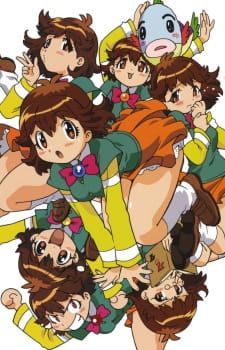
Shichinin no Nana
- Aired: January 10, 2002 - June 27, 2002
- Total Eps: 25 episodes
- Streaming Platforms: -
- Studio: A.C.G.T.
- Director(s): Yasuhiro Imagawa
- Original Creator: Yasuhiro Imagawa
- Genres: Adventure, Comedy, Romance
Review: This is a 2002 anime that takes a genuinely clever premise—a middle school girl accidentally split into seven physical copies, each representing an exaggerated facet of her personality—and buries it under a Power Rangers pastiche. The result is a series that oscillates between charming character comedy and baffling superhero detours, ultimately landing as a mildly enjoyable curiosity rather than a hidden gem.
The setup is simple enough: Nana Suzuki is an ordinary student cramming for high school entrance exams so she can follow her crush, Yuichi, to an elite school. When her eccentric inventor grandfather's experiment goes awry, six duplicate Nanas emerge alongside the original—an energetic one, a brainy one, a weepy one, a sleepy one, a cheerful one, and a "slightly odd" one. Early episodes mine decent humor from the logistics of hiding six identical girls, and the central conceit—that Nana must literally negotiate with her own warring emotions—gives the show a surprisingly coherent emotional throughline.
Then the Nana Rangers happen. All seven Nanas gain superpowers from the accident and acquire costumes from a defunct tokusatsu show, spending significant screen time as a color-coded sentai team. This is where the series loses its way. The superhero antics feel like a concession to a younger demographic, and the quality drops in direct proportion to how much time the Rangers spend posing and apologizing for their lack of a giant robot. What could have been an intimate comedy about adolescent self-integration becomes a noisy, episodic kids' show with occasional moments of genuine feeling.
The production values are competent without being remarkable. Character designs by Mine Yoshizaki (Sgt. Frog) give the cast a soft, expressive look, and the Kyoto-inspired backdrop adds some visual texture. The English dub deserves particular mention—a single voice actress performs all seven Nanas, and the result is genuinely impressive, making the duplicates feel like distinct people who nonetheless share a core identity. The original Japanese cast uses seven separate actresses, which works well enough but lacks the uncanny cohesion of the dub.
The series does improve in its second half. Once the sentai filler recedes, the show returns to its central question: what happens when the parts of yourself you've been avoiding have to be reintegrated? The appearance of an eighth, darker Nana late in the run injects real stakes, and the eventual resolution—without spoiling specifics—earns some genuine emotional weight. It is telling that the episodes people remember are the quiet ones: Nana studying, Nana negotiating with her duplicates, Nana failing and trying again.
This is not a lost classic. It is too uneven, too willing to abandon its strengths for easy tokusatsu gags, and too obviously aimed at an audience that will forgive narrative incoherence. But beneath the Nana Rangers noise is a modest, sincere story about a girl learning to accept that her messy, contradictory self is worth integrating rather than escaping. For viewers patient enough to sit through the costumed filler, there is something quietly worthwhile here.

Duel Masters
- Aired: October 21, 2002 - April 4, 2003
- Total Eps: 26 episodes
- Streaming Platforms: -
- Studios: A.C.G.T., Studio Hibari
- Director(s): Waruro Suzuki
- Original Creator: Shigenobu Matsumoto
- Genres: Action, Comedy, Fantasy
Review: The 2002 anime occupies an awkward space: it is a card-game tie-in that seems embarrassed by its own source material, opting for self-aware parody over genuine engagement with the game it exists to promote. The result is a series that can be amusing in small doses but ultimately feels hollow, a children's show that mistakes mockery for personality.
The premise follows Shobu Kirifuda, a young duelist aiming to become a Kaijudo master like his father, a title earned by mastering the ability to summon creatures from cards into real life. This setup is nearly indistinguishable from Yu-Gi-Oh!, and the series knows it. Rather than compete on dramatic stakes or intricate game mechanics, the English adaptation leans heavily into fourth wall breaks and self-deprecating humor, treating the entire enterprise as a joke. For viewers who appreciate that irreverent approach, there is some charm to be found. Those seeking a coherent card-battle narrative, however, will be disappointed.
The central failure is that the card game itself—the reason the show exists—is presented with almost no clarity. Rules are barely explained, matches routinely contradict the actual mechanics of the Duel Masters trading card game, and the creatures lack the visual variety that makes rival series' monsters memorable. The 3D animation for summoned creatures is crude even by early-2000s standards, and the flat character designs do the show no favors. The English opening theme, which simply chants "SHOBU!" over and over, serves as an honest preview of the level of craft on display.
What redeems the series, marginally, is its comedic timing. The dub script is genuinely funny in places, with voice actors who clearly understood they were making something ridiculous and leaned into it. The parody elements—mocking the earnestness of Yu-Gi-Oh! and similar shows—land more often than they miss, provided the viewer is receptive to that tone. It is telling that the most enthusiastic responses to the series come from those who treat it as a comedy rather than a card-battle anime.
This is best understood as a product of its moment: a quick attempt to capitalize on the card-anime boom, elevated slightly by a dub that decided to have fun with the material. It is neither a hidden classic nor an unwatchable disaster, just a slight, occasionally amusing curiosity that never figures out whether it wants to sell cards or mock the people who buy them.

Ningen Kousaten
- Aired: April 5, 2003 - June 28, 2003
- Total Eps: 13 episodes
- Streaming Platforms: -
- Studio: A.C.G.T.
- Director(s): Issei Kume
- Original Creator: Masao Yajima
- Genre: Drama
Review: This anime is an anomaly in early-2000s anime: a quiet, adult-oriented anthology series with no fan service, no supernatural hooks, and no continuing plot. Adapted from a long-running manga, the 13-episode series presents standalone vignettes about ordinary people—a boxer confronting his past, a lawyer searching for meaning, a workaholic father, a woman forced to care for the father who abandoned her—each ending on a note of hard-won reconciliation. The ambition is admirable. The execution, however, is persistently uneven.
The anthology format is both the series' greatest strength and its most glaring weakness. Each episode features a different writer and director, producing wild swings in quality. The best entries, such as "Direction," achieve genuine poignancy by trusting the audience to sit with uncomfortable family dynamics before arriving at an earned emotional payoff. Others, like "The 25th Hour," collapse under the weight of their own preachiness, forcing resolutions that feel improbable and unearned. The brevity of each story—roughly 24 minutes—means characters must establish lifetimes of resentment or regret in minutes, and the inevitable happy endings often arrive too conveniently, smoothing over conflicts that deserved messier conclusions.
Visually, the series is thoroughly unremarkable. Character designs are bland and occasionally repetitive, with some figures appearing to be recycled across different stories. The animation takes frequent shortcuts, and backgrounds lack the detail that might have lent the mundane settings a sense of place. The sound design fares slightly better—the Japanese voice cast delivers competent performances, and the live-action opening and closing sequences set to Nana Katase's music offer a momentary spark of atmosphere. But the absence of a meaningful musical score leaves many emotional beats stranded, with silence where a subtle theme might have deepened the impact.
What lingers after watching this anime is not any single story but the series' peculiar commitment to a kind of storytelling that anime rarely attempts. It is a drama for adults, about adults, with no concession to the escapist pleasures that define most of the medium. That alone gives it a certain historical interest. Yet interest is not the same as engagement. Too many episodes drift by without leaving a mark, their lessons delivered rather than felt, their characters defined by a single flaw that is resolved by the closing credits. The series gestures toward the complexity of human relationships but rarely musters the craft to render that complexity with the texture it demands.
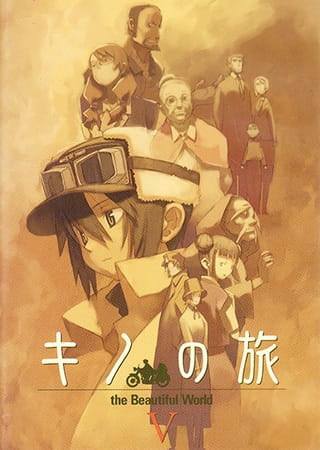
Kino no Tabi: The Beautiful World
- Aired: April 8, 2003 - July 8, 2003
- Total Eps: 13 episodes
- Streaming Platforms: Netflix
- Studio: A.C.G.T.
- Director(s): Ryūtarō Nakamura
- Original Creator: Keiichi Sigsawa
- Genres: Adventure, Drama, Fantasy
Review: This anime is an anomaly among anime of its era: a quiet, episodic travelogue that treats philosophy not as a lecture to be delivered but as a landscape to be wandered through. Across thirteen episodes, Kino and her talking motorrad Hermes drift from country to country, staying exactly three days in each before moving on, and the series asks its audience to sit with what they witness rather than be told what to feel. The result is a work of remarkable restraint and occasional brilliance, though its deliberate coldness will not appeal to everyone.
The premise is deceptively simple. Kino is a young traveler, androgynous in presentation and preternaturally calm, who carries firearms and knives and practices her draw each dawn. Hermes is a sentient motorcycle who serves as companion, foil, and the series' primary source of dialogue. Together they pass through isolated city-states, each a self-contained social experiment: a land where telepathy destroyed community, a country where books are censored to protect the impressionable, a society that surgically removed desire to eliminate crime. Kino never intervenes. She observes, asks questions, and leaves. The show's recurring thesis—that the world is not beautiful, and that this lends it a kind of beauty—is stated explicitly but earned through accumulation rather than assertion.
The series' greatest strength is its discipline. Episodes are self-contained parables, often dark, frequently unresolved in the conventional sense. The fourth episode, which reveals Kino's origin, is a masterclass in understated horror: a child deemed "defective" by her community for questioning its customs, saved by a traveler who dies in the attempt, and left to inherit his name and his motorcycle. It is brutal and tender in equal measure, and it casts a shadow over everything that follows without ever being explicitly referenced again. Other standout entries—the railway workers endlessly laying and tearing up tracks, the land of books where authors are the only ones who see reality clearly—linger in the mind long after the credits roll.
The production, directed by Ryūtarō Nakamura of Serial Experiments Lain fame, is deliberately austere. Character designs are simple, colors muted, and music used sparingly enough that its absence becomes a presence. This minimalism serves the material well for the most part, lending the proceedings a documentary-like detachment that suits Kino's role as observer. But it also contributes to the series' occasional emotional flatness. Some episodes drift by without leaving a mark, their philosophical provocations too slight or too familiar to justify the detached delivery. The middle stretch, particularly an arc involving gladiatorial combat, feels like a concession to conventional anime action and sits uneasily alongside the quieter parables.
What ultimately elevates this anime is its refusal to resolve. Kino does not grow in the conventional sense; she remains a static, mysterious figure whose motives are only partially illuminated. The countries she visits do not offer lessons to be learned but mirrors to be considered. The series trusts its audience to draw connections, to feel the weight of what is shown without being told how to feel it. That trust is both its finest quality and the source of its limitations. For viewers willing to meet it on its own terms—patient, contemplative, comfortable with ambiguity—it offers a journey worth taking. For others, it will remain a beautiful but distant world, observed from the outside looking in.
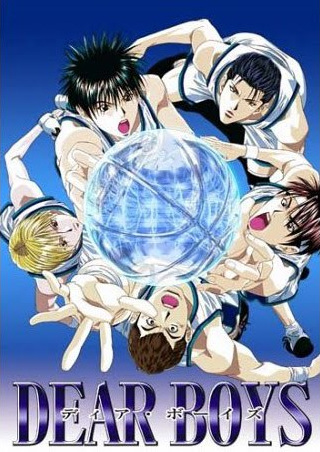
Dear Boys
- Aired: April 8, 2003 - September 29, 2003
- Total Eps: 26 episodes
- Streaming Platforms: -
- Studio: A.C.G.T.
- Director(s): Susumu Kudo
- Original Creator: Hiroki Yagami
- Genres: Drama, Sports
Review: This anime is a basketball anime that arrives with all the familiar equipment of the genre—the gifted transfer student, the ragtag team on the verge of dissolution, the rival school, the tournament bracket—and then struggles mightily to execute even the basics of its own sport. Across twenty-six episodes, the series demonstrates genuine affection for its characters and their earnest struggle to rebuild a disgraced program, but the on-court action is so poorly rendered that the central appeal of a sports anime never fully materializes. What remains is a watchable but deeply flawed series, best appreciated for its heart rather than its execution.
The premise is standard but serviceable: Kazuhiko Aikawa, a prodigy from the elite Tendōji basketball program, transfers to Mizuho High seeking something his old school could not provide—the simple joy of playing. Mizuho's boys' team has been effectively disbanded after its captain, Takumi Fujiwara, punched the coach and earned a year-long tournament ban. With only four remaining players and no coach willing to take them, the team's future hinges on Aikawa's arrival and the reluctant assistance of the girls' team's coach. The setup allows for some genuinely fresh dynamics, particularly the involvement of the girls' basketball team as practice partners and the lingering friction between Fujiwara and authority.
The characters, while archetypal, are drawn with enough care to become likable. Aikawa is the classic hidden ace—unassuming off the court, dominant on it—and his enthusiasm proves contagious. The supporting cast fills familiar roles: the calm shooter Miura, the hot-tempered Ishii, the gentle giant Dobashi, and the brooding captain Fujiwara, each given moments of backstory that explain their investment in the team's revival. The relationship between the boys' and girls' teams adds a layer of interpersonal texture that most sports anime ignore, even if the romantic subplots are underdeveloped and largely irrelevant to the basketball.
Where this anime falters most conspicuously is in its animation. The basketball sequences lack fluidity and coherence; players seem to teleport past defenders, shots arrive without the arc of a real jump, and the slow-motion techniques meant to heighten tension instead expose the stiffness of the movement. Comparisons to Slam Dunk, a decade older, are unavoidable and unflattering. The character designs are serviceable but unremarkable, and the overall production bears the hallmarks of a rushed television adaptation rather than a labor of love.
The sound design offers partial compensation. The opening theme by Da Pump is genuinely catchy, and the voice acting—particularly in the English dub—is competent and occasionally excellent, with the cast investing more emotion into the material than the animation deserves. The background music during games does its best to manufacture tension where the visuals cannot.
This anime is not unwatchable. The story of a disgraced team clawing its way back to respectability has an inherent pull, and the characters are easy to root for. The series improves as it progresses, with later matches generating genuine stakes and the team's chemistry becoming more convincing. But the fundamental limitation remains: a basketball anime lives and dies by its basketball, and this one cannot make the game look like it matters. For genre devotees willing to overlook crude animation in exchange for earnest storytelling, there is something here. For everyone else, it is a reminder that passion behind the scenes does not always translate to the screen.

Koi Kaze
- Aired: April 1, 2004 - June 17, 2004
- Total Eps: 13 episodes
- Streaming Platforms: -
- Studio: A.C.G.T.
- Director(s): Takahiro Omori
- Original Creator: Motoi Yoshida
- Genres: Drama, Romance
Review: This is a series that earns its reputation as one of anime's most uncomfortable and quietly devastating romances, but it does so by refusing nearly every convention that might make its subject matter palatable. The premise alone is enough to send most viewers running: a 27-year-old man falls in love with his 15-year-old sister, whom he hasn't seen in over a decade, shortly after meeting her by chance and before either realizes their relationship. What follows is not a titillating fantasy or a melodramatic taboo shocker, but a slow, methodical study of two people making each other miserable because they cannot stop feeling what they feel.
The series' greatest asset is its restraint. Koshiro is not a predator; he is a sullen, emotionally stunted wedding planner who was recently dumped for being "too cold". His attraction to Nanoka arrives as a bewildering intrusion, and his attempts to suppress it manifest as gruffness and distance rather than pursuit. Nanoka, for her part, is not a seductress but an ordinary high schooler whose growing attachment to her brother is tangled up with the simple fact of having a family member who pays attention to her. The show's decision to render both characters as flawed, indecisive, and frequently unlikable is what makes it work. They are not archetypes of forbidden love; they are people making a mess of things.
Visually, the series adopts a muted, pastel-heavy palette and a deliberate pace that mirrors the characters' emotional constipation. Long silences, small gestures, and indirect conversations carry more weight than any confession. The music is sparse and melancholic, used only when necessary, and the animation favors subtle shifts in expression over dramatic flourishes. This minimalism serves the material well, though it also means the series can feel airless, as if the viewer is trapped in the same suffocating apartment as Koshiro and Nanoka.
The supporting cast exists largely to refract the central relationship. Koshiro's supervisor Chidori pieces together what is happening and tries to intervene, only to conclude that the siblings cannot be happy apart. A coworker serves as crude comic relief, his obsession with teenage girls highlighting by contrast how differently Koshiro's transgression is framed. These figures add texture without distracting from the core, though some feel underdeveloped.
The series does not offer easy answers. It ends not with condemnation or celebration but with a quiet, unsettling acceptance, leaving the viewer to sit with what they have witnessed. That ambiguity is the point. This anime is not asking to be liked; it is asking to be endured, and for viewers willing to grant it that patience, it offers a portrait of forbidden desire that is as honest as it is difficult to watch.

Initial D Fourth Stage
- Aired: April 17, 2004 - February 18, 2006
- Total Eps: 24 episodes
- Streaming Platforms: -
- Studio: A.C.G.T.
- Director(s): Tsuneo Tominaga
- Original Creator: Shuichi Shigeno
- Genres: Action, Drama
Review: This season represents both a technical high point and a narrative crossroads for the long-running street racing series. Following Takumi Fujiwara's graduation from solitary mountain runs to organized team warfare, this 24-episode season delivers the most polished racing action the franchise had seen to that point, while simultaneously exposing the limits of its character drama and romantic subplots. The result is a season that satisfies the craving for high-octane touge battles but leaves the human element idling in neutral.
The premise shifts the series into a new gear: Ryosuke Takahashi formalizes Project D, a two-car team with Takumi on downhill and Keisuke Takahashi on uphill, dedicated to breaking course records across other prefectures and promoting Ryosuke's racing theory. This structure transforms the show from a series of coincidental duels into a campaign of conquest, complete with a dedicated website announcing future battles and posting results. The stakes feel more organized and deliberate, and the introduction of teams from Saitama and Ibaraki provides a rotating cast of opponents with distinct philosophies and, in one memorable case, genuinely underhanded tactics.
Visually, Fourth Stage marks a significant leap. The cel-shaded 3D rendering for the cars blends far more seamlessly with the hand-drawn animation than earlier seasons, shedding the "paste-on-top" quality that had previously undermined the racing sequences. The vehicles themselves are rendered with obsessive care, their lines and engine notes given more personality than most of the human cast. The Eurobeat soundtrack remains the series' beating heart, with tracks like "Dogfight" and "Noizy Tribe" propelling the races with an earnest, fist-pumping energy that no modern imitator has quite replicated.
Where the season stumbles is in its handling of everything outside the cockpit. The romantic subplots, particularly Keisuke's entanglement with Kyoko, are handled with a clumsiness that borders on uncomfortable—one notable misstep conflates a woman's car with her chastity in a way that feels less like characterization and more like a writer's blind spot. The non-racing drama feels like connective tissue at best, obligatory pauses between battles that the series would rather skip entirely. Even Takumi's arc, which sees his confidence shattered after his father effortlessly passes him on Akina, resolves too neatly to leave a lasting impact.
What saves the season is the racing itself. The tactical dimension has never been sharper; victories hinge on tire management, weight distribution, and psychological warfare rather than raw speed alone. The dirty-trick opponents from the Lancer Evo team inject a mean-spirited satisfaction into their inevitable defeat, while the later battles against the middle-aged professional racers offer a different kind of tension—experience versus instinct, patience versus aggression. These sequences are long, sometimes stretching across three episodes, but they earn their duration through carefully escalating pressure and the ever-present threat of mechanical failure or human error.
This anime is, ultimately, a season for the converted. Those who have followed Takumi from his days of delivering tofu before dawn will find plenty to savor in Project D's campaign, and the production values finally match the series' ambitions. But the human drama remains stubbornly static, the romances a distraction rather than an enhancement. It is a finely tuned racing machine that has learned to corner at blistering speeds but still has not figured out how to make the driver interesting when he is not behind the wheel.

Lime-iro Ryuukitan X
- Aired: January 5, 2005 - March 30, 2005
- Total Eps: 13 episodes
- Streaming Platforms: -
- Studio: A.C.G.T.
- Director(s): Tsuneo Tominaga
- Original Creator: ELF Corporation
- Genres: Drama, Supernatural, Ecchi
Review: I went into this anime with no expectations beyond a vague awareness that it was a sequel to something, and I came out the other side feeling like I had witnessed a trainwreck that was somehow both boring and inexplicable. The year is Meiji 38, the Russo-Japanese War is raging, and a young man named Inukai Tsuyoshiro has been placed in charge of a squad of girls who pilot... something. The "Raimu" squad exists, they have powers, and there is a war on, but the show treats these facts as mere scaffolding for harem antics. I spent most of the first episode watching the male lead scream and run across the screen while a single repetitive music track played, and I honestly could not tell you what the plot was supposed to be.
The girls themselves are barely distinguishable. There is a calm one, an energetic one, a reserved one—the show does just enough to let you pick a favorite if you are so inclined, but no more. They all fawn over Inukai, who responds mostly by screaming about being a man or, in one genuinely baffling sequence, transforming into a mech and firing laser beams from his nipples while shouting "MANLY ATTACK". I am not making that up. That moment is the only thing from this series that has lodged itself in my memory, and I am not entirely sure I want it there.
The action is passable at best, and the sound design actively undermines it. Hits and explosions land with a dull thud, robbing what little combat there is of any impact. The show cannot decide if it wants to be an ecchi harem or a mecha action series, and it fails at both because it splits its attention so thinly. For the first several episodes, there is almost no conflict between the girls over the protagonist, which removes even the petty drama that usually sustains this kind of show. By the time actual rivalries emerge, I had long stopped caring.
What makes this more frustrating is the knowledge that its predecessor, Lime-iro Senkitan, apparently had a sense of humor about itself—a gleeful subversion of genre tropes that this sequel entirely abandons in favor of playing everything straight. The villains, named after fabrics, have no personality whatsoever, and the show's idea of resolution is for the male lead to single-handedly save the day while the girls cheer him on. It is a cookie-cutter harem anime with delusions of wartime grandeur, and I can only recommend it to someone who has genuinely exhausted every other option in the genre and is curious about what the bottom of the barrel looks like. Even then, I would suggest bringing a friend and some strong beverages.
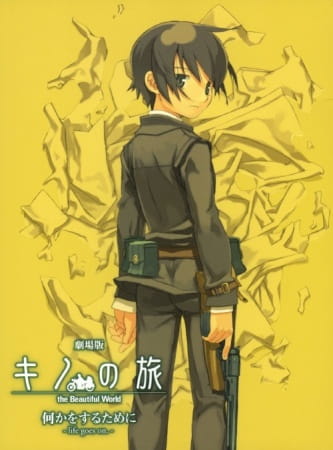
Kino no Tabi: The Beautiful World - Nanika wo Suru Tame ni - Life Goes On.
- Aired: February 19, 2005
- Total Eps: 1 episode
- Streaming Platforms: -
- Studio: A.C.G.T.
- Director(s): Takashi Watanabe
- Original Creator: Keiichi Sigsawa
- Genres: Adventure, Drama, Fantasy
Review: I go into this movie expecting a missing chapter, a clean answer to the question of how the stoic traveler of the 2003 series came to be. What I find instead is a half-hour that feels less like a revelation and more like a sketch—beautiful in places, frustrating in others, and ultimately defined by what it refuses to explain. The film is a prequel, set before Kino sets out on her journey, following her training under a woman known only as Master and the moment she decides to inherit the name and coat of the Kino who died saving her. It is, by any measure, an essential piece for anyone who cares about this character. It is also far too short to carry the weight of everything it attempts.
The central pleasure is watching Kino before she became Kino. The androgynous, unflappable traveler of the series is absent here; in her place is a softer, more uncertain girl still wearing her old dress, still saying "atashi" instead of the more neutral pronoun she adopts later. The film traces her acquisition of the skills that define her—marksmanship, motorcycle riding—but more importantly, it traces her decision to become someone else. The moment she puts on the dead Kino's coat and declares herself his continuation lands with a quiet force. It is not a triumphant transformation. It is a burden accepted.
The problem is that the film treats this transformation as a single event rather than a process. The middle section involves a confrontation with a woman who turns out to be the original Kino's mother, a sequence that escalates from uneasy hospitality to violence with almost no transition. The confrontation is meant to be the crucible that forges the new Kino, but it arrives and resolves so quickly that the emotional logic never has room to breathe. The Master's role in orchestrating this test—if that is indeed what it is—remains ambiguous, and the film ends before that ambiguity can be explored. The questions that linger after the credits are not the productive kind. They are the kind that come from a story that ran out of time.
What saves the experience is the atmosphere. A.C.G.T.'s animation retains the muted, slightly dusty palette of the television series, and the sound design—the hum of Hermes, the wind through the trees, the absence of music in the crucial moments—remains as evocative as ever. The film understands that Kino's world is defined by silences, and it respects those silences. When Kino finally rides away from Master's forest, the moment is earned not by dialogue but by the accumulated weight of everything unsaid.
I wanted more. I wanted to know how Kino met Master, why Master demands to be called that, why Kino ultimately leaves. The film gives me none of this. What it gives is thirty minutes with a character I love, at a point in her life when she was still becoming. For that alone, it is worth watching. But it is not the origin story I hoped for. It is a fragment, and it knows it.
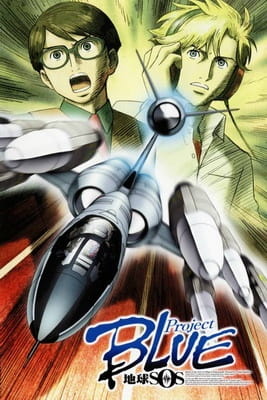
Project BLUE Chikyuu SOS
- Aired: July 2, 2006 - December 3, 2006
- Total Eps: 6 episodes
- Streaming Platforms: -
- Studio: A.C.G.T.
- Director(s): Tensai Okamura
- Original Creator: Shigeru Komatsuzaki
- Genres: Adventure, Comedy, Sci-Fi
Review: I went into this anime expecting a forgotten curiosity from 2006 and came out genuinely torn. On one hand, it's a loving homage to the pulp sci-fi of the 1950s—flying saucers, ray guns, genius kids saving the world—and that aesthetic is rendered with real care. On the other hand, the story runs out of steam almost immediately, and the characters never become anything more than cardboard cutouts moving through a retro-futuristic diorama.
The setup is pure classic B-movie material: in an alternate year 2000 powered by clean "G-Reaction" energy, a high-speed train vanishes during its inauguration, and two teenage geniuses—Billy Kimura and Penny Carter—stumble into a conspiracy involving a secret UN defense organization and an alien invasion. I was hooked for the first episode or two. There's a genuine creepiness to the mystery, a sense that something vast and incomprehensible is lurking just out of frame. The visuals helped: the lighting and CG explosions during the action sequences are surprisingly polished, and the whole thing has this muted, Art Deco-adjacent look that feels distinct from anything else airing at the time. The spaceship designs and laser weapons commit fully to the retro bit without winking at the audience.
Then the middle episodes happened, and my enthusiasm curdled. The plot stops building and starts repeating: aliens deploy a new threat, the kids and the military scramble to counter it, repeat. Billy and Penny are supposedly rivals who learn to work together, but the show handles this by having them essentially announce their character arcs out loud rather than earning any of it. The supporting cast—the grizzled captain, the dainty scientist's daughter, the eccentric doctor—exist purely to fill roles, not to feel like people. By the time the climax arrived, I was watching more out of obligation than investment, and the final message about peace between species felt dropped in from a different, more thoughtful show.
What frustrates me most is that the pieces were there. The six-episode, 45-minute-per-installment format should have allowed for a tight, propulsive adventure. The director, Tensai Okamura, has serious credentials, and the mechanical designs by Shinji Aramaki give the hardware real weight. But the script never trusts its own premise enough to let the retro charm carry the weight, instead burying it under generic alien-of-the-week plotting and character beats that feel copied from a manual. If you have a soft spot for 1950s sci-fi and can forgive one-dimensional leads, there's a pleasant enough afternoon here. If you need your stories to actually go somewhere, you'll likely check out before the flying saucers even arrive.

GR: Giant Robo
- Aired: January 19, 2007 – July 6, 2007
- Total Eps: 13 episodes
- Streaming Platforms: -
- Studio: A.C.G.T.
- Director(s): Ren Usami (chief), Masahiko Murata
- Original Creator: Mitsuteru Yokoyama
- Genres: Adventure, Sci-Fi
Review: I go into this anime expecting something connected to the beloved 1992 OVA, Giant Robo: The Day the Earth Stood Still. What I find instead is a 2007 television reboot that shares a name and a giant robot but almost nothing else—a slow, cerebral, and deeply strange reimagining written entirely by Chiaki J. Konaka, the mind behind Serial Experiments Lain and The Big O. It is a show that feels less like a celebration of a franchise and more like an autopsy of one, and that is both its most fascinating quality and the reason it remains almost entirely forgotten.
The premise is pure Konaka. Giant Robo is not a superweapon built by scientists but an ancient weapon from a civilization that vanished fifty thousand years ago, created to fight the "Old Ones"—Lovecraftian entities that feed on human stupidity and were banished to the ends of time. Daisaku Kusama, an eighteen-year-old high school dropout working at a diving shop in Okinawa, is coerced into a contract with GR-1 that rewrites his genes and makes him functionally immortal, then drafted into UNISOM to fight the terrorist organization GRO while a news network called BFN manipulates both sides for ratings. The first six episodes contain roughly two proper fights. The priority is establishing shots, slow reveals, and the drip-feed of information, not spectacle.
What keeps me watching is the sheer audacity of the world-building. The robots have "avatars"—fetal-like organs inside their heads that can be transplanted—and pilots who lose their GR die horribly through the feedback link. A failsafe called GR-0, based on a giant floating head from another Yokoyama work, is designed to exterminate all life on Earth if humanity proves unworthy of the machines. The show was planned for three seasons and cancelled after thirteen episodes, and you can feel that truncation in every unresolved thread. It ends not with a conclusion but with an abandonment.
The production values are genuinely striking. A.C.G.T.'s animation blends traditional cel work with 3D, and the mecha designs carry a weight and physicality that the script's glacial pacing rarely allows them to demonstrate. The sound design and score are effective, but they serve a show that seems actively hostile to the idea of being entertaining in a conventional sense. One forum comment from the time described it as "too blunt," with traces of Evangelion and Argento Soma that make it more in-depth than the original but ultimately use ideas that "no longer make an impact". I understand the frustration. This is not a show that rewards patience with payoff. It rewards patience with more patience.
The accessibility problem completes the picture. Only the first three episodes ever received an English release, uploaded by Softgarage itself before being removed; no official English subtitles exist for the full series, and it was never licensed in North America. For most practical purposes, it is unavailable in any language but Japanese. This is a show that was designed to fail, and it did, quietly and completely.
I cannot recommend this anime as entertainment. It is slow, unresolved, and demands familiarity with a franchise it deliberately alienates. But as an artifact—a strange, melancholy, Lovecraftian mecha series written by one of anime's most idiosyncratic minds and buried so thoroughly that even the fans who might have championed it never found it—it is genuinely fascinating. I finished it not because I was enjoying myself, but because I wanted to understand what Konaka was trying to do. I am still not sure I do.

Wangan Midnight
- Aired: June 8, 2007 – September 13, 2008
- Total Eps: 26 episodes
- Streaming Platforms: -
- Studio: A.C.G.T.
- Director(s): Tsuneo Tominaga
- Original Creator: Michiharu Kusunoki
- Genres: Adventure, Sci-Fi
Review: I go into this anime expecting the highway counterpart to Initial D, a faster, sleeker version of the mountain racing formula. What I find instead is a show that is philosophically opposed to its own genre. It is not about winning. It is not about growth. It is about addiction, and the people who cannot stop chasing a feeling even as it destroys everything else in their lives. That is a genuinely interesting premise. The execution, however, is so uneven that the show rarely earns the weight of its own ideas.
The premise is simple: high schooler Akio Asakura loses to a black Porsche called the Blackbird, finds a cursed blue Fairlady Z in a junkyard, and becomes obsessed with beating the car that beat him. The Z, nicknamed the "Devil Z," is fast and dangerous, and every previous owner has crashed or died. Akio knows this. He buys it anyway. The show is not subtle about what this means. The Devil Z is an addiction metaphor with a turbocharger, and the people around Akio—mechanics, rivals, a woman whose brother died driving the same car—all recognize what he is doing to himself. He does not care.
The problem is that Akio is a void. He has no interiority, no motivation beyond "go faster," and no discernible personality beyond a blank stare. The show spends twenty-six episodes with him, and by the end I knew less about who he was than I did in the first episode. The supporting cast fares slightly better, particularly the mechanic Kitami, whose obsession with the Z is rendered with a weary self-awareness that Akio lacks. But the show cycles through rivals at a rapid clip, giving each a brief arc before they either crash, quit, or fade into the background. One of the better arcs involves a driver who chooses his pregnant wife over the highway, and the show treats this as a quiet tragedy—a life reclaimed from something that was consuming it. Moments like that suggest what this anime could have been.
The racing itself is a mixed bag. The CGI cars are rendered with care, and the sense of speed on the Bayshore Route is conveyed through a combination of sharp modeling and a soundtrack that leans into Latin choir music during the more intense sequences. But the races are structurally inert. There are no starting lines, no finish lines, no overtakes that feel earned. The characters simply drive until one of them gives up or crashes. Without stakes or structure, the races become visual noise, pretty but weightless.
What lingers is the atmosphere. The nighttime highways of Tokyo, the glow of taillights, the hum of engines—the show captures a specific mood that is genuinely compelling. But mood alone cannot sustain twenty-six episodes. This anime is a show about people who have given their lives to a machine, and it never quite figures out how to make me care about what that costs them.

Kimi ga Aruji de Shitsuji ga Ore de
- Aired: January 6, 2008 – March 30, 2008
- Total Eps: 13 episodes
- Streaming Platforms: -
- Studio: A.C.G.T.
- Director(s): Susumu Kudo
- Original Creator: Minato Soft
- Genres: Comedy, Romance, Ecchi
Review: I go into this anime expecting a disposable 2008 harem comedy, and that's mostly what I get—but with a strange, persistent warmth that keeps me watching longer than I should. The premise is pure eroge transplant: Ren and his sister Mihato, runaway rich kids, end up as servants to the three Kuonji sisters in their sprawling mansion. Ren disguises himself as a maid to keep the job, and the household chaos begins. It's Hayate no Gotoku by way of softcore fanservice, and it knows exactly what it is.
The fanservice is relentless. Almost every episode finds a reason to put someone in a compromising position, and the camera rarely misses an opportunity. The humor leans heavily on Ren's humiliation and the sisters' varying degrees of predatory interest in him. If that's a dealbreaker, the show offers nothing to change your mind. What surprised me is that beneath the leering, there's a genuine attempt at found family. The Kuonji sisters lost their parents; Ren and Mihato fled an abusive home. The show returns to this theme with a consistency that most harem anime abandon after two episodes. The characters, particularly the sisters, get enough small moments of vulnerability that by the end I actually cared about their household, even if I felt slightly guilty about enjoying it.
The production is a mess. The animation looks a decade older than its 2008 air date, the sound quality is genuinely poor, and the voice acting lacks the energy the comedy demands. But there's an odd charm to the show's references and parodies—Utena homages, Shuffle! nods, a Gundam joke or two—that suggests the staff knew they were making trash and decided to have fun with it. The ending theme is shameless, and I won't pretend I skipped it.

Monochrome Factor
- Aired: April 8, 2008 – September 30, 2008
- Total Eps: 24 episodes
- Streaming Platforms: -
- Studio: A.C.G.T.
- Director(s): Yuu Kou
- Original Creator: Kaili Sorano
- Genres: Action, Boys Love, Supernatural
Review: I went into this anime knowing it was a 2008 adaptation of a shounen manga that had somehow acquired a reputation for shounen-ai content its source material never had. As a writer, that alone intrigued me—the idea of a production team looking at a generic demon-fighting manga and deciding, "Yes, what this needs is more red lipstick and longing glances." What I found was a series that squanders a serviceable premise through catastrophic pacing, a commitment to comedy that actively undermines every attempt at drama, and an animation budget that appears to have been scraped together from loose change.
The premise is Bleach by way of a Gothic romance novel: Akira Nikaido, a sullen high schooler, is attacked by a shadow monster and forced into a pact with the mysterious Shirogane, becoming a "shin" tasked with restoring balance between the human and shadow worlds. That's a perfectly workable skeleton. The problem is that the show has no interest in putting meat on it. Across twenty-four episodes, roughly eight actually advance the plot. The rest follow a template so rigid it becomes almost hypnotic in its tedium: a guest character appears, the guest character is possessed by a Kokuchi, the guest character fights Akira and friends, the guest character is freed and learns a lesson. Repeat. Repeat. Repeat. By the time the actual story remembers it exists, somewhere around episode twenty-one, any investment I might have had has long since evaporated.
What's genuinely frustrating is that the comedy, the element the show leans on hardest to fill that void, is not without merit. There are moments of genuine wit buried in the chibi cutaways and Kengo's desperate "Akira-kuuuun!" wails. The voice cast, particularly Daisuke Ono as Akira and Hiroshi Kamiya as Kengo, clearly understood the assignment and deliver performances that occasionally transcend the material. But the comedy is deployed without restraint, undercutting every moment that might have carried weight. A betrayal lands, and someone makes a face. The world is ending, and the gang is bickering about lunch. It's not that levity is unwelcome; it's that the show cannot modulate its tone, so the jokes read less as relief and more as a refusal to take anything seriously, including itself.
Visually, the series bears all the hallmarks of a production stretched too thin. Character designs are attractive enough—Shirogane's entire aesthetic is a commitment, and the shin transformations are suitably flashy—but the animation is flat, the fight choreography consists largely of still frames and recycled sequences, and the backgrounds are so anonymous they might as well be blank. For a show about the clash between light and shadow, it has remarkably little visual identity of its own.
As a writer, the lesson I take from this anime is about the danger of mistaking noise for energy. The series is loud, frantic, and constantly in motion, but none of that motion goes anywhere. It is a show that seems terrified of silence, of a beat held long enough for an emotion to land, and so it fills every gap with a joke or a transformation sequence or a monster of the week. The result is a series that passes the time without leaving a trace. There is a version of this story—tighter, darker, more willing to let Akira and Shirogane's strange bond breathe—that might have been something. This is not that version.

Freezing
- Aired: January 8, 2011 – April 7, 2011
- Total Eps: 12 episodes
- Streaming Platforms: -
- Studio: A.C.G.T.
- Director(s): Takashi Watanabe
- Original Creator: Dall-Young Lim
- Genres: Action, Drama, Romance, Sci-Fi, Ecchi
Review: I went into this anime telling myself I would approach it as a writer first and a viewer second—to look past the surface and find the architecture underneath. What I found instead was a series that actively resists that kind of generosity. It is a show built on a genuinely intriguing science-fiction premise, then systematically buried under so much gratuitous fan service and narrative laziness that the skeleton beneath becomes almost impossible to see. As someone who believes even trashy genre work can have craft, I wanted to find the good version of this. I am not sure it exists.
The setup has potential. In a near-future world threatened by extradimensional aliens called Nova, humanity relies on genetically enhanced teenage girls called Pandoras to fight them. These girls are paired with male Limiters, who use a "freezing" ability to counteract the Nova's paralyzing fields and allow the Pandoras to move and fight. Kazuya Aoi enrolls at the academy following in his deceased sister's footsteps, and immediately bonds himself to Satellizer L. Bridgette, the "Untouchable Queen," a powerful but deeply traumatized girl who violently repels anyone who touches her. That is a workable engine for drama: trauma, intimacy, the weaponization of teenage bodies, the ethics of pairing children with other children to fight a war. A writer could do something with that.
This anime does not. Instead, it spends the vast majority of its runtime on something else entirely. The Nova, the ostensible reason for the entire military apparatus, are barely present. The war is background noise. What the show actually cares about is ritualized combat between scantily clad girls, punctuated by shredded clothing, panty shots, and lingering shots of bodies. This is not a matter of a little fanservice seasoning a serious story. The fanservice is the story, and the science fiction is the excuse. One episode can feature a limb being severed and blood spraying, then cut immediately to a shot framed to maximize cleavage. The tonal incoherence is not edgy; it is exhausting.
As a writer, the most frustrating element is Satellizer herself. There is a genuinely compelling character buried here—a girl whose refusal to be touched is rooted in abuse, whose isolation is both armor and wound. Some viewers have found her sympathetic, even admirable, for her restraint and her gradual openness to Kazuya. I can see what they are responding to. But the show undermines that characterization at every turn by treating her trauma as a fetish object, framing her body for consumption even as it asks us to take her pain seriously. The result is not complexity. It is contradiction without purpose.
The writing around the supporting cast is equally thin. The academy is populated by interchangeable rivals and antagonists, most defined by a single personality quirk and a combat style. The Limiters exist almost entirely as accessories to the Pandoras, their bonds treated less as partnerships than as metaphors for possession. When the show attempts emotional beats—a backstory reveals, a moment of vulnerability—it rushes through them to get back to the next fight or the next bath scene. The pacing lurches between tedious exposition and abruptly resolved conflicts, with victories that feel unearned and consequences that evaporate.
Visually, the series is competent enough to be frustrating. The character designs are attractive in a generic way, and the animation occasionally achieves a decent action beat. But the direction is so single-minded in its priorities that every frame feels calculated for a specific audience rather than in service of the story. This is not a matter of prudishness. It is a matter of craft. A writer learns early that every choice communicates something. When a camera lingers on a girl's body during a moment of emotional vulnerability, the choice says that the vulnerability is secondary to the display. This anime makes that choice over and over until it becomes the only thing the show is saying.
I finished the season not angry, exactly, but disappointed in a specific way. There is a version of this story—about damaged children forced to become weapons, about the intimacy of combat partnership, about a boy who reaches for the one person everyone else has written off—that could have been genuinely affecting. This anime glances at that version occasionally, then turns away to show another girl's underwear. As a writer, I find that waste more offensive than simple bad execution. It is not that the show aimed low. It is that it had something real in its hands and chose to drop it.

Freezing Vibration
- Aired: October 4, 2013 – December 20, 2013
- Total Eps: 12 episodes
- Streaming Platforms: -
- Studio: A.C.G.T.
- Director(s): Takashi Watanabe
- Original Creator: Dall-Young Lim
- Genres: Action, Drama, Romance, Sci-Fi, Ecchi
Review: I went into this sequel with a grim kind of curiosity. The first season had left me cold—not because it was too dark or too trashy, but because it felt like a waste of a premise that could have worked. So the question I carried into this sequel was simple: does the story finally figure out what it wants to be? The answer, frustratingly, is both yes and no. There are moments here that suggest a better show lurking beneath the surface, but they are buried under the same impulses that sank the original, now compounded by a narrative decision that feels actively cruel.
The setup is at least more focused than the first season's meandering academy politics. The Chevalier organization, facing a steady depletion of natural Pandoras, has launched the E-Pandora Project: ordinary women artificially enhanced to fight the Nova. Satellizer, Kazuya, and Rana are summoned to an Alaskan base to witness the project's progress, and it quickly becomes clear that the E-Pandoras are weaker than their natural counterparts—and that the people running the program are willing to push them past safety into something monstrous. This is a genuinely promising engine for drama. The ethics of manufacturing soldiers, the desperation of a war machine running out of bodies, the question of what happens when the artificial becomes indistinguishable from the enemy—these are ideas worth exploring.
And to the show's credit, it does explore them, at least intermittently. The Alaskan setting strips away the school-life distractions of the first season and forces the cast into a pressure cooker of institutional secrecy. The mystery of what's happening to the E-Pandoras builds with reasonable patience, and the introduction of Elizabeth Mably's backstory adds a layer of genuine tragedy that the series had previously lacked. There is a version of this anime that leans into this material and becomes a nasty, tense thriller about the cost of survival. That version appears in flashes.
Then the show remembers what it is, and the flashes die. The fan service is still present, though arguably less constant than before. The real problem is not the nudity or the camera angles—it is the way the series uses trauma as spectacle. Without spoiling specifics, there is a sequence involving Satellizer's past that the show renders with a level of detail that feels less like character drama and more like an exercise in squick. A forum discussion of the series described the presentation as "exploitative content" that "ups the squick factor," and that assessment is difficult to argue with. As a writer, I find this the most damning failure. It is not that dark subject matter is off-limits. It is that the show cannot decide whether it wants to condemn the abuse or linger on it, and the result is a tone that reads as leering rather than empathetic.
The action, meanwhile, remains competent but unremarkable. Fights are staged with enough clarity to follow, but they lack the weight that would make the violence feel consequential. Satellizer's victories often arrive through sudden power spikes that feel unearned, and the supporting cast—including the new E-Pandoras—remain largely defined by their function in the plot rather than by any interiority. The pacing lurches between the central mystery and episodic detours, and by the time the climax arrives, the momentum has dissipated.
What lingers after watching this anime is not any single scene but a sense of wasted potential. The first season was a mess that at least had the excuse of establishing a world. This sequel knows its world, knows its characters, and knows the questions it wants to ask about them. It simply refuses to sit still long enough to answer any of them with the seriousness they demand. For viewers who found something to enjoy in the original's blend of combat and melodrama, there is more of the same here, executed with slightly more narrative discipline. For anyone hoping the series had matured alongside its audience, the result is a disappointment dressed in better clothes.
I wanted to find the version of this story that deserved to be told. It is in there, somewhere, buried under the noise. But I am no longer sure the people making it are interested in digging it out.

Fuuun Ishin Dai☆Shougun
- Aired: April 10, 2014 – June 26, 2014
- Total Eps: 12 episodes
- Streaming Platforms: -
- Studios: J.C.Staff, A.C.G.T.
- Director(s): Takashi Watanabe
- Original Creator: -
- Genre: -
Review: I went into this anime telling myself that a premise this absurd deserved a fair shot. An alternate-history Meiji Japan where the Black Ships were repelled by a giant steam-powered robot, and where the heir to the Tokugawa shogunate must remain a virgin to pilot it? That is the kind of gleefully stupid setup that can, in the right hands, become something genuinely entertaining. What I found instead was a show that squanders every ounce of its premise's potential on a singular obsession: breasts. Not story. Not character. Not even the mecha that supposedly justify the entire alternate history. Just an endless parade of jiggling, fondling, and panting, punctuated by animation so stiff it makes flash cartoons look lavish.
As a writer, the most instructive thing about this anime is how thoroughly it demonstrates the difference between a bad idea and a badly executed one. The core concept—a virgin heir who breaks out in hives whenever a woman touches him, forced to navigate a harem of potential co-pilots while foreign powers encroach on Japan—is not inherently doomed. It is a comedy engine. It could work. The problem is that the show has no interest in building anything with that engine. Every episode follows the same template: Keiichiro sees a woman, Keiichiro gets aroused, Keiichiro breaks out in hives or passes out, the plot advances by perhaps thirty seconds, and then the episode ends. The mecha Susanoo appears in maybe five episodes out of twelve, and its coolest function—changing form and abilities based on which girl serves as co-pilot—is used exactly once per girl before being abandoned entirely. The harem dynamic that the first half seems to be building toward is discarded halfway through in favor of making Kiriko the sole love interest and damsel in distress, rendering the other two girls' development moot.
And then there is the animation. I have seen low-budget anime before. I have seen shows that cut corners. This anime does not cut corners; it removes the entire concept of motion and replaces it with still frames dragged across the screen. Characters "run" by having their upper bodies slid across the background. Action scenes are freeze frames with sound effects. The mechs, when they appear at all, are largely static. The opening sequence is genuinely well-animated, which only makes the rest of the episode feel like a bait-and-switch. This is not a stylistic choice. It is a production collapse, and it drains whatever energy the comedy might have generated. A joke about hives cannot land when the character delivering it cannot move.
The writing, credited to Dai Satō of Eureka Seven and Ergo Proxy fame, is baffling in its laziness. The dialogue consists almost entirely of Keiichiro screaming, women scolding him, and the same repetitive gag about his virginity being both his greatest asset and his greatest frustration. The supporting cast exists to be groped or to react to being groped. Kiriko, the female lead, is introduced as a capable ninja and then spends most of the series either being captured, stripped, or worrying about whether Keiichiro likes her. The historical setting—a Japan where the Meiji Restoration never happened, where steam power and giant robots coexist with samurai and courtesans—is a backdrop so thinly sketched that it might as well be cardboard. The show has no interest in its own world.
What frustrates me most, as a writer, is the waste. There is a version of this anime that leans into the absurdity, that treats the virgin-pilot mechanic as the joke it obviously is, that gives its characters actual personalities and lets the mecha fights be ridiculous and fun. That version does not exist. What exists is a twelve-episode exercise in endurance, a show that mistakes repetition for comedy and stillness for animation. I finished it not because I was curious, but because I wanted to be certain there was nothing redeemable buried underneath. There is not. The only thing this anime taught me is that a premise, however ridiculous, is only as good as the craft behind it. And here, there is no craft at all.

Minami Kamakura Koukou Joshi Jitensha-bu
- Aired: January 7, 2017 – March 25, 2017
- Total Eps: 12 episodes
- Streaming Platforms: Crunchyroll
- Studios: J.C.Staff, A.C.G.T.
- Director(s): Susumu Kudo
- Original Creator: Noriyuki Matsumoto
- Genre: Sports
Review: I went into this anime expecting the anime equivalent of a gentle Sunday ride—something pleasant, scenic, and undemanding. What I found was a show that gets the scenery exactly right and almost everything else frustratingly wrong. As a writer, the most instructive thing about it is how clearly it demonstrates the difference between a premise and a story. The premise is fine. The execution is so weightless that by the end, I felt like I'd spent twelve episodes watching a tourism commercial with occasional dialogue.
The setup is straightforward enough: Hiromi Maiharu moves from Nagasaki to Kamakura, discovers on her first day of high school that she's forgotten how to ride a bicycle, and is rescued by Tomoe Akitsuki, a local girl who patiently teaches her. This is a genuinely charming starting point. A protagonist who has to relearn something fundamental, in a new town, is a solid engine for a slice-of-life story. The problem is that the show never finds a second gear. Hiromi remains vaguely clumsy and enthusiastic, Tomoe remains the patient guide, and the supporting cast—the swimmer Natsumi, the headmaster's granddaughter Fuyune, the American Sandy—fill their roles without ever becoming people I could describe beyond a single trait.
What the series does have, unmistakably, is Kamakura. The background art is the only element of the production that feels genuinely considered. Detailed streets, layered light, the sense of a real place with history and texture—it's all there, and it's lovely. But as a writer, I can't help noticing that the show cares more about its setting than its characters. The camera lingers on vistas and landmarks while the girls cycle past, and the effect is less "immersive world-building" and more "promotional video with a plot bolted on." The product placement doesn't help; real bicycle brands appear with a clarity that feels transactional rather than organic.
The writing, credited to the person who also worked on Yowamushi Pedal, never finds a way to make the cycling itself feel meaningful. When the club forms and the principal issues a three-month deadline to produce results or be disbanded, the stakes are theoretically raised. But the resulting race arc—a night criterium against other school clubs—plays out with almost no tension. The girls win largely because they have better equipment than their opponents, not because of effort, strategy, or growth. As a writer, that's the cardinal sin: a competition where the outcome is determined by gear rather than character tells the audience that the struggle doesn't matter.
There are moments that hint at a better show. Hiromi's quiet awe at seeing female cyclists on the road, her exclamation that she "can go anywhere"—that's a real emotion, briefly. The post-episode segments explaining bicycle mechanics and maintenance are genuinely informative, and they suggest a version of the series that took its subject seriously. But these flashes are isolated. The rest of the runtime is filled with mild, pleasant nothing—conversations that circle without landing, conflicts that resolve before they begin, and a pervasive sense that nothing is at risk.
The animation is serviceable but unremarkable, and the character designs are generic enough that I occasionally lost track of who was speaking. The direction favors static shots and gentle pacing, which suits the material but also exposes how little is actually happening. By the final episodes, when Sandy's impending departure is meant to provide emotional weight, the effect is muted because I never felt like I knew her.
I wanted to like this. I wanted to find the gentle, sincere cycling story that the premise promised. What I found instead was a series that treats its own subject as backdrop, its characters as tour guides, and its audience as tourists. It is not unpleasant. It is simply weightless—a show that passes through without leaving a mark, which is perhaps the saddest thing a story can do.

Dies Irae
- Aired: October 14, 2017 – December 23, 2017
- Total Eps: 11 episodes
- Streaming Platforms: -
- Studios: J.C.Staff, A.C.G.T.
- Director(s): Susumu Kudō
- Original Creator: Light
- Genre: Action
Review: I went into this anime knowing only that it was a crowdfunded adaptation of a visual novel with a formidable reputation for convolution, and I came out the other side feeling like I had been handed a puzzle box with half the pieces missing and the picture on the lid painted by someone who had never seen the finished image. As a writer, what fascinates me most about this series is not its failures—those are numerous and well-documented—but the specific way it fails: not through laziness or indifference, but through a kind of desperate, fragmented ambition that cannot find a coherent shape. There is a real story buried in here, and the show's inability to tell it is almost more frustrating than if it had simply been empty.
The premise, at least as I can reconstruct it, involves a ritual conducted by Nazi officers in the final days of World War II, using the slaughter in Berlin as a sacrifice to summon a group of superhuman beings called the Longinus Dreizehn Orden. Decades later, in modern-day Japan, a high school student named Ren Fujii is drawn into their machinations, his dreams haunted by guillotines and black-clad knights. This is a workable skeleton for an urban fantasy epic: occult Nazism, reincarnation, a protagonist with a hidden nature. The source visual novel, by all accounts, uses its considerable length to build these concepts into something coherent. The anime, constrained to a fraction of that runtime and produced on a crowdfunded budget, attempts to compress a sprawling narrative into a handful of episodes, and the result is a show that feels less like a story and more like a summary of one.
The first episode, ostensibly a prologue set in 1939, is where the show's most significant problems announce themselves immediately. The animation is stiff, the storyboarding cuts between locations with almost no establishing information, and the characters—many of them named after and modeled on real historical figures, including Reinhard Heydrich—are introduced with no context beyond their participation in an occult ritual. As a writer, I can see what the episode is trying to do: establish stakes, create mystique, and set the stage for the modern-day story. What it actually does is alienate the viewer before they have any reason to care, and the decision to glamorize a chief architect of the Holocaust as a beautiful, superhuman figure is not a narrative choice that the show earns or interrogates. It is simply there, presented without critique, and the discomfort it generates is not the productive kind.
Once the story shifts to present-day Japan, the show settles into a rhythm that is marginally more coherent but still deeply frustrating. Ren is a passive protagonist, shuffled from scene to scene by forces he does not understand, surrounded by characters who speak in riddles and refuse to explain anything. There is a romance subplot with Kasumi that briefly threatens to become emotionally engaging, before it is derailed by a possession reveal that the show handles with all the grace of a car crash. The action sequences, when they arrive, are fragmented and abrupt—buildups that cut away before their payoff, fights that end before they begin. The soundtrack, which has moments of genuine grandeur, is edited with a jarring lack of continuity, piano giving way to electric guitar without transition.
What I find most instructive, as a writer, is the way the show's defenders describe their experience of it. One viewer described the story as "tangled, confusing, and deliberately starved of information," arguing that this is a deliberate game of patience and reward. Another, more critically, noted that the series assumes familiarity with the source material and punishes newcomers for not having it. Both perspectives are valid, and they point to the same underlying problem: this is not an adaptation in the sense of translating a story from one medium to another. It is a set of references and fragments assembled for people who already know what they mean. For anyone else, the experience is one of watching a conversation from the other side of a glass wall, able to see the gestures but not hear the words.
I wanted to find the version of this story that the visual novel's fans love. I can see traces of it in the imagery—the guillotine, the golden fortress, the strange bond between Ren and the mysterious Marie. But a story is not its images. It is the connective tissue between them, the accumulated weight of cause and effect, the slow build of understanding. This has the images and lacks the tissue. It is a beautiful, incoherent fever dream, and while there is a kind of fascination in watching it, fascination is not the same as engagement. The show left me with questions, but not the productive kind. It left me wondering what I had just watched, and whether the answer would have been worth the effort of finding out.
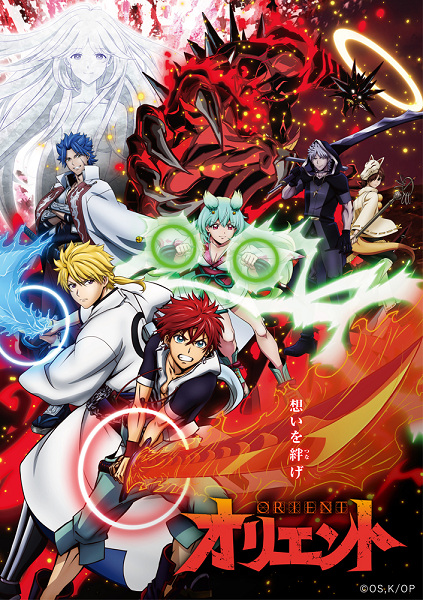
Orient
- Aired: January 6, 2022 – March 24, 2022
- Total Eps: 12 episodes
- Streaming Platforms: Crunchyroll
- Studio: A.C.G.T.
- Director(s): Tetsuya Yanagisawa
- Original Creator: Shinobu Ohtaka
- Genres: Action, Adventure, Fantasy
Review: I went into this anime with a specific kind of hope—the kind a writer reserves for a story by the creator of Magi, a series that knew how to balance grand adventure with genuine emotional stakes. What I found instead was a production that feels caught between two worlds: a source material with real ambition and an anime adaptation that cannot quite figure out how to translate that ambition into motion. As a writer, the most instructive thing about this anime is how clearly it demonstrates the gap between having ideas and having craft.
The premise is standard shounen scaffolding: Musashi and his best friend Kojirou vow as children to become Bushi, warriors wielding special Kitetsu blades against the Oni who have ruled humanity for 150 years. Five years later, the dream has dimmed, and Musashi is staring down a future in the mines. The first several episodes are, frankly, a slog. The pacing is irregular, the world-building is doled out in confusing fragments, and the Oni themselves—supposedly the terrifying overlords of this setting—are rendered as cartoonish mascot creatures that undercut any sense of threat. A writer learns early that your antagonists define your stakes. When the monsters look like they wandered out of a children's show, it becomes very hard to care whether the heroes defeat them.
Then something shifts. Somewhere around episode six or seven, the anime remembers it has a story to tell. The introduction of Shirou, a genuinely unsettling antagonist with power far beyond our protagonists, injects the series with the tension it had been missing. Musashi's backstory—the ostracization, the loss, the darkness he carries—arrives with a weight that the early episodes never suggested was possible. The trio of Musashi, Kojirou, and Tsugumi develops a chemistry that is genuinely enjoyable, their banter and misunderstandings carrying a warmth that the plot alone could not sustain. There is a version of this show that starts here, and it would be a far better show.
The problem is that it does not start here, and the version that exists is compromised at every turn by its production. The animation is the most consistent criticism for good reason: fight choreography is static, dramatic moments lack fluidity, and the visual direction feels a decade out of date. As a writer, I can forgive a lot if the storytelling is strong enough to carry the weight. But the anime asks its audience to sit through middling execution of a story that only intermittently justifies the patience. The second cour compounds this by separating Musashi from his companions, a structural choice that drains the series of the group dynamic that had become its greatest asset.
What lingers is a sense of unrealized potential. The power system involving Kitetsu colors and the Obsidian Goddess inside Musashi suggests a mythology with real depth. The discrimination metaphor, however clumsily handled, gestures at something meaningful. Shinobu Ohtaka can build worlds; Magi proved that. But an anime is not a manga, and an adaptation must find its own rhythm, its own visual language, its own way of earning investment. The anime never quite finds any of these. It is a story that demands patience and rewards it only partially, a reminder that even a promising premise needs a production capable of carrying it across the finish line. I wanted to see the version of this that the source material's fans believe in. I am still not sure I did.
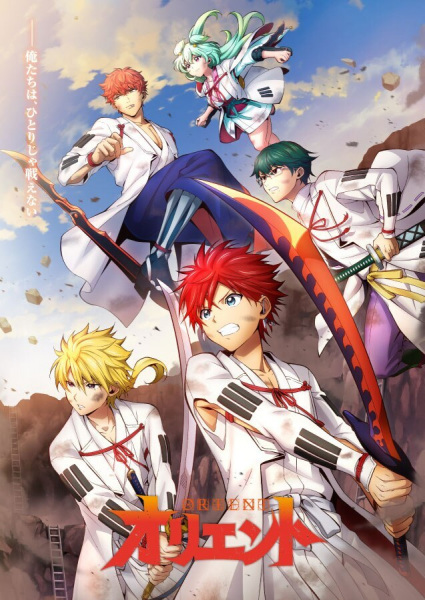
Orient: Awajishima Gekitou-hen
- Aired: July 12, 2022 – September 27, 2022
- Total Eps: 12 episodes
- Streaming Platforms: -
- Studio: A.C.G.T.
- Director(s): Tetsuya Yanagisawa
- Original Creator: Shinobu Ohtaka
- Genres: Action, Adventure, Fantasy
Review: I went into this new season hoping the second cour might fix what the first could not. The first season had flashes of something worth caring about—the bond between Musashi and Kojirou, the mythology of the Kitetsu, the faint outline of a larger war—but it was buried under stiff animation and a pacing that felt like walking through mud. The Awajishima arc, at least on paper, promised escalation: a massive Oni, a gathering of Bushi bands, stakes that could finally make the series feel like it mattered. What I found instead was a production that had not improved where it counted, and a story that made a fatal choice about its own characters.
The premise of this arc is straightforward enough. Musashi, separated from his companions, finds himself on Awajishima among a coalition of Bushi forces preparing to confront the Yamata no Orochi, a colossal Oni that has never been wounded. This should be the moment where the series delivers on the promise of its world: rival bands forced to cooperate, a threat that dwarfs anything the heroes have faced, a chance for Musashi to grow beyond the hotheaded boy of the first season. And to be fair, there are moments where that promise flickers. The introduction of Michiru, the sheltered princess who becomes a genuine emotional anchor, is the arc's brightest spot—a character whose arc feels earned rather than manufactured. The power system gets more texture, the stakes feel more concrete.
But as a writer, the choice that defines this arc is the decision to keep Musashi apart from Kojirou and Tsugumi. Their chemistry was the first season's only reliable engine, the thing that made the slower episodes tolerable. Stripping that away leaves Musashi exposed, and what he's exposed as is a protagonist who spends most of the arc getting beaten down, lectured at, and left behind. There is a difference between a hero who struggles and a hero who is simply subjected to the plot, and Awajishima leans hard into the latter. By the time the final confrontation arrives, I felt less like I was watching growth and more like I was watching endurance testing.
And then there is the animation. The first season's action was static; this season's is occasionally ambitious in its choreography but frequently sabotaged by the same shortcuts and reused frames. Fights that should feel monumental—clashes against a creature that has never known a wound—unfold in fits and starts, with visual effects attempting to compensate for a lack of fluid motion. The direction inserts flashbacks mid-combat without transition, shattering whatever momentum the scene had built. A writer learns that action is storytelling, not decoration. When the action cannot communicate weight or consequence, the story loses its ability to make the audience feel the stakes it keeps insisting exist.
What lingers, in the end, is a sense of a story that knows what it wants to be but lacks the means to become it. The Awajishima arc has the bones of a turning point: a siege, a sacrifice, a protagonist forced to confront the limits of his conviction. The manga, by all accounts, makes these beats land. The anime gives them a stage and then forgets to light it. I wanted to be moved by the ending. I wanted Michiru's arc to mean something. Instead, I finished the season feeling like I had read a summary of a story rather than experienced one—informed of the emotions I was supposed to feel, without ever being given the chance to actually feel them.

Boushoku no Berserk
- Aired: October 5, 2023 – December 21, 2023
- Total Eps: 12 episodes
- Streaming Platforms: Crunchyroll
- Studio: A.C.G.T.
- Director(s): Tetsuya Yanagisawa
- Original Creator: Ichika Isshiki
- Genres: Action, Adventure, Fantasy
Review: I went into this anime with a writer's ear tuned for a specific frequency: the hum of a story that knows exactly what it is and commits to it without apology. What I found was a series that occasionally hits that note, but more often wavers between the grimdark fantasy it wants to be and the generic power-fantasy it settles for. As a writer, the most instructive thing about this adaptation is how clearly it demonstrates the difference between a premise that sounds edgy and a story that actually earns its darkness.
The setup is straightforward and, on paper, effective. Fate Graphite is a "doorkeeper" in a world where skills determine destiny, cursed with the skill of Gluttony—a hunger that never abates and offers no apparent benefit. When he kills a dying thief and absorbs his soul, he discovers the truth: Gluttony allows him to consume the skills and stats of anything he slays. Paired with a sentient sword named Greed who shares his affliction, Fate begins a climb from the bottom of a rigid hierarchy dominated by corrupt Holy Knights. That is a workable engine for a revenge-adjacent power fantasy with a genuinely unsettling cost.
The problem is that the show rarely lets that cost feel real. Fate's hunger is introduced as a constant, gnawing threat—the thing that will eventually consume him if he cannot feed it. But across twelve episodes, the hunger becomes a mechanic rather than a terror. He eats, he grows stronger, he moves on. The moments where the show gestures toward the psychological toll—the isolation, the fear of losing control—are brief and underdeveloped, buried under a steady stream of new abilities and escalating enemies. As a writer, I kept waiting for the show to sit with Fate's condition, to let the horror of what he is settle into his bones. It never does.
The supporting cast fares worse. Roxy Hart, the compassionate Holy Knight who showed Fate kindness when no one else did, is positioned as the emotional anchor, the reason he wants to remain human. But she remains largely passive, a symbol of goodness rather than a person with her own interiority. Greed, the talking sword, is the closest thing the series has to a genuine dynamic—their banter carries a spark that the rest of the dialogue lacks. Everyone else, from the corrupt knights to the mysterious Myne, exists to serve the plot's next beat, introduced with just enough detail to fulfill their function and then discarded.
Visually, the series is the definition of adequate and no more. The character designs are serviceable, the action sequences are staged with clarity but little flair, and the animation frequently relies on still frames and close-ups during conversations. For a story about a man who devours his enemies to survive, the fights should feel visceral, desperate, hungry. They feel like a checklist. There are worse-looking productions, certainly, but "better than the worst" is a low bar to clear.
What lingers, in the end, is a sense of a story that had the ingredients for something genuinely nasty and interesting—a protagonist whose power is inseparable from his damnation, a world built on a hierarchy that deserves to be torn down—and chose instead to be another power-fantasy comfort food. The first episode presents a society split between the skilled and the skill-less, a system ripe for critique. Fate never actually challenges that system. He just becomes powerful enough to exist within it. That is not a story about Gluttony. That is a story about a guy who gets strong. I wanted to feel the hunger. I finished the season feeling nothing at all.

"Omae Gotoki ga Maou ni Kateru to Omouna" to Yuusha Party wo Tsuihou sareta node, Outo de Kimama ni Kurashitai
- Aired: January 9, 2026 – March 27, 2026
- Total Eps: 12 episodes
- Streaming Platforms: Crunchyroll
- Studio: A.C.G.T.
- Director(s): Nobuharu Kamanaka
- Original Creator: kiki
- Genres: Action, Adventure, Fantasy, Girls Love
Review: I went into this anime—mercifully abbreviated as Roll Over and Die in English—knowing only that it had a reputation for being darker than the standard fantasy fare. As a writer, that word "darker" is a promise and a trap. It can mean a story willing to sit with discomfort, or it can mean a story that mistakes cruelty for depth. What I found across twelve episodes was a series that genuinely wants to be the former but lacks the discipline to avoid becoming the latter, a story with a compelling central wound and a production that keeps picking at the scab instead of letting it heal into something meaningful.
The setup is brutal in a way that commands attention. Flum Apricot has been chosen for the hero's party despite stats that read as zero across the board. Her only skill is "Reversal," which she does not understand, and which makes her appear useless. The party's sage, Jean, bullies her relentlessly before eventually selling her into slavery. When her master throws her into a monster pit for entertainment, she grabs a cursed sword that guarantees death to its wielder—and discovers that her Reversal flips the curse into power. That is a genuinely strong opening move. A protagonist whose salvation is inseparable from her damnation, whose apparent weakness is actually the key to her strength, whose betrayal becomes the catalyst for her liberation. A writer can build on that.
What the series does with that foundation is where the frustration sets in. The early episodes commit to Flum's suffering with an intensity that borders on gratuitous. She is sold, degraded, and nearly killed, and the camera lingers on her humiliation in a way that feels less like empathy and more like spectacle. This is the central tension of "dark fantasy": the line between depicting trauma and exploiting it. This anime crosses that line more than once, and the effect is numbing rather than affecting. By the time Flum escapes with Milkit, another slave, and begins to build a new life, the relief I felt was less for the characters than for myself—the ordeal was over, and the show could finally become something else.
And it does, briefly. The middle stretch, where Flum and Milkit learn to trust each other and navigate a world that has only ever treated them as objects, has moments of genuine warmth. The relationship between them is the series' emotional anchor, and the show is smart enough to let it breathe in small gestures and quiet conversations rather than grand declarations. The introduction of Eterna Rinebow and the wandering witch Gadhio adds texture, and the mystery of Flum's Reversal ability deepens in ways that suggest a larger mythology worth exploring. There is a version of this story that leans into the found-family dynamic, that treats Flum's growing power as a means of protecting the people she has chosen rather than simply a tool for revenge. That version flickers in and out of view.
Then the pacing collapses. The final episodes scramble to resolve threads that needed another cour to develop, introducing lore drops and revelations that land with a thud because they have not been earned. One viewer described the ending as "scrambled" and "kind of dumb," and while that is blunt, it is not inaccurate. The fights become long-winded, heavy on dialogue and light on choreography, and there are sequences where fog obscures the action for minutes at a time—a production shortcut that reads as a concession to budget rather than a stylistic choice. The animation throughout is serviceable but never inspired; A.C.G.T. does not have the resources to make Flum's power feel as terrifying and beautiful as it should.
As a writer, what bothers me most is the wasted potential of the Reversal concept. Here is a protagonist whose very existence inverts expectations—weakness becomes strength, curse becomes blessing—and the series treats it primarily as a power-up rather than a philosophical problem. What does it mean to live reversed? What does it cost to turn death into life? The show gestures at these questions without committing to them, too busy moving Flum from one confrontation to the next to let her sit with the implications of what she is. The final lore drops suggest answers that might have been interesting if the series had earned them.
I wanted to love this. I wanted to find the dark fantasy that its defenders describe, the one with "depth if you actually pay attention". What I found was a series that pays attention to suffering but not to healing, to cruelty but not to consequence. It is not slop—the bones are too good for that—but it is incomplete, a story that ends before it has finished becoming itself. Flum deserves better. Milkit deserves better. And so, frankly, does the audience.


Comments
Post a Comment