Beyond the Anime: Dive into These Thrilling Ongoing Action Manga and Manhwa
With its exciting plots and vibrant illustrations, action manga has enthralled millions of readers and influenced storytelling in a variety of media. With trailblazing creators like Osamu Tezuka, the modern action genre, which has its roots in illustrated scrolls and picture books, blossomed in the years following World War II. The way action was depicted was transformed by Tezuka's "cinematographic" techniques, which gave readers a vivid sense of impact and movement. Other manga genres, like as sports, sci-fi, fantasy, and romance, were largely influenced by this visual style. Action manga's influence goes beyond its own genre; Japanese comics emphasize dynamic character poses, crisp, powerful paneling, and movement progression. Action manga is inextricably related to the global phenomenon of anime, as evidenced by the adaptations of classic series like Dragon Ball, Naruto, and One Piece.
Here is the ongoing recommendation for action genre enthusiasts:

Golgo 13
- Volumes: -
- Chapters: -
- Published: November 29, 1968 - Publishing
- Genres: Action, Adventure, Award Winning, Drama, Mystery
- Themes: Adult Cast, Historical
- Demographic: Seinen
- Serialization: Big Comic
- Authors: Takao Saito (Story & Art), Kazuo Koike (Story)
Review: This manga is less a conventional narrative and more a monument—a half-century testament to the enduring appeal of a perfectly still center. Created by Takao Saito in 1968 and still publishing today, it holds the Guinness World Record for most volumes of a single manga series, with over 200 collected editions and roughly 300 million copies in circulation. To read it is to encounter a work that fundamentally reshaped what Japanese comics could be for adults, even as its protagonist remains stubbornly, almost defiantly, unknowable.
The premise is elemental: Duke Togo, known as Golgo 13, is a professional assassin. He takes contracts. He does not fail. He has no discernible nationality, age, or origin, and the series has famously refused to confirm any of the theories about his past. What matters is not who he is, but what he does, and he does it with a customized M-16 and an accuracy that borders on the supernatural. The stories are largely episodic, set against real-world geopolitics—Cold War intrigues, corporate conspiracies, assassinations that intersect with historical events. This structure is both the series' greatest strength and its primary limitation. A reader can begin almost anywhere; there is no accumulated continuity to master. But there is also no arc, no progression, no change. Golgo does not evolve. He simply persists.
That persistence is the point. Golgo is not a hero, nor is he an antihero in any conventional sense. He is a force—stoic, amoral, and utterly committed to the completion of his contract. The manga's refusal to humanize him is precisely what makes it work. Readers do not root for Golgo so much as watch him, fascinated by the mechanical precision of his existence and the intricate, often research-heavy plots that surround him. The real protagonists of many stories are the clients, the targets, and the investigators caught in Golgo's orbit; he often appears in only a handful of panels across a hundred-page chapter. This decentering of its own title character is a bold and unusual choice, one that keeps the series fresh by making Golgo a constant rather than a subject.
Historically, the manga's significance cannot be overstated. Saito was a key figure in the gekiga movement, which brought cinematic technique and dark adult themes to a medium previously dominated by children's entertainment. This manga was a commercial and cultural validation of that approach, proving that adults would read comics about violence, sex, and international intrigue. Its influence on the perception of manga as a medium for mature storytelling is foundational.
The drawbacks are inherent to the format. The episodic nature means quality varies; some plots are taut and gripping, others convoluted or reliant on dated geopolitical assumptions. The art, while effective in its gritty realism, reflects the conventions of its era, and readers accustomed to modern manga may find the pacing and paneling antiquated. Most significantly for English-language readers, only a fraction of the series has been translated, leaving the vast majority of Golgo's hundreds of missions inaccessible.
This manga is essential as a historical document and fascinating as a character study in absence. It is not a series to binge for narrative payoff; it is a series to dip into, to observe a master at work in self-contained, often grimly satisfying vignettes. The protagonist never changes, and that is both the manga's limitation and its strange, enduring power.

Kinnikuman
- Volumes: -
- Chapters: -
- Published: May 15, 1979 - Publishing
- Genres: Action, Award Winning, Comedy, Sports
- Theme: Combat Sports
- Demographic: Shounen
- Serialization: ShuuPlay News
- Authors: Yudetamago (Story & Art)
Review: This is a foundational text that is simultaneously essential and deeply alien to most Western readers. Running in Weekly Shōnen Jump from 1979 to 1987, Yudetamago's series began as a crude Ultraman parody about a cowardly, idiot prince named Suguru Kinniku who happens to be Earth's designated superhero. What it became, however, was something far more influential: the blueprint for the modern battle shōnen tournament saga, a merchandising juggernaut, and a cultural touchstone in Japan that remains stubbornly obscure outside it.
The manga's central transformation is its most remarkable feature. The early volumes are genuinely rough—scatological humor, uneven art, and a protagonist who is difficult to root for because he is, by design, lazy and incompetent. Around the Chōjin Olympics arc, however, the series pivots hard into wrestling melodrama. Matches gain stakes, fighters develop signature finishers, and the comedy recedes into interludes between arcs that now carry genuine emotional weight. The Seven Devil Chōjin and Golden Mask arcs represent the series at its peak, where the absurdity of a character named Buffaloman is treated with complete narrative seriousness.
This tonal whiplash is both the manga's charm and its barrier. Readers must survive the early volumes to reach the good stuff, and the definition of "good" here is inseparable from 1980s Japanese pro-wrestling culture and tokusatsu tropes that never translated well to Western audiences. The series' other defining innovation—incorporating reader-submitted character designs into the story, a practice that famously launched the career of a young Eiichiro Oda—is fascinating historically but adds to the chaotic, kitchen-sink quality of the cast.
The artwork by Yoshinori Nakai is workmanlike rather than beautiful, prioritizing the grotesque physiques of the Chōjin and the impact of their special moves over elegance. It serves the wrestling spectacle effectively, but readers accustomed to the polished aesthetics of later Jump hits will find it dated.
This manga is a historically vital work that is difficult to recommend without heavy qualification. Its influence on tournament structuring, villain-to-ally conversions, and power escalation is undeniable and traceable directly to Dragon Ball and everything that followed. But the original manga is a product of its time and place in ways that make it resistant to casual modern reading. For students of shōnen history, the middle arcs are worth the investment. For everyone else, the barrier to entry is steep and the payoff uncertain.

Berserk
- Volumes: -
- Chapters: -
- Published: August 25, 1989 - Publishing
- Genres: Action, Adventure, Award Winning, Drama, Fantasy, Horror
- Themes: Gore, Military, Psychological
- Demographic: Seinen
- Serialization: Young Animal
- Authors: Kentaro Miura (Story & Art), Studio Gaga (Art)
Review: A dark fantasy manga by Kentaro Miura, serialized in Young Animal magazine from 1989 until his death in 2021. It is a work that redefined the visual and emotional possibilities of the medium, combining hyper-detailed artwork with a story of profound trauma, ambition, and the stubborn human refusal to submit to fate. Since Miura's passing, the series has continued under his friend Kouji Mori and Studio Gaga, a continuation that has proven deeply divisive and which any honest assessment must confront alongside the original's achievements.
The narrative follows Guts, a mercenary born from a corpse and raised in violence, who wields a sword larger than himself and carries a burden even heavier. The early "Black Swordsman" chapters establish him as a vengeful loner hunting demons, but the series' true foundation is the Golden Age arc, a sprawling flashback detailing his years with the Band of the Hawk and his fraught relationship with Griffith, the charismatic leader whose dream of a kingdom ultimately leads to an act of betrayal so catastrophic it reshapes the world. The post-Eclipse story follows Guts as he seeks to protect Casca, the woman he loves, whose mind was shattered by that same betrayal, while confronting the demonic God Hand and the inexorable pull of causality itself.
Miura's artwork is the series' most immediate and undeniable achievement. His command of detail—every rivet in a suit of armor, every grotesque fold of a demon's flesh, every expression of agony or resolve—creates a world that feels engineered rather than merely drawn. The Golden Age arc in particular is a masterclass in visual storytelling, building the Band of the Hawk's camaraderie through quiet campfire scenes and crowded battlefields before the Eclipse arrives to tear it all apart. The infamous Eclipse sequence is harrowing not because of its shock value alone, but because Miura spent dozens of chapters making the reader care about the people being destroyed.
The character work is equally accomplished. Guts is a protagonist defined by his flaws and his suffering, a man who commits terrible acts and yet remains compelling because his struggle against a world that has literally marked him for destruction feels genuinely earned. Griffith stands alongside him as one of manga's great antagonists, a figure whose ambition and charisma are inseparable from his capacity for monstrous sacrifice. Their relationship—friendship, rivalry, and ultimately betrayal—is the emotional core that gives the series its enduring power.
Thematically, this manga is a sustained meditation on trauma and the will to endure. Guts' refusal to stop struggling in a world fated to destroy him becomes the very thing that proves his humanity. The series does not shy away from depicting sexual violence, gore, and psychological devastation, but these elements serve the story's exploration of what it means to survive and to keep moving forward even when hope seems impossible.
Any assessment of this manga in its current state must acknowledge that it is no longer solely Miura's work. Since Chapter 365, the manga has been written by Kouji Mori based on conversations with Miura and illustrated by Studio Gaga. The reception has been sharply divided. Some readers find the continuation a faithful and moving attempt to honor a friend's vision, expressing gratitude that the story is being told at all. Others argue that the recent chapters have fundamentally betrayed the series' themes, citing a twist that reframes Guts as a "chosen one" tied to fate—a revelation that contradicts everything that made him special as a man who existed outside causality through sheer stubbornness and suffering. The art, while competent, lacks Miura's singular intensity, and the pacing has shifted dramatically.
This is not a minor caveat. It means that Berserk is now two works: the incomplete masterpiece Miura left behind, and the contested continuation that seeks to finish it. Readers approaching the series must decide for themselves where one ends and the other begins, and whether the latter does justice to the former.
This manga remains essential reading for anyone interested in the darker possibilities of fantasy storytelling. Miura's vision—of a world that is cruel and beautiful, of a man who fights because the alternative is surrender, of art that demands to be studied rather than merely consumed—is a genuine achievement that has influenced a generation of creators. But it is also a work that asks for patience, emotional resilience, and a willingness to sit with discomfort. It is not for everyone, and its unfinished state is a tragedy that no continuation can fully remedy. For those willing to undertake the journey, however, the Golden Age arc and the chapters that follow it contain some of the most powerful storytelling the medium has produced.

One Piece
- Volumes: -
- Chapters: -
- Published: July 22, 1997 - Publishing
- Genres: Action, Adventure, Fantasy
- Demographic: Shounen
- Serialization: Shounen Jump (Weekly)
- Authors: Eiichiro Oda (Story & Art)
Review: Monkey D. Luffy is a rubber-bodied teenager who ate a cursed fruit as a child and has wanted to be King of the Pirates ever since. He sets out from his tiny village with nothing but a straw hat and an unshakable conviction that the legendary treasure known as One Piece is real and that he will find it. Along the way he recruits a swordsman who wants to be the world's greatest, a navigator who wants to map every sea, a liar who wants to be a brave warrior of the sea, a chef who wants to find the ocean's greatest ingredients, a doctor who wants to cure every disease, and an archaeologist who wants to uncover a forbidden history. Each has a dream, and each has been wounded by the world in some way that makes the crew's found family feel earned rather than sentimental.
Oda's art is often described as busy, and it is—his pages are dense with background gags, tiny details, and crowds that reward rereading. But the messiness serves a purpose: it makes the world feel inhabited, and it makes the quieter character moments land with surprising force. The early arcs, from Arlong Park to Drum Island to Alabasta, are masterclasses in setup and payoff, building toward confrontations that are less about defeating a villain than about proving that a person's dream has value. The famous "walk to Arlong Park" sequence, the burning of the Going Merry, the declaration of war on the World Government at Enies Lobby—these are moments that have been memed and referenced so often that it is easy to forget how genuinely effective they are in context. They work because the series has spent hundreds of chapters earning them.
The ensemble is the series' beating heart. Luffy is a simple protagonist by design—his honesty and his refusal to compromise on his friends' dreams are the point—but the crew around him carries the emotional weight. Nami's history with Arlong, Robin's desperate desire to live, Sanji's complicated relationship with his past, Chopper's grief over his mentor: each character gets a spotlight arc that recontextualizes them, and the cumulative effect is a crew that feels like a family rather than a collection of archetypes. The villains, too, are often memorable—Crocodile, Doflamingo, and Kaido each represent distinct kinds of tyranny, and the series is careful to show how ordinary people suffer under them, which gives the eventual defeats a cathartic weight.
The series' length is both its greatest asset and its most significant barrier. The early arcs are tight and propulsive, but the later arcs—particularly Dressrosa, Whole Cake Island, and Wano—span hundreds of chapters each, and the pacing becomes glacial. Oda's tendency to introduce dozens of characters in a single arc means that many receive minimal development, and the sheer volume of names, factions, and plot threads can be exhausting to track. There is also a recurring criticism that the series' treatment of female characters has not aged well; early arcs rely on damsels and fanservice, and while later arcs introduce stronger figures like Robin and Yamato, the improvement is uneven rather than consistent.
The combat system, based on Haki and Devil Fruits, becomes increasingly complex and occasionally inconsistent, with power-scaling debates that can overshadow the story's emotional core. And for all its warmth, the series' tone is not as varied as its length might suggest—the formula of "arrive on island, make friends, learn of a tyrant, fight, liberate, party" becomes predictable, even if the execution remains competent.
This manga is not a series that can be judged on its first few volumes alone, nor is it one that can be dismissed for its length. It is an epic in the truest sense—sprawling, uneven, occasionally frustrating, but capable of moments of genuine transcendence. It asks readers to invest thousands of pages, and for those who make that investment, it offers a world that feels alive and a crew that feels like friends. It is not for everyone, and its flaws are real, but its place in the medium's history is deserved.

Hunter x Hunter
- Volumes: -
- Chapters: -
- Published: March 3, 1998 - Publishing
- Genres: Action, Adventure, Fantasy
- Demographic: Shounen
- Serialization: Shounen Jump (Weekly)
- Authors: Yoshihiro Togashi (Story & Art)
Review: This manga is a shonen manga that fundamentally distrusts the conventions of shonen manga. Yoshihiro Togashi's series, serialized sporadically since 1998, begins with a premise so familiar it borders on archetypal—a boy named Gon leaves home to find his absent father—and then spends hundreds of chapters systematically dismantling the assumptions that premise invites. The result is a work of extraordinary intelligence and frustrating incompleteness, a manga that treats its genre as a set of hypotheses to be tested and frequently disproven.
The series' most significant formal achievement is its power system. "Nen" is introduced not as a means of escalating combat but as a rule-bound framework of conditions, restrictions, and costs. The famous example is Kurapika, who defeats a vastly stronger opponent not through training or determination but through a contract with himself: his power is immense only against the Phantom Troupe, and using it against anyone else costs him his life. This principle—that power must be paid for, and that cleverness can overcome raw strength—governs nearly every conflict in the series. Battles are frequently won before the first punch is thrown, through information asymmetry, environmental manipulation, and psychological pressure. The Chimera Ant arc's climax hinges not on the strongest character's strength but on a human-made bomb, a deliberate refusal of the shonen logic that physical power determines outcomes.
This intellectual rigor extends to the narrative's treatment of its characters. Gon is not a hero in any conventional sense; his morality is instinctive and self-centered, and the Chimera Ant arc reveals the terrifying implications of a child whose determination has no ethical boundary. Killua's arc, by contrast, is one of the most carefully developed portraits of recovery from abuse in the medium, his gradual liberation from his family's conditioning rendered with a patience the series rarely affords anything else. The supporting cast—Kurapika's vengeance, Leorio's ambition, the Phantom Troupe's strange code—receives similar attention, and the villains are frequently more comprehensible than the protagonists.
The manga's structural ambition is matched by its visual intelligence. Togashi's paneling is deceptively simple but relentlessly intentional, guiding the eye through conversation and confrontation with a control that rewards rereading. The Chimera Ant arc's notorious narration—dense, philosophical, and frequently criticized for its pacing—is in the manga a deliberate use of the medium's capacity to expand subjective time, allowing a single moment to contain paragraphs of strategic and emotional calculation.
The problems are inseparable from the work's history. The Chimera Ant arc, while arguably the series' peak, sprawls across roughly 130 chapters and suffers from uneven pacing and, in its serialized form, artwork that occasionally descended into sketches. The current Succession War arc is the series' most complex and densely plotted, a political thriller of information warfare and nested conspiracies that has no business in a shonen magazine, but its advancement is glacial due to Togashi's well-documented health issues. The manga exists in a state of perpetual suspension, and any evaluation must acknowledge that it may never be completed.
This manga is a masterclass in subversion and construction, a series that uses the vocabulary of shonen to interrogate what that vocabulary can and cannot express. Its power system remains the medium's most elegant, its character work is frequently devastating, and its willingness to follow its premises to uncomfortable conclusions is unmatched. It is also incomplete, unevenly paced, and occasionally difficult to read in its original serialization. It is not a manga to read for resolution. It is a manga to read for the experience of watching a brilliant mind take apart the genre it loves, piece by piece, and rebuild it into something stranger and more honest.

Boukenou Beet
- Volumes: -
- Chapters: -
- Published: March 6, 2002 - Publishing
- Genres: Action, Adventure, Fantasy, Supernatural
- Demographic: Shounen
- Serialization: Jump SQ.Crown
- Authors: Riku Sanjo (Story), Koji Inada (Art)
Review: This manga is a shonen manga defined by its own interrupted history. Serialized since 2002 from the creative team behind Dragon Quest: Dai no Daibouken—writer Riku Sanjou and artist Koji Inada—it carries the DNA of classic 1990s adventure manga into a new century, offering a familiar but warm-hearted world of monster-hunting and inherited legacies. The problem is that the series has been in a state of perpetual interruption for nearly two decades, making it less a complete story than a collection of promising fragments.
The premise is pure genre comfort food: in a world ruled by demons called Vandels, young Beet idolizes the legendary Zenon Warriors. When they sacrifice themselves to save him, they pass their magical Saiga weapons into his body, making him the strongest Buster alive and setting him on a quest to end the Dark Century. The setup is efficient and emotionally legible, borrowing liberally from the mentor-sacrifice playbook that defined Dragon Quest and later One Piece. The early chapters suffer from rushed pacing and abrupt turns, as if the series was uncertain of its survival, but once the core cast settles into a rhythm, the worldbuilding begins to breathe. Concepts like Broad Busters and Vandel society are introduced naturally through the plot rather than dumped through exposition.
The cast follows familiar archetypes but develops genuine warmth. Beet is a kind, determined hero who—refreshingly for the era—is not oblivious to romance, openly declaring his intention to marry his companion Poala. The supporting characters expand into more intricate roles as the story progresses, though some, like the rival Slade, remain stubbornly two-dimensional. The villains are a mixed bag: the main antagonist Beltoze is a one-note "absolute evil" figure with little page presence, while mid-tier Vandels like Grunide and Sir Baron are far more engaging, each with distinct abilities that keep the action varied.
The artwork by Inada is competent but lacks the distinctive flair that made Dai no Daibouken memorable. The action is clear and readable, and the monster designs carry a nostalgic RPG quality, but the visual identity never quite escapes the shadow of its predecessor.
The defining issue is availability and completion. This manga has been repeatedly derailed by the artist's health, magazine discontinuations, and serialization shifts, leaving the series in a state of indefinite hiatus punctuated by brief revivals. Only a fraction of its chapters has been translated into English, and the narrative remains unresolved. For readers seeking a satisfying arc, this is a fundamental barrier. For those willing to treat it as an ongoing, erratic journey, the early and middle volumes offer a charming, if unremarkable, shonen adventure with genuine affection for its characters.
This manga is a time capsule of classic shonen values—friendship, legacy, and righteous monster-punching—delivered with sincerity but without distinction. Its pedigree is impeccable, its execution is solid, and its potential is clear. But the manga exists in a state of suspension, and recommending it means recommending an unfinished experience. Approach it as a pleasant detour through familiar territory rather than a destination worth committing to.

Okane ga Nai
- Volumes: -
- Chapters: -
- Published: March 26, 2002 - Publishing
- Genres: Action, Boys Love, Comedy, Drama, Erotica
- Serialization: Comic Magazine LYNX
- Authors: Hitoyo Shinozaki (Story), Tohru Kousaka (Art)
Review: This manga is a work that sits at an uncomfortable intersection of genre history and contemporary sensibilities. Launched in 2002 as a manga adaptation of Hitoyo Shinozaki's light novels, with art by Tōru Kousaka, the series follows eighteen-year-old Yukiya Ayase, an orphaned university student betrayed by his cousin and sold at auction to settle a debt. He is purchased for 120 million yen by Somuku Kanou, a loan shark with a connection to Ayase's past, who then forces Ayase into a sexual arrangement to "repay" the debt—500,000 yen per encounter. What follows across its numerous volumes is a narrative that has become something of a lightning rod, celebrated by some as a classic of the boys' love genre and condemned by others as a relic of its most troubling excesses.
The series' central conceit is built on a foundation that modern readers will find immediately difficult: the debt is not merely financial but sexual, and the "romance" that develops is rooted in coercion. Kanou is a domineering figure who uses his economic power to trap Ayase, and the narrative's early volumes do little to disguise the transactional and non-consensual nature of their dynamic. Ayase is characterized as naive, gentle, and perpetually bewildered by the attention he receives, while Kanou oscillates between possessive cruelty and gestures of affection that feel designed to soften the edges of his behavior rather than genuinely reckon with it. For readers who approach the genre with expectations shaped by more recent works that prioritize consent and emotional reciprocity, this manga reads as a throwback to an era when the line between romance and violation was far more blurred—and far less questioned.
Yet to dismiss the series entirely as mere "ragebait" would be to ignore the peculiar self-awareness that occasionally surfaces within it. One of the more interesting tensions in the manga is its treatment of homophobia. Kanou, despite his behavior, insists he is not gay, and his internalized loathing—his disdain for being perceived as "like a woman" through his role as the receiving partner's counterpart—is acknowledged and even called out by other characters. This is not a defense of the narrative's problems, but it does suggest that the series is operating with a degree of consciousness about the codes it is manipulating. The artwork reinforces this self-consciousness: Kanou and Ayase are drawn in deliberately contrasting styles, the former hyper-masculine and imposing, the latter so delicate and diminutive that the visual disparity becomes almost absurd. It is possible to read this as a parody of the genre's extremes, but it is equally possible to read it as merely an extreme example of them.
The character work beyond the central pair is thin. The supporting cast—Kanou's twins, the okama bar owner Someya, various rivals and suitors—populate the world but rarely transcend their functions as obstacles or foils. Ayase himself remains largely static: a victim whose primary narrative role is to be desired and acted upon, whose growth is measured in his gradual acceptance of a relationship that began in coercion. The series' longevity (it has been serialized, with interruptions, for over two decades) means that the dynamic between Kanou and Ayase has had ample time to evolve, and later volumes do introduce complications—Kanou's insecurity, the return of old enemies, the question of whether Ayase's feelings are genuine or merely a survival mechanism. But the foundation remains the same, and for many readers, no amount of later tenderness can erase the terms on which the relationship was built.
This manga is, in the end, a difficult work to recommend without significant caveats. It is a product of its time, and that time was one in which the boys' love genre frequently used coercion as a narrative shortcut to emotional intensity. For readers interested in the history of the genre—in understanding what the conventions were and how they have shifted—it offers an instructive, if uncomfortable, case study. For readers seeking a romance that treats its characters with dignity, it offers little. The series has its defenders, who point to the dark humor, the eventual emotional complications, and the sheer longevity as evidence that there is something worth engaging with beneath the surface. Whether that something outweighs the foundational problems is a question each reader must answer for themselves. What can be said with certainty is that this manga is not a work that can be approached casually, and its legacy is inseparable from the very elements that make it so contentious.

Black Lagoon
- Volumes: -
- Chapters: -
- Published: April 19, 2002 - Publishing
- Genres: Action, Drama
- Themes: Adult Cast, Military, Organized Crime
- Demographic: Seinen
- Serialization: Sunday Gene-X
- Authors: Rei Hiroe (Story & Art)
Review: This manga arrives with a reputation that precedes it: a manga about pirates, guns, and swearing, set in a fictional Thai city so thoroughly corrupt that it makes Gotham look like a wellness retreat. Rei Hiroe's series, serialized since 2002, follows the Lagoon Company—a small smuggling outfit operating out of Roanapur—and the Japanese salaryman, Rock, who is abducted by them and ultimately joins their crew after his former life is rendered meaningless. What could have been a shallow exercise in stylized violence instead reveals itself, at its best, as something more considered: a crime noir that understands the moral vacuum of its setting and uses it to interrogate the limits of decency.
The series' greatest asset is its willingness to let dialogue and political maneuvering carry as much weight as its gunfights. The Japan arc, in which Rock returns to his homeland on company business and finds himself caught between the Lagoon crew and the yakuza, is widely regarded as the series' peak precisely because it operates with almost no physical action at all. Instead, it immerses the reader in dense negotiation and psychological pressure, forcing a reckoning with the uncomfortable truth that the "heroes" of Roanapur are just as ruthless as the syndicates they oppose. This moral inversion—where the imposing crime bosses become the villains and the supposed bad guys are often victims—is where this manga is most alive.
Revy, the Chinese-American gunslinger who serves as the series' other central figure, is the engine of its action and its most complicated presence. She is violent, profane, and frequently terrifying, but the series never treats her as a simple instrument of carnage. Her dynamic with Rock—the man who refuses to become like her, even as he adapts to her world—provides the emotional tension that sustains the narrative across its arcs. Rock's slow evolution from helpless outsider to a negotiator who can hold his own in Roanapur's treacherous politics is handled with more nuance than the premise might suggest, though the series is careful never to let him become comfortable in his new skin.
Visually, Hiroe's art is clear, confident, and notably attentive to the mechanics of its violence. The author's interest in firearms extends to chapter-end notes explaining the weapons depicted and the reasoning behind their portrayal, a detail that speaks to the series' commitment to grounding its spectacle in a recognizable reality. The character designs are distinctive without being exaggerated, and the action sequences—while occasionally cramped by the manga format's paneling—convey a sense of kinetic chaos that matches the series' tone.
Where the series stumbles are in its structural rhythm. It has a tendency to alternate between dense, politically intricate arcs and more disposable action-oriented ones, creating a tonal whiplash that can be frustrating. The long running El Baile de la Muerte arc, in particular, has been criticized for slowing the pacing dramatically, with chapters becoming packed with text and losing the balance between plot and action that made earlier arcs so effective. The series' publication schedule has also been notoriously irregular, with extended hiatuses that have left the story incomplete for years at a time. This is not a flaw of the work itself, but it shapes the experience of reading it: this manga is a story that has been told in fragments, and it shows.
This manga is not a manga for everyone. It is violent, cynical, and populated almost entirely by people who have done terrible things or are about to. But within that bleakness is a genuine engagement with questions of identity, morality, and the possibility of remaining human in a world designed to strip that away. When it leans into its political and psychological dimensions, it borders on exceptional. When it defaults to gunfights, it remains entertaining but loses the edge that makes it distinctive. It is a series of high peaks and uneven valleys, held together by the magnetic pull of its central duo and the grimy, lived-in texture of its world. For readers willing to accept its inconsistencies, it offers something rare in the genre: a crime saga that takes its own moral questions seriously, even as it fills the page with bullets.

One Punch-Man
- Volumes: -
- Chapters: -
- Published: June 14, 2012 - Publishing
- Genres: Action, Comedy
- Themes: Adult Cast, Parody, Super Power
- Demographic: Seinen
- Serialization: Tonari no Young Jump
- Authors: Yusuke Murata (Art), ONE (Story)
Review: This manga is, at its core, a paradox: a battle manga where the battles are over before they begin. Saitama, the protagonist, is a hero so powerful that he defeats every opponent with a single punch, and the series' central tension is not whether he will win but whether he will ever find a fight worth having. From an action perspective, this premise is either a catastrophic flaw or a radical innovation depending on how the series deploys it—and over its long run, it has proven to be both.
The series' most consistent action asset is its understanding of hierarchy. Saitama's invincibility is not the only power scale in the world; the Hero Association ranks heroes from C-Class to S-Class, and the monsters that threaten cities escalate in kind. This structure allows the series to generate genuine tension in fights that do not involve Saitama at all. Genos, the cyborg disciple, delivers spectacular high-speed combat sequences that end in wreckage and hard-won survival. The S-Class heroes—Tatsumaki, Bang, Atomic Samurai—fight opponents whose power dwarfs their own, and the series extracts real drama from their struggles. The action works because the world is populated by fighters who can lose, and their losses matter.
When Saitama does enter the fray, the series shifts into a different register entirely. His punches are not dramatic climaxes but anticlimaxes, and the series' visual language reflects this: the impact is rendered with almost casual simplicity, a single panel of contact followed by the opponent's disintegration. The joke, repeated across hundreds of chapters, is that the most powerful being in the world is also the least invested in his own power. Yet this repetition is not without purpose. The series repeatedly stages elaborate, multi-chapter battles involving dozens of heroes and monsters, only to have Saitama end the conflict with a single blow that arrives from off-panel or in the middle of a joke. The effect is deliberate deflation, a commentary on the escalation fetish of the genre itself.
The action's visual execution is where the series most clearly distinguishes itself. Yusuke Murata's artwork is among the most accomplished in the medium, rendering motion with a clarity and dynamism that few artists can match. The spread pages devoted to Boros's meteoric assault, the kinetic chaos of the Monster Association arc, the precise anatomy of a punch that cracks a continent—these are sequences that reward the reader's attention panel by panel. The series' use of speed lines, perspective distortion, and impact framing demonstrates a mastery of the visual vocabulary of action manga while also pushing it toward new extremes. The action is not merely functional; it is the series' primary aesthetic pleasure.
The Monster Association arc represents the series' most ambitious action undertaking, spanning dozens of chapters and pitting nearly every named hero against a corresponding monster threat. The arc's structure is almost operatic, cutting between multiple battles as they escalate in parallel. At its best, this produces a genuine sense of scale and stakes, with heroes like Zombieman and Child Emperor pushed to their limits against opponents who outclass them. At its worst, the sheer number of simultaneous fights becomes exhausting, and the narrative's attention fragments across too many fronts. The eventual arrival of Saitama resolves the arc, but the resolution feels less like a culmination and more like a mercy killing—the series itself seems relieved to have cleared the board.
The Garou arc, which spans much of the series' middle stretch, is the most sustained attempt to build an action narrative around a character other than Saitama. Garou's evolution from martial artist to monster is tracked through a series of increasingly desperate fights, and his growth is measured in the techniques he absorbs and the opponents he overcomes. The action here is more grounded than the cosmic spectacle of the Boros fight, emphasizing technique, adaptation, and the sheer will to continue fighting. Garou's eventual confrontation with Saitama is the series' most thematically rich battle, precisely because it is the one fight Saitama cannot resolve with a single punch—not because Garou is stronger, but because the fight is not really about strength at all.
The series' weakness from an action perspective is its occasional reliance on repetition as a substitute for escalation. There are only so many ways to depict a one-punch victory before the joke wears thin, and the series has long since exhausted the novelty of Saitama's anticlimaxes. The action's true value lies elsewhere: in the struggles of the heroes who can lose, in the visual brilliance of Murata's choreography, and in the series' willingness to let its most spectacular fights end in failure or pyrrhic victory. This manga is not a series about a hero who wins every fight. It is a series about a world where fighting matters, and the hero who wins every fight is the one person for whom it no longer does.

Bungou Stray Dogs
- Volumes: -
- Chapters: -
- Published: December 4, 2012 - Publishing
- Genres: Action, Mystery, Supernatural
- Theme: Detective
- Demographic: Seinen
- Serialization: Young Ace
- Authors: Kafka Asagiri (Story), Harukawa35 (Art)
Review: This is a series that wears its literary pretensions lightly and its action credentials proudly. Kafka Asagiri and Sango Harukawa's manga, serialized since 2012, populates its world with characters named after famous authors and grants them supernatural abilities tied to their literary works—a premise that could easily have collapsed into shallow gimmickry. Instead, the series uses its literary framework to structure a surprisingly robust action system, one in which the abilities are as varied and idiosyncratic as the writers they reference, and the combat sequences are shaped by the tension between those abilities and the personalities who wield them.
The series' action is defined by its refusal to rely on raw power. The protagonist, Atsushi Nakajima, possesses the ability to transform into a white tiger, but his fights are rarely about overwhelming his opponents with brute force. Instead, they are about learning to control his transformation, to direct it, to use it strategically. This pattern repeats across the cast: abilities are not simple upgrades but complex tools with limitations, costs, and unintended consequences. Dazai's ability to nullify other abilities is the series' most elegant example—it is a power that renders other powers irrelevant, and the action sequences involving him are exercises in tension, as his opponents realize that their most reliable weapons are useless against him. The series' combat is built on these interactions, and the most satisfying fights are those in which the outcome hinges on the clever application of an ability's specific rules rather than on who can hit harder.
The Port Mafia arc represents the series' most sustained action sequence, pitting the Armed Detective Agency against a criminal organization whose members are every bit as dangerous as they are. The fights in this arc are not merely physical confrontations but negotiations of philosophy and loyalty, and the action sequences reflect this. Akutagawa's Rashomon is a weapon of terrifying reach and precision, and his battles with Atsushi are rendered with an intensity that matches their personal stakes. The series' use of environment is also notable; fights take place in warehouses, alleyways, and rooftops, and the setting is always a factor in the combat. Characters use walls, vehicles, and debris as weapons or shields, and the action sequences are choreographed with an awareness of space that gives them a grounded, physical quality.
The supporting cast provides the series with its most varied action scenarios. Kunikida's ability to materialize objects from his notebook is used in combat with a resourcefulness that makes him one of the series' most entertaining fighters, while Yosano's healing ability is deployed in ways that blur the line between medicine and violence. The Guild arc introduces a new set of antagonists with abilities that are deliberately overpowered, and the action sequences in this arc are designed to make the Armed Detective Agency's victories feel earned through ingenuity rather than strength. The series' willingness to let its characters lose is also notable; defeats are not merely setbacks but opportunities for growth, and the action sequences are structured to reveal character as much as they are to entertain.
Visually, the art is stylish and dynamic. The character designs are distinctive, and the action sequences are rendered with a fluidity that makes the abilities feel tangible. The series' use of paneling is particularly effective in fight scenes, with the layout often mirroring the flow of combat and the shifting positions of the combatants. The art's evolution over the series' run is noticeable; the earlier chapters are somewhat rougher, while the later chapters demonstrate a confidence and polish that make the action sequences more impactful. The series' use of color in its anime adaptation is notable, but the manga's black-and-white art is equally capable of conveying the visual variety of the abilities.
The series' structural weakness is its pacing. This manga has a large cast, and the narrative frequently cuts between multiple storylines, which can make the action sequences feel fragmented. The series also has a tendency to introduce new abilities and characters at a rapid pace, and the action sequences sometimes suffer from a lack of clarity as a result. The later arcs, in particular, escalate the stakes to a global scale, and the action sequences become more abstract and less grounded in the physical world. This escalation is not without its pleasures, but it does represent a departure from the more intimate, character-driven action of the earlier arcs.
This is a series that understands that the most interesting action is that which reveals character. Its abilities are not merely weapons but expressions of identity, and the action sequences are designed to explore the people who wield them. The series' combat is clever, varied, and often surprising, and its willingness to let its characters fail gives the action a weight that many of its peers lack. For readers seeking a series that combines supernatural action with genuine emotional stakes and a cast of characters who are as compelling in conversation as they are in combat, it offers a consistently rewarding experience.

Eleceed
- Volumes: -
- Chapters: -
- Published: October 2, 2018 - Publishing
- Genre: Action
- Theme: Super Power
- Serialization: Naver Webtoon
- Authors: Hye-jin Kim (Art), Jae-ho Son (Story)
Review: This manhwa arrives with a premise that seems almost deliberately mismatched: a world of superpowered "awakened" individuals engaged in shadowy conflicts, secret organizations, and brutal combat, filtered through the perspective of a teenage boy who can move at an incredible speed. Jiwoo Seo, the protagonist, is a kind-hearted animal lover who inherits his mother's awakening abilities and enrolls in a school for the gifted, where he befriends Kayden, a legendary awakened who has been transformed into a fat, fluffy cat and is now living with him. From an action perspective, this tonal collision between cute and brutal is the series' defining characteristic, and its willingness to oscillate between lighthearted comedy and intense violence is both its greatest strength and its most significant limitation.
The series' combat system is built on a clear and effective foundation. Awakened individuals possess superhuman speed, strength, and durability, and their abilities are categorized by type and power level. Jiwoo's abilities are initially unremarkable—he is fast, but not exceptionally so—and the series tracks his growth through training and combat. The action sequences emphasize speed and impact, with the series' art conveying the velocity of a punch and the shockwave of its landing with a clarity that makes the fights feel visceral. The series' use of "force control"—the ability to manipulate kinetic energy—is its most distinctive combat element, and the action sequences are designed to showcase the creative applications of this ability. Characters use force control to enhance their strikes, absorb impacts, and redirect attacks, and the series' best fights are those in which the combatants use their abilities in unexpected ways.
Jiwoo's growth as a fighter is the series' central action arc. He begins as a novice whose primary advantage is his speed and his willingness to learn, and the series tracks his development through a series of increasingly difficult opponents. The action sequences are structured to reward his growth; techniques that defeat him in early chapters are countered with techniques he learns in later ones, and the series maintains a clear sense of progression. Jiwoo's fighting style is not elegant or refined; it is direct and efficient, and his best sequences are those in which he overwhelms his opponents with speed and adaptability rather than superior technique. The series' use of training arcs is particularly effective; the action sequences in these arcs are not merely showcases of the characters' abilities but demonstrations of their learning, and the reader can track the specific techniques and strategies that Jiwoo acquires.
The supporting cast provides the series with its most varied action scenarios. Kayden, in his human form, is the series' most powerful fighter, and his battles are rendered with a brutality and intensity that contrast sharply with his feline form. The series' use of scale is notable; Kayden's fights often involve opponents who are significantly stronger than Jiwoo, and the action sequences are designed to communicate the vast gap in power between the series' top-tier fighters and its protagonists. The school setting provides a steady stream of opponents, from bullies to rival awakened, and the series uses these encounters to explore different combat styles and abilities. The series' willingness to let its characters lose is also notable; defeats are not merely setbacks but opportunities for growth, and the action sequences are structured to reveal character as much as they are to entertain.
Visually, the art is polished and dynamic. The character designs are distinctive, and the action sequences are rendered with a fluidity that makes the abilities feel tangible. The series' use of paneling is particularly effective in fight scenes, with the layout often mirroring the flow of combat and the shifting positions of the combatants. The art's evolution over the series' run is noticeable; the earlier chapters are somewhat rougher, while the later chapters demonstrate a confidence and polish that make the action sequences more impactful. The series' use of color in its webtoon format is notable, and the action sequences benefit from the additional visual information that color provides.
The series' structural weakness is its pacing. This manhwa is a long webtoon, and its arcs can be dauntingly slow, with extended training sequences and slice-of-life chapters interrupting the action. This pacing is deliberate—the series is as much about Jiwoo's relationships and his growth as a person as it is about his growth as a fighter—but readers seeking consistent action will find the series' slower stretches challenging. The series also has a tendency to introduce new antagonists who are resolved relatively quickly, which can make the action feel episodic rather than cumulative. The later arcs escalate the stakes to a national scale, and the action sequences become more elaborate, but the series' focus on Jiwoo's personal growth remains constant.
This manhwa is a series that balances its action with its comedy and its character work, and its willingness to oscillate between tones is both its charm and its challenge. The action sequences are well-constructed, the combat system is clear and varied, and the series' commitment to tracking Jiwoo's growth gives the fights a sense of purpose that many of its peers lack. For readers seeking a series that combines supernatural action with genuine warmth and humor, it offers a consistently rewarding experience. The cat is not a gimmick; he is the heart of the series, and the action sequences are all the more effective for the emotional investment that the series' quieter moments have built.
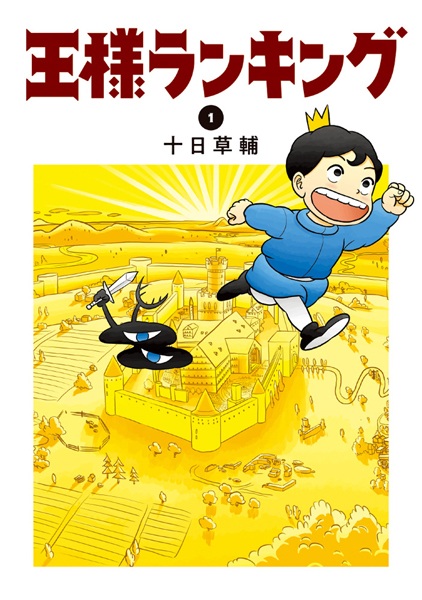
Ousama Ranking
- Volumes: -
- Chapters: -
- Published: February 12, 2019 - Publishing
- Genres: Action, Adventure, Comedy, Fantasy
- Serialization: -
- Authors: Sousuke Tooka (Story & Art)
Review: I came to this manga expecting a fairy tale, and in many ways that's what I got—a story about a deaf, weak prince named Bojji who dreams of becoming the world's greatest king despite being unable to wield a sword or hear the cheers of his people. What I did not expect was how the series would handle action. This is not a battle manga in the conventional sense; Bojji cannot fight in the way his father did, and the series is more interested in emotional conflict than in combat. And yet, when the action arrives, it is handled with a precision and emotional intelligence that made me reconsider what action in a story like this could accomplish.
The first thing I noticed is how the series uses Bojji's limitations to redefine what a fight can be. He is small, weak, and deaf, and his early attempts at combat are failures. The series does not shy away from showing his inadequacy; he is knocked down, humiliated, and told repeatedly that his dream is impossible. But the action sequences are designed to show his growth in ways that are not merely physical. Bojji learns to read his opponents' movements through vibration and observation, and his fights become exercises in perception rather than strength. The series' most effective action sequence—his confrontation with a swordsman who underestimates him—is not about who is stronger but about who is more observant, and the outcome feels earned because the series has spent chapters building the skills that make it possible.
What struck me most is how the series uses action to explore its themes of disability and determination. Bojji's deafness is not a plot device to be overcome but a fundamental part of who he is, and the action sequences are designed to reflect this. He cannot hear an opponent's approach, so he learns to feel it. He cannot rely on the shouted warnings of allies, so he learns to anticipate danger on his own. The series' action is not about overcoming disability but about adapting to it, and the fights are structured to showcase the unique skills that Bojji has developed as a result. I found myself genuinely moved by these sequences, not because they were spectacular but because they were meaningful.
The supporting cast provides the series with its most varied action scenarios. Kage, the shadowy assassin who becomes Bojji's companion, is the series' most capable fighter, and his battles are rendered with a speed and precision that contrast with Bojji's more deliberate approach. The series' use of scale is notable; Kage is small, and his fights often involve opponents who dwarf him, and the action sequences are designed to communicate the resourcefulness required to overcome such disadvantages. The series' willingness to let its characters lose is also notable; defeats are not merely setbacks but opportunities for growth, and the action sequences are structured to reveal character as much as they are to entertain.
Visually, the art is soft and expressive, with a style that recalls classic children's illustrations. The action sequences are not detailed in the manner of a dedicated battle manga—there are no elaborate techniques or step-by-step choreography—but they convey impact and emotion effectively. The series' use of expression and body language is particularly effective in fight scenes, and the art's simplicity makes the moments of violence feel more intimate and more consequential. The art's evolution over the series' run is noticeable; the earlier chapters are rougher, while the later chapters demonstrate a confidence and polish that make the action sequences more impactful.
The series' structural weakness is its pacing. This is a slow burn, and its action sequences are infrequent. Readers seeking consistent combat will find the series' long stretches of character development and political intrigue challenging. The series also has a tendency to introduce new antagonists who are resolved relatively quickly, which can make the action feel episodic rather than cumulative.
This is a work that understands that the most effective action is that which is rooted in character. Its fights are not merely spectacle but demonstrations of growth, and the series' willingness to let its protagonist struggle and fail makes the moments of victory feel earned. For readers seeking a story that combines emotional depth with action that matters, it offers a consistently rewarding experience.

Spy x Family
- Volumes: -
- Chapters: -
- Published: March 25, 2019 - Publishing
- Genres: Action, Comedy
- Theme: Childcare
- Demographic: Shounen
- Serialization: Shounen Jump+
- Authors: Tatsuya Endou (Story & Art)
Review: I picked up this manga expecting a comedy about a fake family, and that's largely what I got—but I was surprised by how much the series cares about action. The premise alone promises it: a master spy, an assassin, and a telepathic child living under one roof, each hiding their identity from the others. From an action perspective, the series is built on the tension between the mundane domesticity of the Forger household and the violent professions of its adult members, and the way it deploys that tension is both its strength and its most interesting limitation.
The first thing I noticed is how the series uses Loid Forger's spy work as its primary action engine. His missions are structured like set pieces: infiltrations, chases, and hand-to-hand encounters that are rendered with a slickness and precision that makes them feel like excerpts from a more conventional action series. Loid's fighting style is efficient and controlled—he uses his environment, his opponents' expectations, and his own physical conditioning to end fights quickly and quietly. The action sequences are designed to showcase his competence, and there is a genuine pleasure in watching him work. The series does not linger on these sequences; they are often resolved in a few pages, and their brevity is deliberate. Loid's violence is always in service of a mission, and the series is careful to keep the focus on the mission's stakes rather than the spectacle of the fight itself.
Yor Forger is the series' other major action figure. Her work as an assassin is rendered with a brutality that contrasts sharply with her domestic persona, and the series uses this contrast to generate both comedy and tension. Yor's fights are less frequent than Loid's, but they are more visceral when they arrive. She fights with a strength and ferocity that her husband is unaware of, and the series extracts considerable dramatic irony from this. I found myself invested in her action sequences not because of their spectacle but because of what they revealed about the gap between her public and private selves, and the series' willingness to let her be genuinely terrifying is one of its most effective choices.
What struck me most is how the series uses action to explore its themes of family and deception. The Forgers are a family built on lies, and their action sequences are always shadowed by the possibility of exposure. When Loid is forced to fight an enemy in close quarters, the risk is not merely that he might be injured but that his secret might be revealed. When Yor dispatches a target with chilling efficiency, the reader is reminded that her family does not know who she truly is. The action is not merely spectacle but narrative, and the series' willingness to let its fights carry emotional weight is what distinguishes it from its peers.
Visually, the art is clean and expressive, with a strong sense of motion. The action sequences are rendered with a clarity that makes them easy to follow, and the series' use of exaggerated expressions and reaction shots adds to both the comedy and the drama. The art's evolution over the series' run is noticeable; the earlier chapters are somewhat rougher, while the later chapters demonstrate a confidence and polish that make the action sequences more impactful. The series' use of paneling is particularly effective in fight scenes, with the layout often mirroring the flow of combat and the shifting positions of the combatants.
The series' structural weakness is its pacing. This is a slow-burn narrative, and its action sequences are often separated by long stretches of character development and domestic comedy. This pacing is deliberate—the series is as much about the Forgers' relationships as it is about their missions—but readers seeking consistent action will find the series' slower stretches challenging. The series also has a tendency to introduce new antagonists who are resolved relatively quickly, which can make the action feel episodic rather than cumulative.
This is a work that understands that the most effective action is that which is rooted in character. Its fights are not merely spectacle but demonstrations of the gap between who these characters pretend to be and who they truly are, and the series' willingness to let that tension inform its action sequences makes them more meaningful than they would otherwise be. For readers seeking a series that combines domestic comedy with genuinely effective action, it offers a consistently rewarding experience.

Niwatori Fighter
- Volumes: -
- Chapters: -
- Published: December 18, 2020 - Publishing
- Genres: Action, Comedy
- Serialization: Hero's
- Authors: Shuu Sakuratani (Story & Art)
Review: The setting is a Japan overrun by "Kijū"—mutant demons that emerge from humans suffering extreme emotional distress or unresolved trauma. While some are harmless, others evolve into intelligent and dangerous threats. Into this chaos wanders Keiji, a solitary rooster with a strict code of conduct, a formidable fighting ability, and a single driving purpose: to find and kill the "White Demon" that murdered his sister. Along the way, he reluctantly acquires companions—most notably Piyoko, a chick he rescues who becomes fiercely attached to him, and Elizabeth, a wealthy hen who initially resents Keiji for abandoning her after a brief encounter but eventually joins his cause.
The series' greatest strength is its tonal discipline. The manga never winks at the audience. Keiji is not a joke character; he is a hard-boiled wanderer with a tragic past, and the narrative treats his quest with genuine gravity. The humor emerges organically from the dissonance between the seriousness of the storytelling and the absurdity of a chicken delivering brutal finishing moves. The action sequences are dynamic and surprisingly violent, with Sakuratani's artwork capturing the "hard-boiled intensity" of a literal rooster in a way that is both visually striking and inherently funny.
The supporting cast complements Keiji well. Piyoko provides moments of warmth without becoming cloying, and her devotion to Keiji reveals a softer side to the otherwise stoic protagonist. Elizabeth's arc—from jilted lover to trained fighter—adds a layer of interpersonal tension that keeps the group dynamic engaging. The demons themselves are appropriately grotesque and varied, and the lore surrounding the Kijū and the mysterious forces manipulating them deepens as the series progresses, giving readers a reason to keep turning pages beyond the novelty of the premise.
The series' commitment to its bit can occasionally work against it. Because the premise is inherently comedic, some dramatic beats land with less weight than they might in a more conventional battle manga. The emotional stakes—Keiji's grief over his sister, the trauma that spawns the demons—are real, but the delivery can feel at odds with the surrounding absurdity. Readers looking for a straightforward action series may find the constant presence of animal characters distracting, while those expecting pure parody may be surprised by how seriously the story takes itself.
Additionally, the pacing can drag during extended battle arcs. The series falls into the familiar shonen trap of escalating confrontations with increasingly powerful foes, and while Sakuratani's art keeps the action visually engaging, some fights overstay their welcome. The humor, while effective, relies on a specific sensibility—if the idea of a rooster with a tragic backstory delivering righteous justice does not amuse, the series offers little else.
This manga is a testament to the power of execution over premise. On paper, it sounds like a one-joke manga destined for a short run. In practice, it is a surprisingly engaging battle series with distinct characters, genuine emotional undercurrents, and action sequences that are legitimately well-crafted. It is not for everyone—the absurdity is constant and inescapable—but for readers willing to embrace a rooster as a shonen protagonist, it delivers far more than the premise suggests.
Source Image: MyAnimeList


Comments
Post a Comment