Warning: May Cause Giggles! The Funniest Manga You Need to Read (Ongoing)
Comedy is one genre that constantly brings pure, unadulterated fun in the colorful and diverse world of manga, where epic battles, endearing romances, and exciting mysteries frequently take center stage. Comedy manga provides more than just a quick laugh; it's an opportunity to escape the strains of everyday life and lose yourself in tales that will make you laugh until your sides hurt. These shows demonstrate that laughing is, in fact, the best medicine, with its clever speech, ridiculous scenarios, amusing character interactions, and inventive visual jokes. But how can you find the ones that would really make you laugh when there are so many amazing titles available? Prepare yourself because we're going to explore some of the greatest comedic manga that will make you say, "This is it! The funniest manga I've ever read is this one."

Magic Kaito
- Volumes: -
- Chapters: -
- Published: May 27, 1987 - Publishing
- Genres: Adventure, Comedy, Romance
- Demographic: Shounen
- Serialization: Shounen Sunday
- Authors: Gosho Aoyama (Story & Art)
Review: This manga is a curious artifact within Gosho Aoyama's bibliography: a series that predates Detective Conan by seven years yet remains perpetually unfinished, perpetually irregular, and perpetually overshadowed by its far more famous sibling. For readers approaching it through the lens of Kaito Kid's guest appearances in Conan, the manga offers something both essential and frustrating—the definitive origin of a beloved character, delivered in agonizingly sparse installments.
The premise is straightforward and charming. Kaito Kuroba, a teenage magician with a cocky streak, discovers that his late father was the legendary phantom thief Kaitou Kid. When he learns his father's death was no accident, Kaito dons the mantle himself to bait the mysterious organization responsible, hunting for a jewel called Pandora that allegedly grants immortality. It is a premise built for episodic heists, and Aoyama delivers exactly that: self-contained capers where Kaito announces his targets, outwits Inspector Nakamori's task force, and returns every gem he steals after confirming it is not Pandora. The formula is light, playful, and occasionally quite clever, with Kaito's stage-magician skill set translating naturally into theatrical thievery.
The supporting cast is where the manga's charm truly resides. Aoko Nakamori, Kaito's childhood friend and the daughter of his primary pursuer, provides the romantic tension and comedic friction; her oblivious hatred of Kid while harboring feelings for Kaito is a classic farce engine. Saguru Hakuba, the half-British detective who nearly deduces Kaito's identity, adds a competent rival dynamic. And Akako Koizumi, a literal witch whose magic cannot affect Kaito, injects a dose of genuine supernatural weirdness that Conan largely avoids. These characters are sketched with warmth and humor, even if none receive the depth that prolonged serialization might have afforded them.
The manga's central problem is its own existence. Aoyama abandoned regular serialization once Detective Conan took off, leaving this manga to advance in fits and starts over decades. Five volumes since 1987 is a glacial pace, and the resulting narrative feels more like a collection of vignettes than a cohesive story. The overarching plot—the hunt for Pandora and the organization behind Toichi's death—advances at a crawl, with long stretches of pure episodic content in between. Readers expecting resolution will find none; the series remains ongoing but dormant, its mysteries unresolved and its protagonist's search perpetually deferred.
The artwork presents another wrinkle. Early chapters show Aoyama's style before it matured into the polished look of Conan, and the difference is noticeable. Later chapters, drawn after Conan had been running for years, look far more refined—creating an uneven visual experience across the sparse volumes. This inconsistency mirrors the manga's broader identity: it is a series caught between eras, never quite settling into a consistent voice or rhythm.
This manga is worth reading primarily as a companion piece—a chance to see Kaito Kid as a protagonist rather than a guest star, to understand his motivations and the world he inhabits when Conan is not around. The heists are fun, the characters are likable, and the magic-vs-detective dynamic is consistently entertaining. But it is also a frustrating read, a story that will almost certainly never be completed in any satisfying sense. Approach it as a collection of charming fragments rather than a coherent whole, and it delivers; expect a proper narrative arc, and disappointment is inevitable.

Meitantei Conan
- Volumes: -
- Chapters: -
- Published: January 5, 1994 - Publishing
- Genres: Adventure, Award Winning, Comedy, Mystery
- Theme: Detective
- Demographic: Shounen
- Serialization: Shounen Sunday
- Authors: Gosho Aoyama (Story & Art)
Review: The story begins with Shinichi Kudo, a high school detective who stumbles upon a shady transaction involving men in black. Rather than killing him, they force-feed him an experimental poison. Instead of dying, Shinichi shrinks into the body of an elementary schooler. Adopting the pseudonym Conan Edogawa, he moves in with his childhood friend Ran and her bumbling private detective father Kogoro, secretly solving cases through Kogoro while searching for a cure and a way to bring down the Black Organization that did this to him. Along the way, he accumulates a supporting cast that includes a fellow shrunken victim (Ai Haibara, a former organization scientist), a rival teenage detective from Osaka, a phantom thief, and an expanding network of law enforcement contacts.
The series' core appeal lies in its commitment to fair-play mystery. Aoyama and his editors have long prioritized trick construction that rewards attentive reading. The puzzles range from locked-room mysteries to elaborate alibi schemes to code-breaking sequences, and the best of them achieve a balance between "impossible" spectacle and logical resolution. The famous "Fog Tengu Legend Murder Case," for instance, presents a seemingly supernatural death in a locked temple room before grounding the solution in physical evidence and human action. The series also frequently pauses to let readers attempt the solution themselves, a convention that has helped cultivate a generation of mystery enthusiasts in Japan and abroad.
The supporting cast is another significant strength. While Conan is the engine, characters like Heiji Hattori, the Kaito Kid, and the various police detectives bring distinct personalities and investigative styles that keep the formula from growing stale. The intermittent Black Organization arcs provide a darker, more serialized counterweight to the episodic murder cases, and the slow-burn romantic tension between Shinichi and Ran gives the series an emotional through-line that sustains investment through hundreds of chapters.
The most persistent criticism is that the main plot—the confrontation with the Black Organization—advances at a glacial pace. Readers have noted that the central narrative can go dozens of volumes without meaningful progression, buried under an endless supply of standalone cases. For those who invest in the overarching mystery, this can feel like the story is treading water rather than building toward a conclusion.
The sheer volume of characters also becomes a double-edged sword. What starts as a tight ensemble expands into a sprawling web of FBI agents, spies, rival detectives, and schoolchildren, and keeping track of who knows what and who is secretly working for whom requires a level of dedication that not every reader will possess. Some of the more recent chapters have also drawn criticism for perceived declines in art quality and character consistency, with detractors arguing that the series has drifted from its mystery roots toward increasingly implausible action sequences.
Additionally, the episodic murder-of-the-week structure, while comforting in its reliability, can make the series feel formulaic. The motives for murder are sometimes thin, and the frequency with which corpses appear in Conan's immediate vicinity has become a running joke for a reason.
This manga is not a series that can be consumed quickly or judged by a single arc. It is an institution, a decades-long project that has become a fixture of Japanese pop culture in a way few works ever achieve. Its puzzles are clever, its characters are memorable, and its best moments—the Black Organization confrontations, the rare Shinichi appearances, the carefully constructed locked rooms—remain genuinely satisfying. But it is also a series that demands patience, and the question of whether the destination will justify the journey grows more pressing with each passing year. For readers who love the process of deduction and are willing to accept the slow pace of the overarching plot, it remains essential. For those seeking a tightly plotted narrative with a clear end in sight, it may prove frustrating.

Keroro Gunsou
- Volumes: -
- Chapters: -
- Published: November 29, 1999 - Publishing
- Genres: Award Winning, Comedy, Drama, Sci-Fi
- Theme: Love Polygon
- Demographic: Shounen
- Serialization: Shounen Ace
- Authors: Mine Yoshizaki (Story & Art)
Review: This manga is a comedy manga that weaponizes cuteness to deliver something far cruder and stranger than its premise suggests. Mine Yoshizaki's long-running series, serialized in Shounen Ace since 1999, follows a platoon of frog-like aliens from Planet Keron who attempt to invade Earth, fail spectacularly, and end up living with the Hinata family as something between house pets and unpaid domestic labor. The setup is pure gag material, but the manga's execution is where it distinguishes itself from both its anime adaptation and the broader comedy landscape.
The central appeal lies in the contrast between the frogs' adorable designs and the relentless cruelty of the humor. Sergeant Keroro, the platoon leader, is obsessed with Gundam models and perpetually schemes to conquer Earth while being physically abused by the Hinata daughter, Natsumi, on a near-daily basis. The manga revels in this dynamic—Natsumi's violence against Keroro is played for laughs with a consistency that borders on ritual, and the series never flinches from the implications. The other frogs are similarly warped: Giroro is a weapon-obsessed battle maniac, Tamama is possessive and unstable, Kururu is a sadistic troll who spies on the household through hidden cameras, and Dororo is a lonely ninja constantly forgotten by his comrades. The character web, included in each volume, is deliberately overcomplicated and exists to track the shifting alliances and resentments that fuel the comedy.
The art serves the humor effectively. Yoshizaki's frog designs are deceptively simple, but the facial expressions are the series' secret weapon—when characters react to something shocking, their faces contort into grotesque, horror-movie levels of detail that contrast sharply with their usual cuteness. The manga also leans heavily into parodies of other anime and manga, particularly mecha franchises, and the density of pop-culture references rewards readers with broad familiarity with the medium.
The most significant caveat is cultural specificity. Many of the jokes revolve around Japanese holidays, traditions, and wordplay, and while the manga attempts to explain these for non-Japanese readers, the humor loses something in translation. The manga is also notably cruder than its anime adaptation—the anime was sanitized for a younger audience, while the manga contains stronger fanservice, darker humor, and a level of violence against the frog characters that the show largely softened. Readers expecting the gentler tone of the anime will find a sharper, more transgressive work.
The narrative structure is episodic by design. There is no overarching plot beyond the perpetually deferred invasion, and individual chapters function as self-contained gag scenarios or slice-of-life vignettes centered on seasonal events. This makes the manga easy to pick up and put down but also means there is no cumulative momentum. The series has been running for over two decades, and its longevity is both a testament to the durability of its formula and an indication of its limitations—the jokes that land are genuinely funny, but the repetition of character dynamics can dull their edge over extended reading.
This manga is a comedy manga that succeeds through sheer commitment to its warped premise and the expressive, grotesque charm of its artwork. The frogs are memorable, the cruelty is consistently funny for those attuned to its wavelength, and the parody density rewards readers who enjoy spotting references. It is also culturally specific, structurally static, and significantly edgier than its animated counterpart. Approach it as a volume-by-volume diversion rather than a narrative to follow, and the invasion of Pekopon is a pleasantly absurd place to spend time.
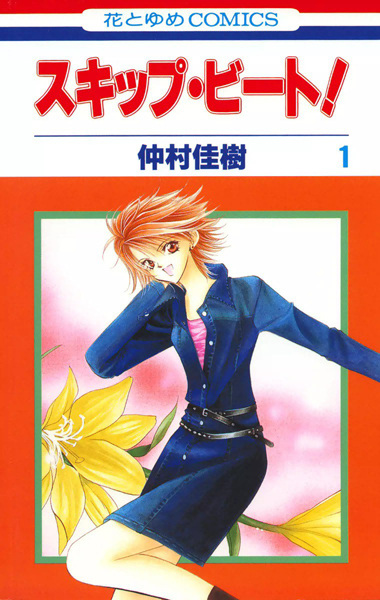
Skip Beat!
- Volumes: -
- Chapters: -
- Published: February 15, 2002 - Publishing
- Genres: Comedy, Drama, Romance
- Themes: Love Polygon, Showbiz
- Demographic: Shoujo
- Serialization: Hana to Yume
- Authors: Yoshiki Nakamura (Story & Art)
Review: This is a shoujo manga that takes the most familiar premise in its genre—a girl betrayed by the boy she loved, vowing to become a star to prove him wrong—and uses it as a launching pad rather than a destination. Yoshiki Nakamura's series, serialized in Hana to Yume since 2002, begins with Kyoko Mogami discovering that her childhood friend and crush Shotaro has been using her as an unpaid housekeeper while he pursues his idol career. When she overhears him dismissing her as "boring and plain," something in her snaps, and she enters the entertainment industry with the sole purpose of becoming a bigger star than him.
What makes this manga endure across its decades-long run is the way it treats revenge as a starting point rather than an endgame. Kyoko's initial motivation is petty and specific, and the manga leans into that pettiness with gleeful humor—her rage manifests as literal anthropomorphic spirits that hover around her, visible only to the reader and occasionally to unfortunate bystanders. But as she stumbles into acting, the series quietly shifts its center of gravity. The revenge plot doesn't disappear; it simply becomes less important than the discovery that Kyoko has a genuine talent and, more surprisingly, a genuine love for the craft. The arc from "I'll show him" to "I want to be good at this" is handled with a patience that rewards long-term reading.
The character work is where the manga distinguishes itself from its peers. Kyoko is not a saintly heroine who endures suffering with grace; she is bitter, suspicious, and frequently unhinged, and the narrative never asks the reader to excuse those qualities. Instead, it shows how they coexist with a fundamental decency she cannot quite suppress—a compulsion to help people that survives even after Shotaro's betrayal taught her that caring about others is a losing proposition. Ren Tsuruga, the male lead, begins as a condescending senior actor who disapproves of her motives, and his gradual reassessment of Kyoko is earned through observation rather than sudden revelation. The romantic tension between them builds across hundreds of chapters with a restraint that can be frustrating but is ultimately more satisfying than instant chemistry would be.
The showbiz setting provides a structural advantage that the manga exploits fully. Because Kyoko is an actress, the series can explore different genres and emotional registers through the roles she takes. The Dark Moon arc, in which she plays a cruel and damaged rich girl, is a particular highlight—the manga uses the production of a drama to examine how acting can be a form of therapy, a way of accessing emotions that are too dangerous to approach directly. Nakamura's artwork rises to the occasion, shifting visual styles between Kyoko's comedic rage faces, the exaggerated glamour of the celebrity world, and the sincere emotional beats with a fluency that keeps the pages turning.
The most persistent issue is length. This manga has been running for over two decades, and its pacing reflects that. Romantic progress is glacial; entire volumes pass with Kyoko and Ren circling each other without meaningful advancement. Readers who need resolution will find the wait agonizing, and even devoted fans acknowledge that the series demands patience. The publication schedule is also irregular, which exacerbates the sense of a story moving in slow motion.
This is a shoujo manga that earns its longevity through sharp character writing, genuine humor, and a willingness to let its heroine be messy and angry without punishing her for it. The revenge premise is a hook, but the real story is about a girl discovering that she is good at something and that being good at it matters more than the person who drove her to try. The romance is slow to the point of frustration, and the series may never reach a conventional conclusion, but the journey is consistently entertaining and occasionally genuinely moving. For readers willing to invest in a long, patient story about a woman learning to want things for herself, this is one of the genre's most rewarding ongoing works.
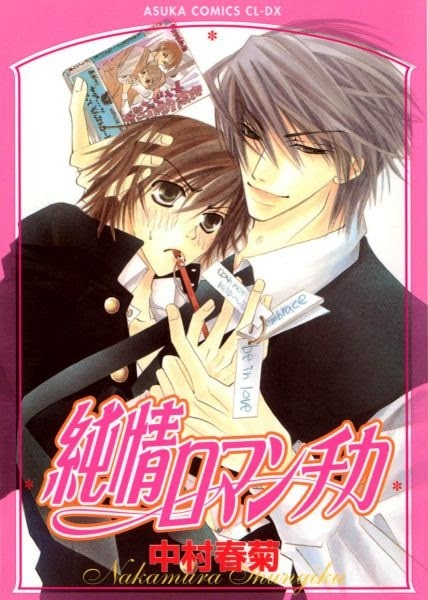
Junjou Romantica
- Volumes: -
- Chapters: -
- Published: April 30, 2002 - Publishing
- Genres: Boys Love, Comedy, Drama, Erotica
- Serialization: Emerald
- Authors: Shungiku Nakamura (Story & Art)
Review: This manga is a comedy of mismatched wiring. The setup is straightforward: Misaki Takahashi, a stressed high schooler desperate to pass his college entrance exams, gets saddled with a tutor named Akihiko Usami—a famous boys' love novelist who is also his older brother's best friend, and who happens to be using Misaki's brother as the model for his novels' romantic lead. The premise is inherently awkward, and the manga leans into that awkwardness with a commitment that borders on the sadistic. Misaki spends most of his waking hours in a state of frantic, flustered denial, his internal monologue a constant loop of "this is not happening" and "why is this happening," while Usami looms over him with the serene confidence of a man who has already decided how this story ends.
The comedy engine runs on Misaki's complete inability to process his own feelings. He is a classic tsundere, but one whose tsun is so pronounced it functions as a kind of comic disability—he cannot accept affection, cannot admit attraction, and cannot stop walking directly into situations that will mortify him. Usami, for his part, is the deadpan instigator, a man whose seduction technique consists largely of ignoring Misaki's protests and waiting for him to capitulate. The gap between Misaki's panicked resistance and Usami's unbothered persistence is where most of the laughs live. The manga also deploys chibi art shifts and visual gags with reliable frequency, and Usami's bizarre hobbies—particularly his collection of unsettling bear figurines—serve as recurring punchlines that break the tension at exactly the right moments.
The series is structured around three couples, and the comedic flavor shifts between them. The "Romantica" pair is the broadest, a screwball dynamic of panic and pursuit. The "Egoist" chapters, following Hiroki and Nowaki, trade some of that frantic energy for a more grounded, occasionally frustrating comedy of miscommunication—Hiroki's stubbornness and Nowaki's obliviousness create a different kind of friction, one that sometimes veers into genuine exasperation rather than pure humor. The "Terrorist" storyline, with the high schooler Shinobu aggressively pursuing his ex-brother-in-law Miyagi, is the most overtly farcical of the three, playing the age gap and Shinobu's relentless determination for maximum absurdity. The variety keeps the formula from calcifying, even if the underlying rhythm—Misaki panics, Usami persists, misunderstanding resolves into a moment of grudging tenderness—remains constant.
There is a caveat that any comedy review of this manga has to acknowledge: the early volumes treat consent as an obstacle to be bulldozed rather than a boundary to be respected, and that behavior is played for laughs in a way that sits uneasily with modern sensibilities. The humor is frequently rooted in power imbalance and resistance, and readers who cannot bracket that off will find the comedy curdles rather than lands. But for those who can approach it as a product of its era—a foundational text in the BL genre whose tropes have since been refined and critiqued—the manga remains a reliably funny, deeply chaotic ride. Misaki's suffering is the point, and the series knows it. Whether that registers as cruel or cathartic is a matter of taste, but the commitment to the bit is undeniable.
For readers who enjoy comedy built on humiliation, denial, and the slow, agonizing collapse of a protagonist's composure, this manga delivers in abundance. It is not subtle, and it is not always comfortable, but it is rarely boring.
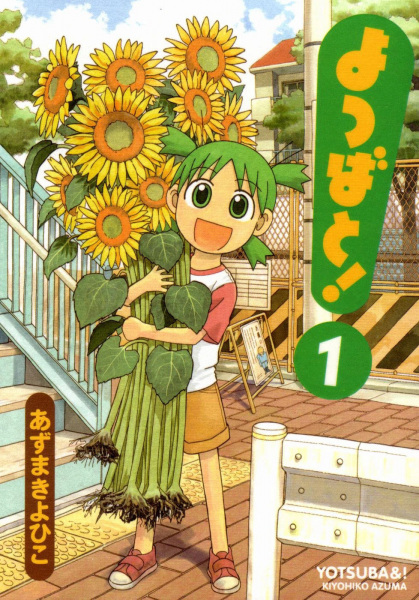
Yotsuba to!
- Volumes: -
- Chapters: -
- Published: January 21, 2003 - Publishing
- Genres: Award Winning, Comedy, Slice of Life
- Themes: Childcare, Iyashikei
- Serialization: Dengeki Daioh
- Authors: Kiyohiko Azuma (Story & Art)
Review: This is a manga that achieves something paradoxical: it is profoundly uneventful, and that is precisely its power. Kiyohiko Azuma's series, serialized sporadically since 2003, follows a five-year-old girl with green pigtails who moves to a new town with her single father and proceeds to discover the world with an intensity that most adults have long forgotten. There are no villains, no stakes, no overarching plot. There is only Yotsuba noticing things—a cicada, a cardboard box, a neighbor's odd expression—and treating each discovery as though it were the most important event in the universe.
The manga's central achievement is its portrayal of childhood perception. Yotsuba is not sentimentalized or precocious; she is chaotic, stubborn, occasionally incomprehensible, and utterly convincing as a real child. Her dialogue often involves mispronounced words and misunderstandings that she repeats with complete confidence, and the humor arises not from jokes told to the reader but from the gap between her understanding and the world's reality. The supporting cast—her father, the neighboring Ayase family, the tall and gentle Jumbo, and the perpetually humiliated Yanda—exists largely to react to her, and their varied responses create a community that feels warm without being cloying. The father-daughter moments, in particular, carry a quiet weight; he is not a wise parent dispensing lessons, but a man doing his best, and the series is at its strongest when it simply lets them be together.
Visually, the manga is a slow-burn pleasure. Azuma's backgrounds are detailed and photorealistic in a way that grounds Yotsuba's fantastical perception of the mundane, and her facial expressions are rendered with a precision that does most of the comedic and emotional labor. The art has evolved over the decades, and the modern chapters are notably more polished than the earliest ones, but the core appeal remains consistent: the world looks real, and Yotsuba looks at it like it is magic.
The criticisms are legitimate and should be acknowledged. The episodic structure means there is no cumulative narrative momentum; readers who need progression will find none. Yotsuba herself does not grow or change in any conventional sense, which some find frustrating given the manga's decades-long publication history. The humor is gentle and repetitive, and its effectiveness depends entirely on whether one finds charm in a child's repetitive misapprehensions. The series has also been criticized for occasionally being mean-spirited toward certain characters, particularly Fuuka, whose primary role seems to be receiving inexplicable insults. And the release schedule is glacial, with years passing between volumes, which makes following the series in real time a test of patience.
This manga is not for everyone, and it does not try to be. It is a manga that asks the reader to slow down, to find interest in a walk to the park, to laugh at a child's earnest misunderstanding of a word, to accept that a story can be worth reading without going anywhere. For those attuned to its wavelength, it is a source of genuine comfort and a reminder that wonder is not a childish quality but a fundamental one. For those who need plot, conflict, or character development, it will feel like nothing happening, slowly, forever. Both responses are honest. The manga simply is what it is: a five-year-old girl, a summer afternoon, and the radical proposition that this is enough.
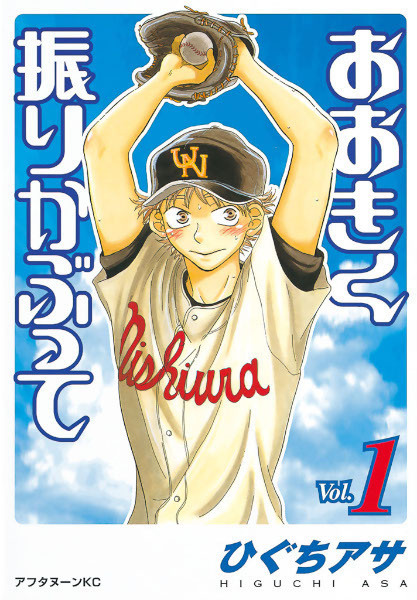
Ookiku Furikabutte
- Volumes: -
- Chapters: -
- Published: September 25, 2003 - Publishing
- Genres: Award Winning, Comedy, Sports
- Theme: Team Sports
- Demographic: Seinen
- Serialization: Afternoon
- Authors: Asa Higuchi (Story & Art)
Review: This is a sports manga that approaches comedy the way its protagonist approaches pitching: slowly, anxiously, and with an excruciating attention to detail that somehow becomes the whole joke. The series follows Ren Mihashi, a pitcher so thoroughly shattered by his middle school teammates' bullying that he has zero confidence, a permanent flinch, and a tendency to interpret every neutral comment as a personal attack. He joins Nishiura High's brand-new baseball team, where the catcher, Abe, is a control freak who sees Mihashi's timid obedience as a feature rather than a bug. The premise is not inherently comedic—Mihashi's trauma is played straight—but the execution mines an extraordinary amount of humor from the sheer, relentless awkwardness of a boy who cannot function as a normal human being.
The comedy engine is Mihashi himself. His "chicken face"—a wide-eyed, mouth-agape expression of pure panic—is deployed so frequently that it becomes a visual running gag. His internal monologues spiral into catastrophic self-doubt at the slightest provocation, and the gap between what is actually happening (his teammates supporting him) and what he believes is happening (everyone secretly hates him) generates a reliable stream of cringe-comedy. Abe's exasperated attempts to manage this neurotic disaster of a pitcher provide the counterweight; his temper flares, his patience snaps, and Mihashi misreads every single reaction, creating a feedback loop of misunderstanding that is genuinely funny in its predictability. The rest of the team functions as a Greek chorus of varying patience levels, with Hanai's quiet irritation and Tajima's cheerful obliviousness rounding out the ensemble.
What makes the humor distinctive is how thoroughly it is embedded in the baseball itself. The manga is famously slow—the anime adaptation famously spent twenty-five episodes on roughly two games—and this pacing is both the source of its comedic rhythm and its greatest barrier to entry. The psychological warfare between pitcher and catcher, the endless signals and shake-offs, the agonizing deliberation over every pitch becomes a kind of deadpan absurdity: these children are treating a high school game with the gravity of a life-or-death chess match, and the manga commits to that gravity so completely that it loops back around to funny. The "runner on third base" strategy, in which the team's anxiety manifests as an elaborate defensive obsession, is a recurring gag that lands precisely because it is treated with utter seriousness.
For readers accustomed to the breakneck pacing of Haikyuu!! or the absurd superhuman feats of Inazuma Eleven, this manga will feel like wading through molasses. The comedy is not punchy; it is ambient, accumulating through repetition and the slow-burn accumulation of Mihashi's small, pathetic victories over his own brain. But for those who find the humor in awkwardness—in the specific comedy of a boy who apologizes for existing and a catcher who cannot decide whether to strangle him or protect him—the series offers something rare: a sports comedy where the sport is the comedy, and the protagonist's complete lack of cool is the entire point.
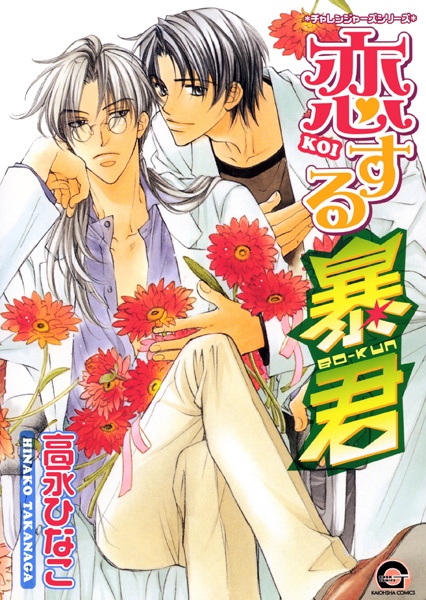
Koisuru Boukun
- Volumes: -
- Chapters: -
- Published: April 7, 2004 - Publishing
- Genres: Boys Love, Comedy, Erotica
- Serialization: GUSH
- Authors: Hinako Takanaga (Story & Art)
Review: I picked up this manga expecting a trainwreck, and honestly, I got one—but it's the kind of trainwreck where you can't look away because the conductor is screaming homophobic slurs while his long-suffering assistant tries to hand him a water bottle. The premise alone is a comedy of errors: Morinaga has been hopelessly in love with his senior, Souichi, for years, and Souichi is a raging homophobe who treats Morinaga like a particularly annoying houseplant he can't quite kill. The "romance" kicks off because Souichi accidentally chugs a bottle of aphrodisiac wine he finds in Morinaga's apartment like it's a forgotten juice box. This is not a meet-cute. This is a meet-catastrophe.
What makes it funny—and I say this with the full awareness that the humor is deeply problematic—is the sheer, relentless energy of the denial. Souichi spends most of his waking hours furious, yelling, and insisting he is not gay, even as he keeps finding himself in increasingly compromising positions with the one man he claims to despise. Morinaga, for his part, is a masterclass in pathetic persistence, a man whose entire romantic strategy amounts to "wait for Senpai to get drunk and hope for the best." The dynamic is less "will they, won't they" and more "will Souichi ever admit he doesn't actually hate it," and the manga milks that question for every drop of comedic tension it's worth.
The supporting cast exists mostly to react to this disaster. Souichi's little sister, Kanako, thinks they're already dating and finds the whole thing adorable, which is a hilarious misreading of a situation that is mostly just Souichi threatening violence. Morinaga's bartender friend, Hiroto, serves as the designated "listen to this idiot complain about his love life" character, a role that requires infinite patience and probably a raise. These side characters don't get much depth, but they function as a Greek chorus of exasperation, reminding you that yes, this is absurd, and no, you're not imagining it.
The comedy is broad, loud, and frequently violent. Souichi's reactions to Morinaga's advances range from punching him in the face to threatening to stab him with a broken wine bottle. It's slapstick with a dark undercurrent, and whether you find it funny depends entirely on your tolerance for tsundere characters who express affection exclusively through rage. There's a moment early on where Morinaga tries to justify his actions by accusing Souichi of being "careless" around him, essentially blaming the victim for existing in a way that made him irresistible. It's a line so audacious in its wrongness that it loops back around to being almost impressive. The manga knows these people are terrible. It just doesn't care, and it dares you to keep reading anyway.
The art is genuinely pretty, which helps. Hinako Takanaga draws Souichi's perpetual scowl with real affection, and Morinaga's pathetic puppy-dog expressions are perfectly calibrated to make you sigh and think "buddy, get some self-respect." The comedic timing in the paneling is solid, especially during Souichi's explosions of fury, and the chibi moments break the tension just when it's about to become unbearable. It's not high art, but it's effective art.
Would I recommend this to someone looking for a healthy, wholesome romance? Absolutely not. Would I recommend it to someone who enjoys watching two deeply dysfunctional people orbit each other with the grace of a car crash? Only if they can stomach the non-consensual setup that launches the whole thing. The first volume is a hurdle, and it's a high one. But if you clear it, what follows is a surprisingly long-running comedy of errors about a man who insists he hates everything he secretly can't live without, and the idiot who loves him anyway. It's messy, it's loud, and it's frequently uncomfortable. It's also, against all odds, kind of funny.
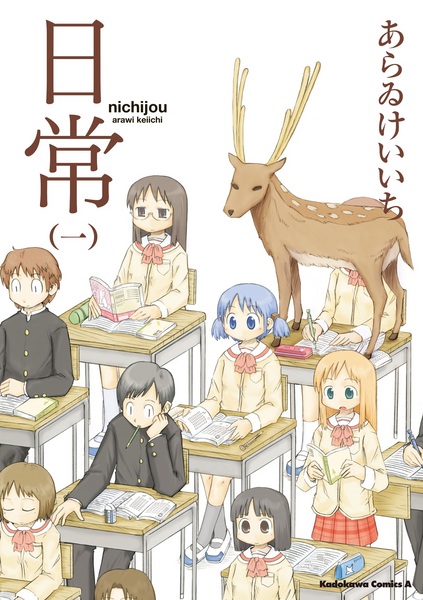
Nichijou
- Volumes: -
- Chapters: -
- Published: June 26, 2006 - Publishing
- Genre: Comedy
- Themes: Gag Humor, School
- Demographic: Shounen
- Serialization: Shounen Ace
- Authors: Keiichi Arawi (Story & Art)
Review: This manga is a comedy that operates on a simple but devastating principle: the ordinary is merely a launchpad for the catastrophic. The manga follows high school girls Yuuko, Mio, and Mai, alongside a robot named Nano and the child professor who built her, but describing the "plot" misses the point entirely. What matters is the delivery, and Arawi is a master of comic escalation.
The humor thrives on disproportion. A forgotten homework assignment spirals into an elaborate scheme requiring more effort than the work itself. A conversation about something mundane detonates into a full-scale disaster. A principal engages in a life-or-death duel with a deer, played out with the gravity of a shonen battle epic. The genius lies in the commitment: within the world of this manga, these absurdities are treated with complete narrative sincerity. Nothing is winking at the audience; the characters react to insanity with the same deadpan shock they might reserve for a bad test score, and that straight-faced delivery is what makes the punchlines land.
Visually, Arawi's art is the engine of the comedy. His clean, simple character designs—cute, rounded, and deceptively innocent—snap into wildly exaggerated expressions of panic, fury, or blank confusion on a dime. The paneling itself is a timing mechanism, knowing exactly when to hold a reaction shot and when to cut away for maximum effect. The manga also freely mixes formats, sliding between traditional panels and four-koma strips, haiku, and visual non-sequiturs, giving the reading experience a restless, improvisational energy. Even the recurring gags—Yuuko's terrible puns, Mai's inscrutable trolling, Misato's willingness to escalate against the oblivious Sasahara—build a kind of rhythmic comfort that makes the sudden swerves into chaos all the more effective.
There is a caveat for English readers: this manga leans heavily on Japanese wordplay and the manzai comedy dynamic of straight man and funny man. Some gags inevitably lose their edge in translation, requiring explanatory notes or clever localization to approximate the original punch. But even when a specific pun doesn't land, the physical comedy and the sheer audacity of the escalation carry the day. The manga is funny not because of what the jokes are about, but because of how relentlessly Arawi commits to them. For anyone who appreciates comedy as a craft of timing, restraint, and explosive release, this manga remains a singular achievement.
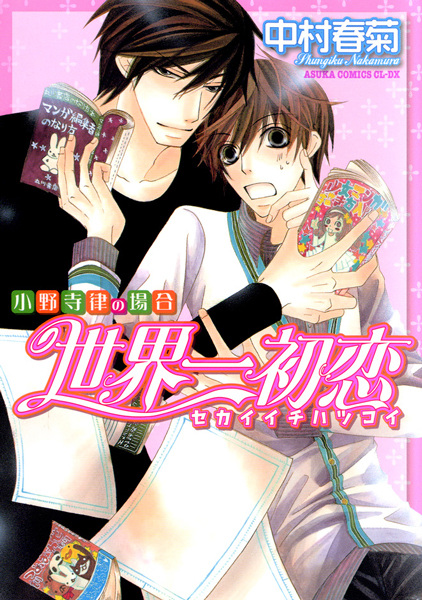
Sekaiichi Hatsukoi: Onodera Ritsu no Baai
- Volumes: -
- Chapters: -
- Published: October 13, 2006 - Publishing
- Genres: Boys Love, Comedy, Drama, Erotica
- Serialization: Emerald
- Authors: Shungiku Nakamura (Story & Art)
Review: This Shungiku Nakamura's serialization is a romantic comedy that understands a fundamental truth about humor: nothing is funnier than a man who has completely lost control of his own life. The premise follows Ritsu Onodera, a literature editor who quits his father's company out of pride, only to be immediately reassigned to the shoujo manga department—a chaotic hellscape of pink sparkles and monthly deadlines—where his new boss turns out to be his high school first love, the very man who broke his heart. The setup is pure sitcom architecture: a grumpy, deeply repressed protagonist trapped in a workplace he despises, forced to answer to an ex who is now his superior and who seems to take immense pleasure in watching him squirm.
The comedy engine runs almost entirely on Ritsu's internal combustion. He is a tsundere of the highest order, a man whose default state is "freaking the fuck out always," as one reader aptly put it. His constant denial of his feelings, his frantic internal monologues, and his desperate attempts to maintain professional composure while his personal life detonates around him create a reliable rhythm of humiliation and catharsis. The workplace setting amplifies this beautifully—the all-male Emerald department swings between "utter fluffy/sparkling pink extremity and utter disheveled depression" depending on where they are in the monthly publication cycle, giving Ritsu's personal chaos a backdrop of collective professional panic. The contrast between the serious literary editor he wanted to be and the manga editor he has become is a running joke that never quite stops being funny, largely because Ritsu refuses to accept it.
Takano, the love interest and boss, functions as the perfect comedic foil: deadpan where Ritsu is hysterical, direct where Ritsu is evasive, and possessed of an almost supernatural ability to appear exactly when Ritsu is at his most vulnerable. The power dynamic—boss and subordinate, former lover and former beloved—should be uncomfortable, and it sometimes is, but the manga leans into the absurdity of the situation rather than its darker implications. Takano's persistence is played as a kind of relentless courtship campaign, complete with an actual countdown (starting at 354 days) to make Ritsu admit his feelings. It is ridiculous. It is also, somehow, endearing.
The manga does have moments where the comedy curdles—the early volumes contain non-consensual elements that sit uneasily alongside the lighthearted tone, a common issue with BL of this era. And over the long run, Ritsu's refusal to communicate becomes less of a comedic quirk and more of a test of reader patience; seventeen volumes of a man who cannot say one simple sentence is a lot to ask. But in its early and middle stretches, the series finds a sweet spot between workplace farce, second-chance romance, and the simple pleasure of watching two deeply stubborn people orbit each other. It is not the world's greatest first love, despite the title's claims. But it is frequently very funny, and sometimes that is enough.
For readers who enjoy comedy rooted in character flaws rather than punchlines—the kind of humor that comes from watching someone dig their own grave with impeccable timing—this manga delivers. Just be prepared for the grave to get very, very deep.
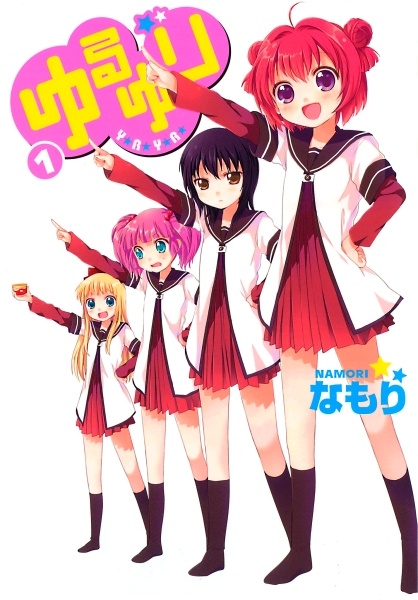
Yuru Yuri
- Volumes: -
- Chapters: -
- Published: June 18, 2008 - Publishing
- Genres: Comedy, Girls Love
- Themes: CGDCT, Gag Humor, School
- Serialization: Comic Yuri Hime
- Authors: Namori (Story & Art)
Review: This Namori's serialization is a comedy that understands a crucial truth: the funniest thing in the world is a protagonist who doesn't matter. The series centers on the Amusement Club, four girls who commandeer an abandoned tearoom to do absolutely nothing of consequence, and its nominal lead is Akari Akaza—a girl so unremarkable that the other characters routinely forget she exists, to the point where her lack of presence becomes a running meta-joke about her own irrelevance in her own story. This is the manga's opening gambit, and it tells you everything about its comedic priorities: there is no plot, no goal, and no protagonist. There is only the machine of character interaction, and it runs with terrifying efficiency.
The humor is generated almost entirely from the friction between personalities. Kyoko Toshinou is the engine of chaos—an enthusiastic otaku who draws doujinshi about her friends and treats every situation as an opportunity for mischief. Yui Funami is the exhausted straight man, her patience a finite resource that Kyoko depletes chapter after chapter. Chinatsu Yoshikawa's enormous, slightly unsettling crush on Yui produces a reliable stream of visual and verbal gags. And Akari, the "protagonist," is the punchline of her own existence, her invisibility milked for every possible laugh. The manga's pacing is brisk and its chapters are short, making each comedic beat land like a quick jab rather than a prolonged setup. The clean, soft character designs—distinctive and expressive despite their simplicity—are perfectly calibrated for the series' light tone, and Namori's chibi reaction shots are deployed with surgical timing.
What keeps this manga from feeling like a one-note joke is its willingness to let the yuri element function as a comedic resource rather than a romantic one. The crushes and infatuations are real within the world, but they are treated as fuel for awkward encounters and escalating misunderstandings, not as material for earnest romance. The result is a series that can be enjoyed as pure comedy even by readers who might otherwise bounce off the genre. The caveat is that the humor is almost entirely character-driven and conversational—readers who need punchlines or narrative momentum will find little to hold onto. The "nothing happens" premise is the point, and whether that registers as delightful or tedious depends entirely on how much one enjoys watching four girls bicker about tea and forget their invisible friend exists. For those who find the rhythm, this manga is a near-perfect comfort comedy: light, fast, and consistently funny in a way that never asks to be taken seriously.

Honto Yajuu
- Volumes: -
- Chapters: -
- Published: July 10, 2008 - Publishing
- Genres: Boys Love, Comedy, Erotica
- Serialization: GUSH
- Authors: Kotetsuko Yamamoto (Story & Art)
Review: This manga is a boys' love manga that thrives on a simple but effective contrast: a mild-mannered neighborhood policeman and a flashy yakuza heir. The premise kicks off when officer Tomoharu Ueda catches an underwear thief and inadvertently rescues Aki Gotouda, the young master of a local gang. The very next day, Aki shows up at the police box to declare his love, launching a relationship that is as unlikely as it is oddly endearing.
The story's greatest strength lies in its characters and their dynamic. Ueda is the calm, responsible adult—gentle, domestic, and seemingly unflappable—until jealousy or passion surfaces. Aki, by contrast, is a bundle of contradictions: he dresses like a stereotypical mobster, speaks bluntly, and has a temper, yet he is also startlingly innocent in matters of the heart and almost childlike in his devotion. Their interactions form the emotional core of the series, shifting from comedic misunderstandings to genuinely tender moments. The "cop and yakuza" setup could easily become melodramatic, but the manga deliberately avoids heavy angst, opting instead for a lighthearted, slice-of-life tone that follows the couple's everyday life and occasional misadventures.
The art by Kotetsuko Yamamoto complements this tone well. The character designs are expressive and attractive, with a style that feels soft and inviting even during the more explicit scenes. The visual storytelling balances humor and intimacy effectively, making the romantic and comedic beats land with equal clarity. It is worth noting that the series began as a one-shot and was extended due to popularity, which explains a somewhat rushed beginning where the confession happens almost immediately. However, the narrative settles into a comfortable rhythm once the relationship is established, and the introduction of side characters and couples later on adds variety without diluting the central focus.
For readers seeking a grounded, realistic portrayal of a gay relationship, this manga may feel more like a fantasy tailored to genre conventions—the characters' dynamics occasionally lean toward heteronormative archetypes, and the "gay" aspect is treated more as a premise than a lived reality. But as a romantic comedy, it succeeds admirably. It is sweet, funny, and consistently charming, offering a comforting read about two people from opposite worlds who somehow fit together perfectly. Those looking for a light, feel-good BL story with likeable leads and a generous dose of humor will find much to enjoy here.

Gakuen Babysitters
- Volumes: -
- Chapters: -
- Published: September 24, 2009 - Publishing
- Genres: Comedy, Slice of Life
- Themes: Childcare, Iyashikei, School
- Demographic: Shoujo
- Serialization: LaLa
- Authors: Hari Tokeino (Story & Art)
Review: This is a manga built on a contradiction: it opens with a tragedy severe enough to shatter two childhoods and then proceeds to spend hundreds of chapters refusing to let that tragedy define its tone. Hari Tokeino's series, serialized in LaLa since 2009, follows brothers Ryuuichi and Kotarou Kashima after their parents die in a plane crash. They are taken in by Youko Morinomiya, the chairwoman of an elite academy who lost her own son and daughter-in-law in the same accident. Her condition is simple: Ryuuichi, a high schooler, must work at the school's daycare center as a babysitter. What follows is not a story about grief, but a story about the quiet, daily work of being needed.
The manga's central appeal is its almost aggressive wholesomeness. The daycare children are rendered with a soft, rounded cuteness that borders on weaponized, and the series leans into this relentlessly. Kotarou, Ryuuichi's toddler brother, is the emotional anchor—initially withdrawn and expressionless after the loss, his gradual thawing into a child who clings to his brother and eventually speaks his name is the closest the series comes to a sustained emotional arc. The other children—the twins, the boisterous ones, the shy ones—each get moments of focus, and the cumulative effect is a world where no one is cruel and nothing truly terrible happens after the opening chapters. For readers seeking comfort, this is precisely the point.
The supporting cast reinforces this warmth. The chairwoman, initially presented as a stern and intimidating figure, reveals herself to be a tsundere grandmother whose gruff exterior conceals a genuine attachment to the brothers. The teachers and students who orbit the daycare are uniformly kind, and the series' refusal to introduce a genuine antagonist becomes both its charm and its limitation. There is no conflict beyond the minor chaos of childcare, no stakes beyond whether a child will stop crying or a babysitter will manage a nap schedule. The manga is, by design, a slice of life in the gentlest sense—a series of vignettes in which the primary tension is whether the toddlers will cooperate.
This absence of narrative friction is also the series' most persistent weakness. A common critique, even among devoted readers, is that the premise strains credibility: a high schooler essentially raising his brother while working as a full-time babysitter, a daycare staffed by a single adult and a rotating cast of teenagers, a chairwoman wealthy enough to solve every material problem with a wave of her hand. The manga asks the reader to accept a fantasy of childhood in which every adult is benevolent and every child is, beneath the occasional tantrum, fundamentally good. For some, this is the appeal; for others, it becomes monotonous over the long run.
The artwork is consistent and expressive, with Tokeino's character designs—particularly the children's oversized eyes and soft proportions—doing much of the emotional labor. The humor lands through facial expressions and timing rather than dialogue, and the series is generous with visual gags that reward attention to the background. It is not a visually ambitious manga, but it is a competent and often genuinely charming one.
This is a manga that knows exactly what it is and commits to it without apology. It is a comfort read, a series designed to soothe rather than challenge, and on those terms, it succeeds almost entirely. The opening tragedy provides just enough depth to keep the sweetness from feeling hollow, and the relationship between Ryuuichi and Kotarou gives the episodic chapters a consistent emotional center. But the lack of real conflict, the repetitive structure, and the implausibility of its premise will wear on readers who want more from a story than a warm feeling. It is best approached as a volume-by-volume indulgence rather than a narrative to follow with urgency—a place to retreat to when the world outside is too sharp, and the softness of a toddler's cheeks is the only medicine that works.


Comments
Post a Comment